Appomattox, VA · Serving Central & SW Virginia

Tag: foundation settlement

  • Do Small Foundation Cracks Need to Be Repaired?

    Do Small Foundation Cracks Need to Be Repaired?

    Do Small Foundation Cracks Need to Be Repaired?

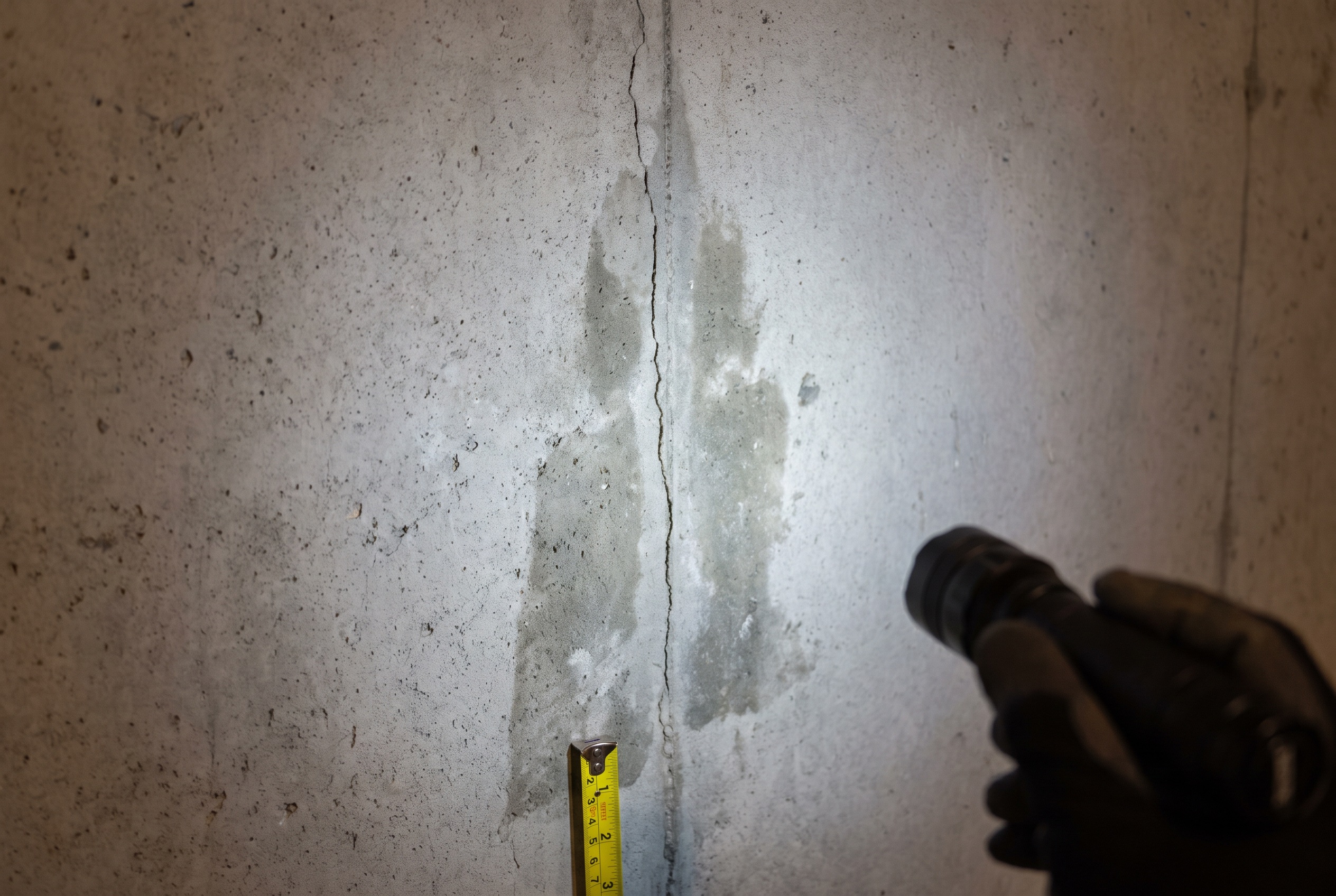
    Small foundation cracks are common, especially in older homes, but that does not mean they should be ignored. Some cracks are minor shrinkage cracks that can be monitored or sealed. Others are early signs of settlement, wall pressure, water intrusion, or structural movement.

    The tricky part is that crack size alone does not tell the whole story. A thin vertical crack in poured concrete may be less concerning than a stair-step crack in block or brick. A small crack that stays dry and unchanged for years is different from one that widens after every hard rain. Location, shape, direction, moisture, and movement all matter.

    For homeowners in Central and Southwest Virginia, small foundation cracks are worth taking seriously without jumping straight to panic. The right next step may be simple monitoring, a waterproofing repair, or a professional foundation inspection.

    Why Small Foundation Cracks Happen

    Foundation cracks can form for several reasons. Some start during the normal curing process after concrete is poured. As concrete dries and shrinks, small hairline cracks may appear. These cracks are often narrow, fairly straight, and do not keep growing.

    Other cracks develop because the foundation is under stress. Soil around the home may expand when wet and shrink during dry spells. Poor drainage can keep soil saturated near the foundation. Tree roots, erosion, hydrostatic pressure, and settlement can all add strain over time.

    Central Virginia weather can make these issues more noticeable. A dry stretch can cause clay-heavy soil to shrink. A week of heavy rain can saturate the same soil and add pressure against basement or crawl space walls. When those cycles repeat, small weaknesses can become visible.

    That is why a crack should be judged by what it is doing, not just how it looks on the day you notice it.

    When a Small Crack Can Usually Be Monitored

    Some small foundation cracks can be watched before any repair decision is made. This is usually more reasonable when the crack is very thin, vertical, dry, and not changing over time.

    If you decide to monitor a crack, take a clear photo with the date noted. You can also measure the width, mark the endpoints lightly with pencil, and check it every month or after major rainstorms. The goal is to see whether the crack is stable or active.

    A crack that looks the same six months from now may simply need sealing if it allows moisture or air through. A crack that grows, spreads, leaks, or appears with other symptoms deserves closer attention.

    Monitoring should be practical, not wishful thinking. If you are already seeing sloping floors, sticking doors, stair-step cracks, water seepage, or a wall that looks bowed, waiting may give the problem more time to develop.

    Cracks That Should Be Inspected

    Certain foundation cracks should be inspected even if they look small. The pattern can matter more than the width.

    Stair-step cracks in brick or block often suggest movement along mortar joints. Horizontal cracks in basement or crawl space walls can point to outside soil pressure. Diagonal cracks near corners, windows, or doors may be connected to settlement. Multiple cracks in the same area can also suggest that one section of the structure is moving differently than the rest of the home.

    You should schedule an inspection if you notice:

    • A crack that keeps getting wider or longer
    • Water coming through the crack
    • Stair-step cracking in brick, block, or masonry
    • Horizontal cracks in a basement or crawl space wall
    • Cracks paired with bowing, leaning, or bulging walls
    • Doors or windows that suddenly stick or stop latching
    • Floors that slope, sag, or feel bouncy
    • Gaps opening around trim, ceilings, walls, or flooring

    Level Up Foundation Repair has a helpful overview of signs of foundation problems for homeowners who are trying to understand whether a crack may be part of a larger pattern.

    When Small Foundation Cracks Need Repair

    Small foundation cracks may need repair when they allow water into the basement or crawl space, continue to grow, or show signs of structural movement. The repair depends on the cause.

    A dry, non-structural crack may be sealed to reduce moisture, air movement, or pest entry. A leaking crack may need a waterproofing repair, especially if water appears during heavy rain. The Building America Solution Center recommends inspecting basement walls for evidence of bulk water penetration and addressing exposed foundation wall cracks, seams, or holes before certain improvement work begins. You can read more in its basement wall inspection and preparation guidance.

    If the crack is connected to foundation settlement, the repair may involve stabilization. Depending on the home and soil conditions, that could mean helical piers, push piers, or another foundation repair method.

    If the wall is bowing inward, repair may involve carbon fiber reinforcement, wall anchors, or another wall stabilization approach. If moisture is the main issue, the better solution may be drainage, sump pump work, or basement waterproofing.

    The important point is simple: the crack is a symptom. The repair should match the cause.

    Can You Seal a Foundation Crack Yourself?

    Some homeowners seal small cracks themselves, especially if the crack is dry, narrow, and clearly non-structural. That can help with minor air or moisture pathways. It can also make the wall look cleaner.

    DIY sealing has limits. Caulk, patching compound, or surface sealant will not stop active settlement. It will not correct wall movement. It may hide changes that would otherwise help a contractor understand whether the crack is growing.

    If you do seal a small crack yourself, take photos first. Keep track of where it was, how wide it was, and whether water had ever come through. If the crack reopens, leaks, or spreads beyond the patch, that is useful information.

    A crack that is horizontal, stair-stepped, widening, wet, or paired with other movement signs should be inspected before being covered up.

    Why Water Makes Small Cracks More Important

    A tiny crack can become a bigger nuisance if it lets water into the home. Even a small amount of seepage can stain walls, dampen insulation, raise humidity, or contribute to musty odors. Water can also make soil problems worse outside the foundation.

    After heavy rain, check the basement or crawl space wall near the crack. Look for damp concrete, mineral staining, mud, peeling paint, or a musty smell. Outside, check whether gutters and downspouts are carrying water away from the home. Also look for low spots where water collects near the foundation.

    Many foundation crack problems are made worse by water management issues. Fixing drainage, extending downspouts, correcting grading, or addressing basement waterproofing concerns can help reduce pressure on the foundation and limit future damage.

    How Level Up Looks at Foundation Cracks

    A good inspection should not turn every small crack into a major repair proposal. It should identify the type of crack, look for movement, check moisture conditions, and connect the crack to the rest of the home’s symptoms.

    At Level Up Foundation Repair, the goal is to explain what is happening in plain language and recommend a targeted repair when repair is actually needed. Sometimes that means monitoring. Sometimes it means sealing or waterproofing. Sometimes it means foundation stabilization.

    Homeowners should not have to guess from a photo or choose between ignoring the crack and paying for an oversized repair. A clear inspection helps separate cosmetic cracks from cracks that need action.

    When to Call for a Free Foundation Inspection

    If you are unsure, schedule an inspection. That is especially true if the crack is changing, leaking, spreading, or appearing with other signs of movement.

    Level Up Foundation Repair provides free inspections and estimates for homeowners across Central and Southwest Virginia. If you have small foundation cracks and want to know whether they should be monitored, sealed, or repaired, contact Level Up Foundation Repair for a no-pressure inspection.

    FAQ

    Are small foundation cracks normal?

    Some small foundation cracks are common, especially hairline vertical cracks in concrete. They may come from shrinkage or normal aging. Still, cracks should be watched for changes, water seepage, or signs that they are part of a larger foundation problem.

    What kind of foundation crack is most concerning?

    Horizontal cracks, stair-step cracks, widening cracks, leaking cracks, and cracks paired with bowing walls or settlement signs are more concerning than a stable hairline crack. The pattern and movement matter as much as the size.

    Should I repair a crack if it is not leaking?

    A dry crack may not need immediate repair if it is small, stable, and not connected to structural movement. Monitoring is often reasonable. If the crack grows or appears with other symptoms, it should be inspected.

    Can small foundation cracks get worse?

    Yes. Some small cracks stay about the same for years, while others widen as soil shifts, water pressure increases, or settlement continues. Take photos, track changes, and schedule an inspection if the crack changes or new symptoms appear.
  • What Causes Foundation Settlement in Central Virginia?

    What Causes Foundation Settlement in Central Virginia?

    Why Foundation Settlement Happens in Virginia Homes

    Foundation settlement in Virginia usually starts with one simple problem: the ground under part of the home can no longer support the structure evenly.

    That can happen slowly over years or become more noticeable after a rough stretch of weather. In Central Virginia, homeowners often see the warning signs after cycles of heavy summer rain, dry heat, and another round of storms. Soil expands, shrinks, softens, washes out, and shifts. The foundation above it has to respond to all that movement.

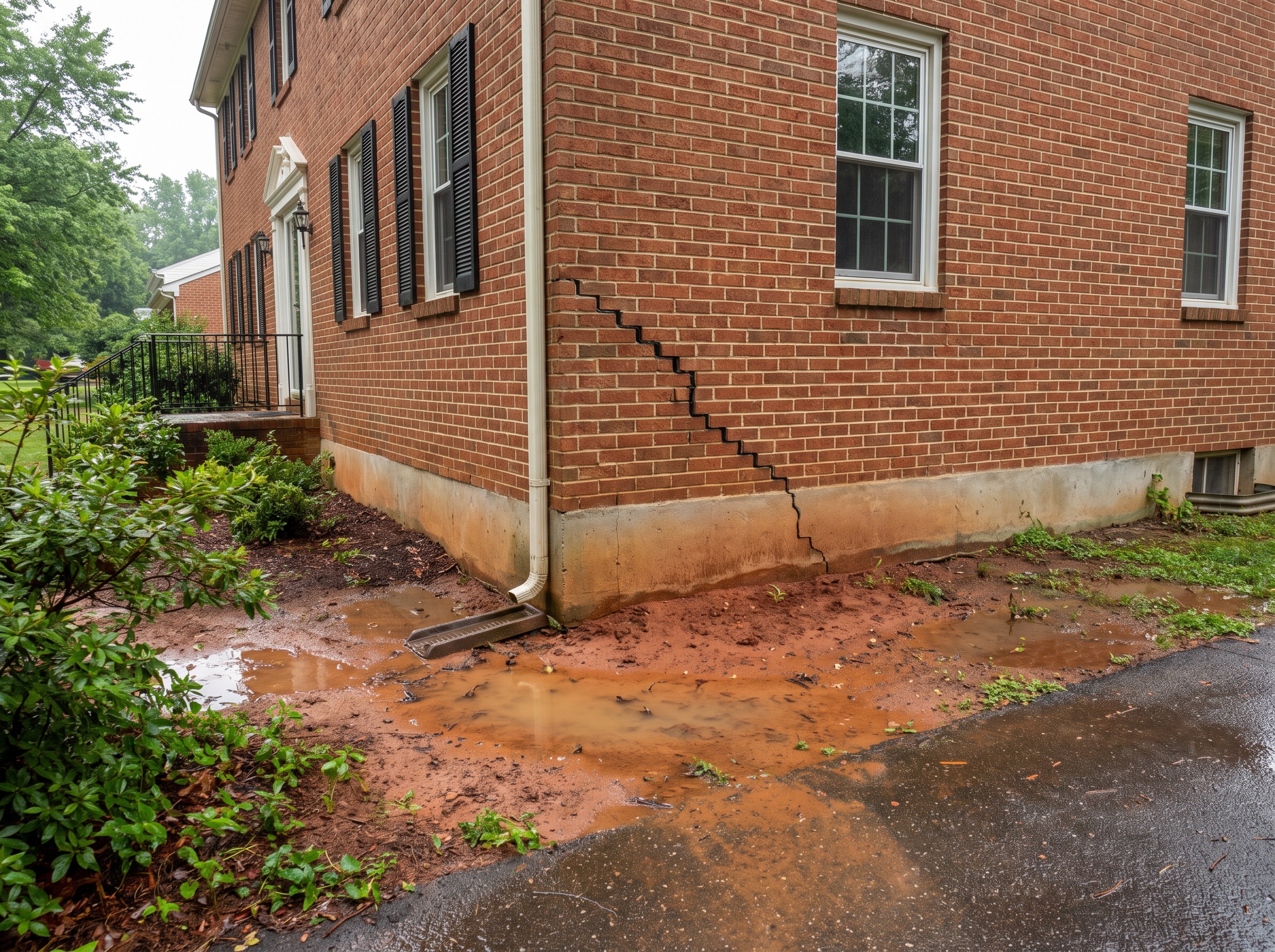
    Sometimes the signs are subtle. A door starts rubbing. A small drywall crack opens near a window. A floor slopes more than it used to. Other times, the problem is harder to ignore, like stair-step cracks in brick, gaps around trim, or a foundation wall that appears to have dropped along one corner.

    Foundation settlement does not always mean the entire home needs a major repair. The cause, location, and severity matter. A good inspection should separate normal aging from active movement and explain what is actually happening below the home.

    Foundation Settlement Virginia Homeowners Should Understand

    The topic of foundation settlement in Virginia covers a wide range of soil and structure problems. Some homes settle because the soil beneath the footing was never compacted properly. Others move because water has changed the soil over time. Older homes may have a combination of original construction conditions, drainage issues, and decades of seasonal movement.

    Central Virginia has plenty of homes built on clay-heavy soil, sloped lots, mixed fill, and ground that changes behavior depending on the weather. During dry stretches, soil can shrink away from the foundation. During heavy rain, it can swell, soften, or wash out. When those changes happen unevenly around the home, one section may settle more than another.

    That uneven movement is what creates many of the symptoms homeowners notice inside the house. The foundation does not have to collapse for settlement to matter. Small shifts can still affect framing, floors, walls, windows, doors, brickwork, and basement or crawl space supports.

    Clay Soil and Moisture Changes

    Clay soil is one of the biggest reasons foundation settlement can become a concern in Virginia. Clay holds water differently than sandy or loamy soil. When it gets wet, it can expand. When it dries out, it can shrink and pull away from the foundation.

    The Virginia Department of Energy explains that expansive soils change volume with changing moisture content, and that these hazards are made worse by prolonged drought followed by soil-saturating rain. You can read more from Virginia Energy’s page on expansive soils.

    That wet-dry cycle is hard on foundations because the movement is rarely perfectly even. Soil near one side of the home may stay wetter because of poor drainage or a short downspout. Soil near another section may dry faster because it gets more sun or sits near large tree roots. Over time, those differences can create stress across the foundation.

    Central Virginia’s recent pattern of intense summer rainstorms broken up by hot, dry periods is a good example of why homeowners should pay attention. A hard rain after a dry spell can dump water onto soil that has pulled back, cracked, or become less stable. That does not automatically mean damage will occur, but it can reveal weak spots that were already developing.

    Poor Drainage Around the Foundation

    Water should move away from the home. When it collects beside the foundation, the soil around the footing can become oversaturated, soft, and unstable.

    Drainage problems can come from several places. Gutters may overflow. Downspouts may dump water too close to the house. The yard may slope toward the foundation. Mulch beds may be built too high. Walkways, patios, or driveways may trap water against the wall. In some cases, the original grading around the home was never ideal.

    After a heavy storm, check where the water goes. If it pools near the foundation or runs toward the house, that water is putting extra stress on the soil and the foundation. Over time, repeated saturation can contribute to settlement, basement water, crawl space moisture, and wall pressure.

    Good drainage will not fix every foundation problem, but poor drainage can make many foundation problems worse.

    Drought Can Also Contribute to Settlement

    Heavy rain gets most of the blame because it is easier to see. Water in the basement, muddy crawl spaces, and pooling around the foundation are obvious problems. Drought damage is quieter.

    During long dry periods, clay soil can shrink. As the soil loses moisture, it may pull away from the foundation and create small gaps or voids below the footing. If part of the home loses support, that section may begin to settle.

    Large trees near the home can add to the issue. Tree roots draw moisture from the soil, and during dry weather that moisture loss can be more dramatic. A tree does not have to be touching the house to affect nearby soil. The concern is the moisture balance around the foundation.

    This is why alternating drought and heavy rain can be such a problem. Dry soil may shrink and crack. Then a strong storm can rapidly change the moisture level around the home. That repeating cycle creates movement, and movement is what foundations dislike most.

    Fill Soil and Poor Compaction

    Some foundation settlement problems trace back to the way the lot was prepared before the home was built. If a foundation rests on fill soil that was not compacted properly, that soil can compress over time. As it compresses, the foundation above it may settle.

    This can happen near additions, porches, garages, patios, or sections of a home built on disturbed ground. It can also happen where builders cut and filled a sloped lot to create a level building area.

    Settlement from poor compaction may show up years after construction. A homeowner may not know anything was wrong until cracks, sloping floors, or sticking doors begin to appear.

    Erosion and Washout

    Fast-moving water can remove soil from around or beneath a foundation. This is more likely where downspouts discharge near the house, drainage channels form along the foundation, or water runs across a sloped yard during storms.

    Washout can leave parts of the foundation unsupported. Once that support is gone, the structure may settle into the weakened area. Concrete slabs, porches, steps, and garage floors can also settle when soil erodes beneath them.

    Homeowners may notice soil pulling away from the foundation, new gaps under concrete, sinking steps, or areas where mulch and topsoil disappear after storms. These signs are worth taking seriously, especially if they appear near cracks or sloping floors.

    Warning Signs of Foundation Settlement

    Foundation settlement can show up in different ways depending on the home. A basement home may show different symptoms than a crawl space home, and brick may reveal movement differently than drywall or siding.

    Common signs include:

    • Stair-step cracks in brick, block, or mortar joints
    • Doors and windows that stick or no longer latch properly
    • Floors that slope toward one side of the home
    • Gaps between walls, ceilings, trim, or flooring
    • Cracks above doorways or around window corners
    • A chimney, porch, or exterior wall pulling away
    • Cracks that widen after storms or dry spells

    One small crack does not always mean the foundation is actively settling. Patterns matter. A crack that keeps widening, a cluster of symptoms in the same area, or signs that appear after major weather swings should be inspected.

    Level Up Foundation Repair has more information on signs of foundation problems for homeowners who are trying to understand what they are seeing.

    How Foundation Settlement Is Repaired

    The right repair depends on the cause of the settlement and the structure of the home. Some foundations need stabilization with piers. Some need drainage improvements first. Some issues that look like settlement from upstairs may actually start in the crawl space framing.

    For true foundation settlement, repair may involve helical piers or push piers. These systems are designed to transfer the weight of the affected part of the home to deeper, more stable supporting soil or load-bearing strata.

    In other cases, the repair may involve wall anchors, carbon fiber reinforcement, crawl space support, beam repair, joist repair, or water management. That is why the inspection matters so much. The visible symptom is only one part of the story.

    Level Up Foundation Repair focuses on targeted repairs. If one section of the home is moving, that does not automatically mean every wall needs the same solution. A clear diagnosis helps homeowners avoid both under-repairing the problem and paying for work they do not need.

    When to Schedule a Foundation Inspection

    Schedule an inspection if cracks are widening, doors and windows are getting harder to use, floors are becoming more uneven, or new symptoms appear after heavy rain or dry weather. You should also have the home checked before finishing a basement, selling the property, or buying a home with visible cracks or sloping floors.

    An inspection gives you more than a repair quote. It gives you context. You should understand what moved, why it moved, whether the movement appears active, and what repair options make sense.

    Level Up Foundation Repair provides free inspections and estimates for homeowners across Central and Southwest Virginia. If you are concerned about foundation settlement in Virginia, contact Level Up Foundation Repair to schedule a no-pressure inspection.

    FAQ

    What is the main cause of foundation settlement in Virginia?

    Foundation settlement in Virginia is often connected to soil movement, moisture changes, poor drainage, erosion, or poorly compacted fill soil. Clay-heavy soil can expand when wet and shrink during dry periods, which can create uneven support below the foundation.

    Can heavy rain cause foundation settlement?

    Heavy rain can contribute to settlement when water collects near the foundation, softens soil, causes erosion, or increases pressure around the home. Rain is especially concerning when it follows a dry period because the soil may have already shrunk, cracked, or pulled away from the foundation.

    Can drought damage a foundation?

    Yes, drought can contribute to foundation movement. Dry soil, especially clay soil, can shrink and create voids or uneven support below the home. When moisture returns, the soil may swell again, creating more movement around the foundation.

    How do I know if my foundation settlement needs repair?

    Look for patterns, not one isolated mark. Widening cracks, sticking doors, sloping floors, gaps around trim, stair-step brick cracks, or symptoms that appear together in one area should be inspected. A foundation professional can determine whether the movement is active and what repair, if any, is needed.

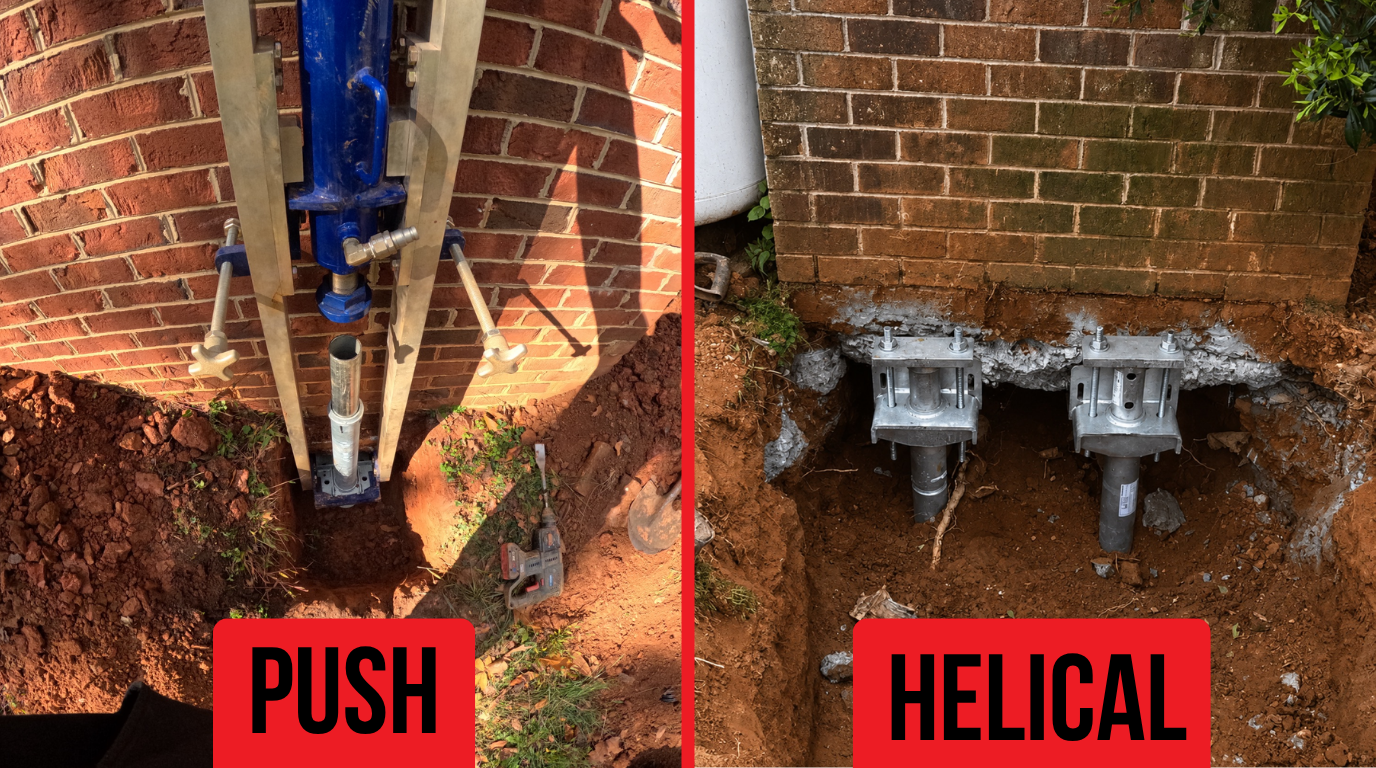
  • Helical piers vs push piers foundation repair comparison showing installation methods and stabilized foundation.

    Helical Piers vs. Push Piers: What’s the Difference?

    Helical Piers vs. Push Piers: Why the Difference Matters

    If your home is settling, you may eventually hear two repair options mentioned: helical piers and push piers. Both are used to stabilize foundations. Both are designed to transfer the weight of a structure to stronger supporting soil or load-bearing strata below the unstable ground near the surface.

    But! That doesn’t mean they work the same way.

    The difference between helical piers vs push piers comes down to how they are installed, how they carry load, and what kind of structure or soil condition they are best suited for. For a homeowner in Central or Southwest Virginia, the important question is not which pier sounds stronger on paper. The better question is which system fits the actual problem under your home.

    Foundation settlement can show up as stair-step cracks, sticking doors, sloping floors, gaps around trim, or cracks in basement walls. The repair should start with a close look at the structure, the soil, the type of foundation, and the pattern of movement.

    What Helical Piers Are

    Helical piers are steel foundation piers with spiral-shaped plates near the bottom of the shaft. Those plates look a little like large screw threads. During installation, the pier is rotated into the ground until it reaches soil capable of supporting the home.

    Because helical piers are screwed into the ground, contractors can measure installation resistance as they go. That resistance helps indicate whether the pier has reached soil with enough bearing capacity. Once installed, the pier can be connected to the foundation with a bracket system to help stabilize the affected area.

    Helical piers are often used for lighter structures, additions, porches, chimneys, and homes where the structure itself does not provide enough weight to drive a different pier system downward. They can also be useful in certain soil conditions where a screw-style installation makes sense.

    Level Up Foundation Repair installs helical piers as part of its foundation repair services when the inspection shows they are the right fit for the home.

    What Push Piers Are

    Push piers are steel piers that are hydraulically driven into the ground. Instead of being screwed in, they are pushed downward using the weight of the structure as resistance. Sections of steel pipe are advanced deeper until they reach stable bearing soil, bedrock, or a load-bearing layer that can support the foundation.

    Once the piers reach the proper depth, brackets are attached to the foundation. The system can then help stabilize the structure and, in some cases, recover part of the settlement. The amount of lift depends on the home, the foundation, the soil conditions, and how long the settlement has been developing.

    Push piers are commonly used for heavier existing structures because the installation process relies on the building’s weight. They are a proven option for many foundation settlement problems, especially where the goal is to transfer the home’s load past weaker surface soils.

    Level Up also offers push pier foundation repair for homes with settlement problems that call for this type of stabilization.

    How Helical Piers and Push Piers Are Similar

    Helical piers and push piers share the same basic goal: support the home on stronger ground below the unstable soil near the surface.

    That matters in places like Central and Southwest Virginia, where changing moisture levels, clay-heavy soil, poor drainage, and erosion can all contribute to foundation movement. When the soil below part of a home can no longer support the weight evenly, the structure may settle. Piers are used to bypass that weaker soil and carry the load deeper.

    The Federal Highway Administration’s Reference Manual for Soils and Foundations discusses how soil behavior and foundation support are connected. For homeowners, the practical takeaway is simple: a foundation repair is only as good as the support below it.

    Both pier systems can be part of a long-term stabilization plan. Both require proper installation. Both should be selected after an inspection, not based on a guess from a crack photo or a quick look at one symptom inside the house.

    Key Differences Between Helical Piers vs Push Piers

    The biggest difference is the installation method. Helical piers are rotated and screwed into the ground. Push piers are hydraulically driven downward.This one difference affects how each system is used.

    Helical piers do not rely on the full weight of the structure in the same way push piers do. That can make them useful for lighter areas, smaller structures, and situations where there may not be enough building weight to drive a push pier. The helical plates help the pier advance into the soil and provide bearing support once the proper depth and resistance are reached.

    Push piers use the weight of the structure as the driving force. Because of that, they are often used under heavier existing foundations. They are driven until they reach a stable layer below the problematic soil, then connected to the foundation with brackets.

    There are also differences in how installation depth is determined. Helical piers are advanced based on torque and soil resistance. Push piers are driven until they reach refusal or the required bearing capacity. A trained foundation contractor should be able to explain what those measurements mean and why they matter for your specific home.

    When Helical Piers May Be Recommended

    Helical piers may be recommended when the structure is lighter, when access is limited, or when the soil conditions are well suited for a screw-style pier. They are often considered for additions, porches, stoops, chimneys, decks, lighter foundation sections, or new construction support.

    They can also be useful when a foundation repair plan needs predictable installation measurements. Since torque is monitored during installation, the contractor can use that data as part of the process for confirming adequate support.

    For a homeowner, the important thing is fit. Helical piers can be an excellent solution, but they should be recommended because the structure and soil call for them. They should not be treated as a universal answer to every foundation crack.

    When Push Piers May Be Recommended

    Push piers may be recommended when an existing home has enough weight to drive the piers and the settlement pattern points to deeper support needs. They are commonly used for foundation settlement, sinking foundation walls, stair-step cracking, and sections of a home that have dropped because of weak or shifting soil.

    Because push piers are driven to a stable layer, they can be a strong fit for many settlement repairs. In some cases, they may also allow careful lifting of the affected foundation area. That process needs to be handled with care, especially in older homes where finishes, framing, masonry, and previous repairs may all respond differently.

    If the home is too light, if the structure does not provide enough resistance, or if the soil conditions point in another direction, push piers may not be the best option. A good inspection should make that clear.

    Which Pier System Is Better?

    There is no honest answer without inspecting the home. Helical piers and push piers are both legitimate foundation repair methods. The better choice depends on the structure, soil, foundation type, depth to stable bearing material, access, and the amount of settlement.

    Some homes need helical piers. Some need push piers. Some need a different foundation repair method entirely, especially if the problem involves bowing basement walls, crawl space support issues, drainage problems, or damaged framing rather than settlement under the footing.

    This is where oversized repair quotes can become a problem. A homeowner may be told they need a large, full-perimeter system when only one section of the home is actually moving. In other cases, a smaller repair may fail because it did not address the full settlement pattern. The right answer lives in the inspection details.

    Level Up’s foundation repair approach starts with finding the actual cause of the movement and recommending a targeted repair that makes sense for the home.

    Signs You May Need Foundation Piers

    Foundation piers may be worth discussing if you notice several signs of settlement around the same area of the home. One crack by itself does not always mean piering is needed, but patterns matter.

    Common warning signs include:

    • Stair-step cracks in brick or block
    • Doors and windows that stick or no longer latch correctly
    • Floors sloping toward one side of the home
    • Gaps between walls, ceilings, trim, or flooring
    • Cracks widening over time
    • A chimney, porch, or foundation section pulling away
    • Visible settlement near one corner or wall

    If you are seeing these issues, the next step should be a professional inspection. Level Up’s guide to signs of foundation problems can help homeowners understand what to look for before scheduling an estimate.

    Start With the Inspection, Then Choose the Repair

    Comparing helical piers vs push piers is useful, but the pier type should not be chosen before the problem is understood. Foundation repair depends on what the structure is doing and what the soil below it can support.

    Level Up Foundation Repair provides free inspections and estimates for homeowners across Central and Southwest Virginia. If your home has cracks, sloping floors, sticking doors, or other signs of settlement, the team can inspect the problem, explain the cause, and let you know whether helical piers, push piers, or another repair option makes the most sense.

    To get a clear recommendation for your home, schedule a free foundation inspection with Level Up Foundation Repair.

    FAQ

    Are helical piers better than push piers?

    Helical piers are better for some situations, while push piers are better for others. Helical piers are often useful for lighter structures or areas where screw-style installation is a good fit. Push piers are commonly used for heavier existing homes with settlement problems. The right choice depends on the inspection.

    Do helical piers and push piers lift the foundation?

    Both systems may allow some recovery of settled areas, but lifting is not guaranteed. The main goal is stabilization. The amount of lift depends on the structure, the soil, the foundation, and how long the settlement has been present.

    How long do foundation piers last?

    Properly installed steel pier systems are designed as long-term foundation stabilization solutions. The lifespan depends on material quality, installation, soil conditions, drainage, and whether the repair was matched correctly to the problem.

    How do I know if my home needs piers?

    Homes may need piers when foundation settlement is causing cracks, sloping floors, sticking doors, or visible movement in part of the structure. Since those symptoms can also come from other issues, a foundation inspection is the best way to know whether piers are needed.

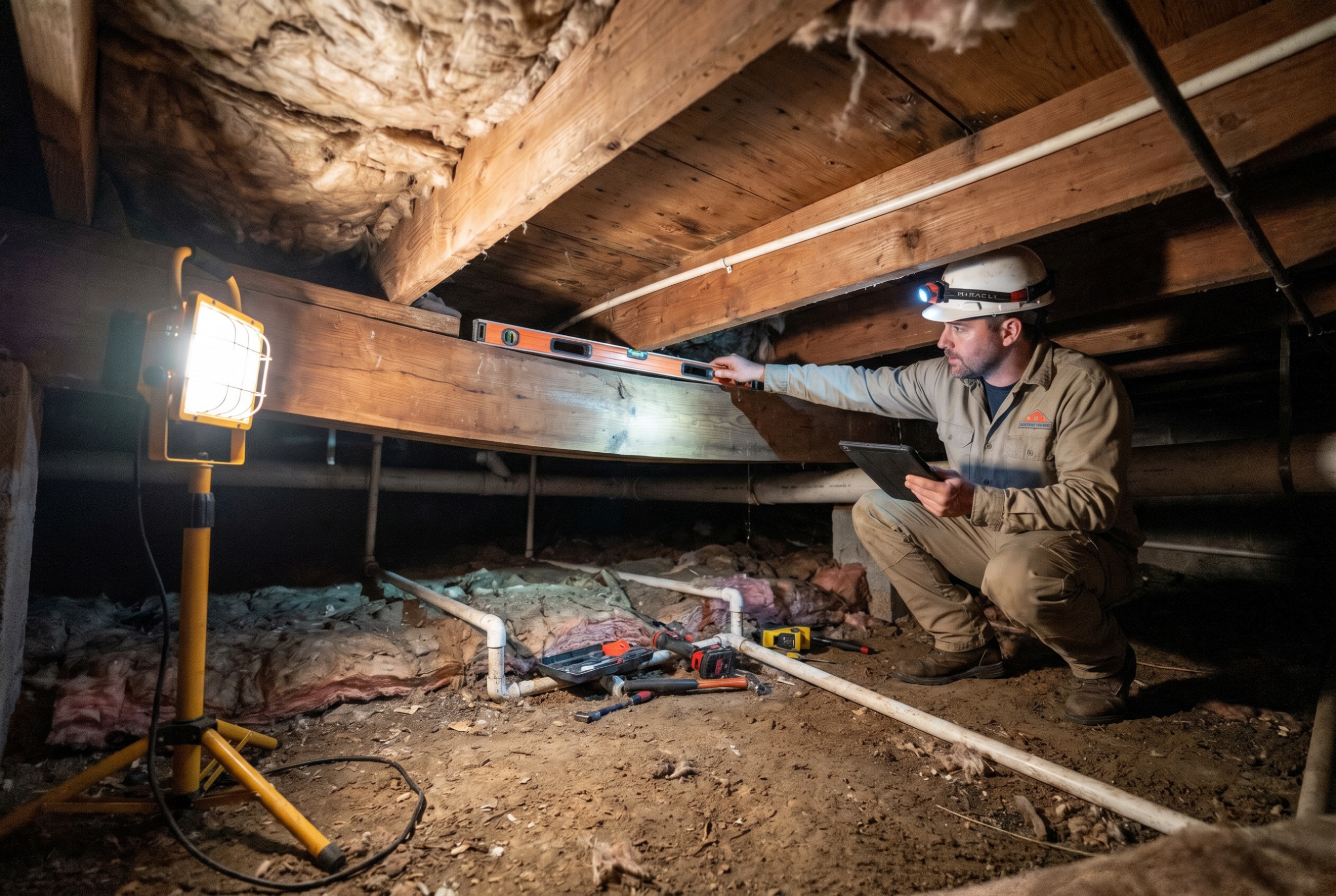
  • Crawl space inspection with Level, tablet, and work light assessing floor joist repair.

    Why Are My Floors Uneven? Crawl Space and Foundation Causes Explained

    Why Are My Floors Uneven?

    If you have been walking through your home and asking, “why are my floors uneven?” you are not being overly picky. Sloping, sagging, soft, or bouncy floors can point to problems below the living space, especially in homes built over crawl spaces or aging foundations.

    In Central and Southwest Virginia, uneven floors are often tied to crawl space moisture, weakened wood framing, failing supports, soil movement, or foundation settlement. Some floor movement is minor and develops slowly over decades. Other cases deserve a closer look because the structure underneath the home may no longer be properly supported.

    The safest place to start is with the cause. A floor that feels slightly out of level may need a very different repair than a floor that dips sharply near one wall or bounces when you walk across the room.

    What Uneven Floors Usually Mean

    Uneven floors usually happen when the structure below the floor changes, weakens, settles, or shifts. That structure may include floor joists, main beams, support posts, crawl space piers, foundation walls, or the soil underneath the home.

    In many Virginia homes, especially older homes with crawl spaces, the problem begins below the first floor. Moisture can soften or damage wood. Support posts can settle into the soil. Joists can bend over time. A main beam can lose strength. In other homes, the issue may come from foundation settlement, where part of the home sinks because the soil below can no longer support it evenly.

    That is why uneven floors should not be treated as a one-size-fits-all problem. The right repair depends on what is actually moving and why it is moving.

    Common Crawl Space Causes of Uneven Floors

    Crawl spaces are one of the most common places to find the source of sagging or bouncy floors. The framing under your home carries a lot of weight every day. If that framing weakens or loses support, the floors above can start to dip.

    Moisture is a major factor. Central and Southwest Virginia homes deal with humid summers, heavy rain, and damp soil conditions. When a crawl space stays wet or humid, the wood framing can absorb moisture. Over time, joists and beams may begin to soften, rot, or lose stiffness. The EPA notes that controlling moisture is key to preventing mold growth in homes, and wet or damp materials should be dried quickly when water damage occurs. You can read more in the EPA’s guide to mold, moisture, and your home.

    Common crawl space issues that can lead to uneven floors include deteriorated joists, weakened beams, failing support posts, poor drainage, standing water, high humidity, and inadequate original support. In some cases, a home simply needs additional structural support in the right places. In others, damaged wood may need to be repaired or replaced before supports are added.

    Level Up Foundation Repair offers crawl space structural repair for issues like damaged framing, sagging floors, and support problems below the home.

    When Support Jacks May Be Part of the Repair

    If the floor system is sagging because beams or joists need additional support, crawl space support jacks may be recommended. These are adjustable steel supports installed beneath beams or other structural areas to help restore stability from below.

    Support jacks can be a good fit when the main issue is a weakened or under-supported floor system. They may help reduce bounce, stabilize sagging areas, and provide long-term support when installed correctly. They are often used along with other crawl space repairs, such as beam reinforcement, joist sistering, drainage improvements, or moisture control.

    The key phrase is “when installed correctly.” A jack placed on unstable soil or installed without addressing moisture damage may not solve the real problem. A proper inspection should look at the framing, the existing supports, the soil conditions, and any water or humidity issues in the crawl space.

    Homeowners dealing with sagging or bouncy floors can learn more about steel jack supports and how they are used to reinforce floor systems.

    How Floor Joist and Beam Problems Cause Sagging

    Floor joists are the horizontal boards that help support the floor above. Beams carry larger loads and help distribute weight across the crawl space or basement. When these materials weaken, crack, rot, or bend, the floor above can start to feel uneven.

    Joist sistering is one possible repair method. This involves reinforcing a damaged or weakened joist by fastening a new piece of lumber alongside it. Beam repair may involve reinforcing or replacing a damaged main beam, depending on the condition of the wood and the amount of support needed.

    These repairs should be based on the actual condition of the framing. A floor that sags because of rotted joists should not be treated the same way as a floor that slopes because part of the foundation has settled. Both can make the floor feel uneven, but they are different problems.

    For some homes, joist or beam repair may be paired with crawl space moisture control. If the space under the home stays damp, structural repairs may not last the way they should. That is why a good inspection should look beyond the floor itself and check the conditions underneath it.

    Foundation Settlement Can Also Make Floors Uneven

    Sometimes the issue is not just in the crawl space framing. Uneven floors can also be a sign of foundation settlement. This happens when the soil beneath part of the home shifts, shrinks, washes out, or loses its ability to support the structure evenly.

    Foundation settlement can show up in several ways:

    • Floors that slope toward one side of the home
    • Doors or windows that stick
    • Cracks in drywall, brick, or foundation walls
    • Gaps between trim, floors, walls, or ceilings
    • Stair-step cracks in masonry

    In Central and Southwest Virginia, soil conditions and moisture changes can both contribute to settlement. Clay-heavy soil can expand when wet and shrink during dry periods. Poor drainage around the home can make the problem worse by allowing water to collect near the foundation.

    If settlement is the true cause, repairs may involve foundation stabilization methods such as foundation repair, helical piers, or push piers. The goal is to transfer the weight of the affected area to stronger supporting soil or load-bearing strata below.

    How to Tell Whether It Is a Crawl Space or Foundation Problem

    There is some overlap between crawl space problems and foundation problems. Both can cause sloping floors, cracks, gaps, and doors that do not close correctly. The difference is where the movement is coming from.

    A crawl space structural issue often starts with the framing under the floor. You might notice bouncy areas, soft spots, dips near the middle of a room, or visible moisture and damaged wood below the home.

    A foundation settlement issue often affects larger sections of the home. You might notice floors sloping toward an exterior wall, stair-step cracks in brick or block, diagonal drywall cracks near doors and windows, or gaps opening where walls meet ceilings or trim.

    Still, symptoms alone do not tell the whole story. A home can have both crawl space and foundation concerns at the same time. That is why Level Up focuses on inspecting the actual structure before recommending a repair.

    Can Uneven Floors Be Fixed?

    Often, yes. The repair depends on the cause, the age of the home, the amount of movement, and the condition of the structure below the floor.

    Some homes can be stabilized and partially lifted. Some floors can be improved but not made perfectly level without creating damage elsewhere. Older homes especially require care because trying to force a floor back into position too quickly can crack finishes, damage trim, or stress other parts of the structure.

    A good contractor should explain what can realistically be corrected, what should be stabilized, and what may be cosmetic. Level Up’s approach is to identify the real source of the problem and recommend a targeted repair instead of assuming the largest repair is automatically the right one.

    When to Schedule an Inspection

    You should consider a professional inspection if your uneven floors are getting worse, feel soft or bouncy, appear suddenly, or show up along with cracks, sticking doors, musty crawl space odors, or visible moisture below the home.

    An inspection is also smart before buying or selling a home. Uneven floors can make buyers nervous, but a clear diagnosis helps everyone understand whether the issue is minor, structural, moisture-related, or foundation-related.

    Level Up Foundation Repair provides free inspections and estimates for homeowners across Central and Southwest Virginia. If you are trying to figure out why your floors are uneven, you can schedule a free inspection and get a practical explanation of what is happening below your home.

    FAQ

    Are uneven floors always a foundation problem?

    No. Uneven floors can come from foundation settlement, but they can also be caused by crawl space moisture, weak joists, damaged beams, failing support posts, or normal aging in older homes. An inspection helps determine which issue is actually present.

    Are bouncy floors dangerous?

    Bouncy floors do not always mean immediate danger, but they can be a sign that the floor system needs more support or that moisture has weakened the framing below. If the bounce is getting worse or appears with sagging, cracks, or crawl space moisture, it is worth having it checked.

    Can crawl space support jacks level my floors?

    Support jacks can help stabilize and sometimes improve sagging floors when the issue is related to weak or under-supported framing. The amount of leveling possible depends on the home, the cause of the sagging, and how long the problem has been developing.

    How do I know if I need crawl space repair or foundation repair?

    Crawl space repair usually addresses damaged framing, moisture problems, beams, joists, or support posts. Foundation repair addresses settlement, shifting, or structural movement in the foundation itself. Many symptoms overlap, which is why the first step should be a full inspection rather than a guess.