Helical Piers vs. Push Piers: Why the Difference Matters
If your home is settling, you may eventually hear two repair options mentioned: helical piers and push piers. Both are used to stabilize foundations. Both are designed to transfer the weight of a structure to stronger supporting soil or load-bearing strata below the unstable ground near the surface.
But! That doesn’t mean they work the same way.
The difference between helical piers vs push piers comes down to how they are installed, how they carry load, and what kind of structure or soil condition they are best suited for. For a homeowner in Central or Southwest Virginia, the important question is not which pier sounds stronger on paper. The better question is which system fits the actual problem under your home.
Foundation settlement can show up as stair-step cracks, sticking doors, sloping floors, gaps around trim, or cracks in basement walls. The repair should start with a close look at the structure, the soil, the type of foundation, and the pattern of movement.
What Helical Piers Are
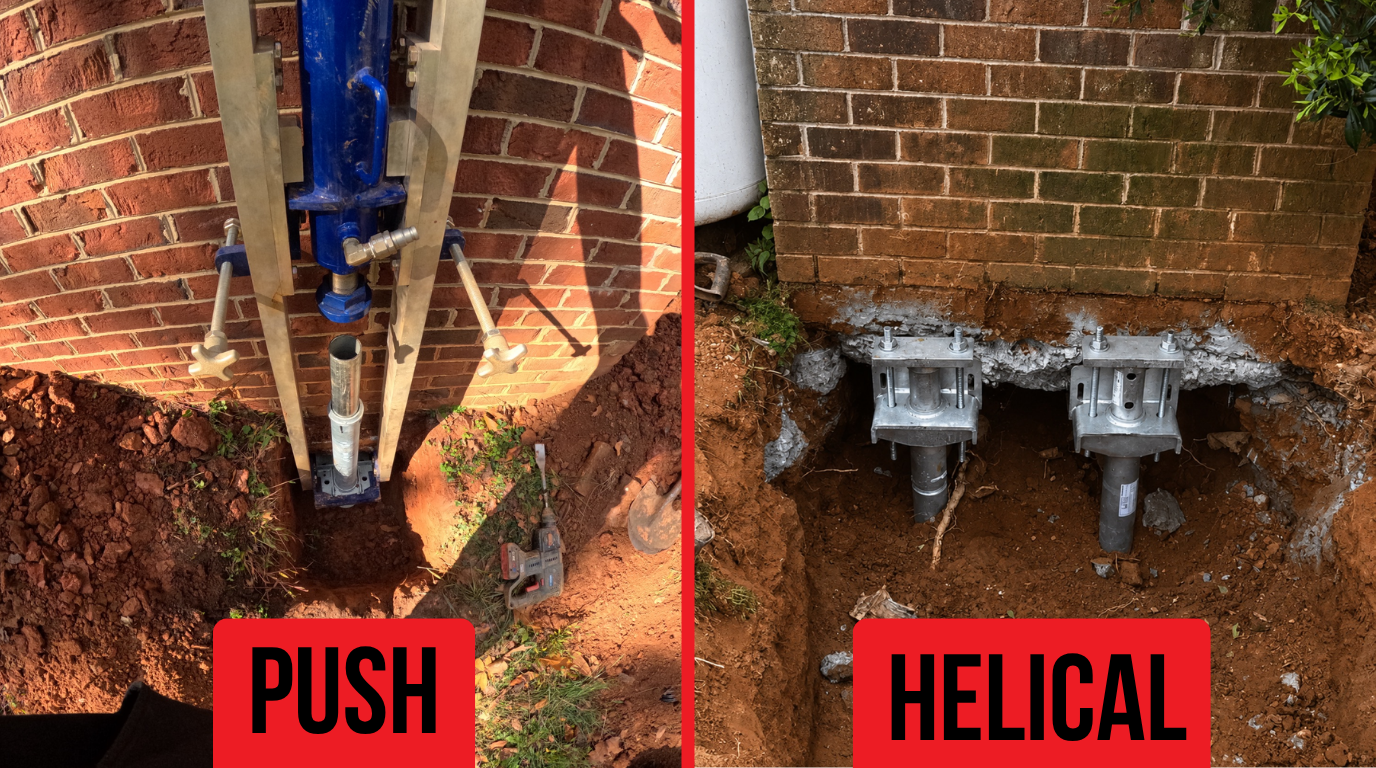
Helical piers are steel foundation piers with spiral-shaped plates near the bottom of the shaft. Those plates look a little like large screw threads. During installation, the pier is rotated into the ground until it reaches soil capable of supporting the home.
Because helical piers are screwed into the ground, contractors can measure installation resistance as they go. That resistance helps indicate whether the pier has reached soil with enough bearing capacity. Once installed, the pier can be connected to the foundation with a bracket system to help stabilize the affected area.
Helical piers are often used for lighter structures, additions, porches, chimneys, and homes where the structure itself does not provide enough weight to drive a different pier system downward. They can also be useful in certain soil conditions where a screw-style installation makes sense.
Level Up Foundation Repair installs helical piers as part of its foundation repair services when the inspection shows they are the right fit for the home.
What Push Piers Are
Push piers are steel piers that are hydraulically driven into the ground. Instead of being screwed in, they are pushed downward using the weight of the structure as resistance. Sections of steel pipe are advanced deeper until they reach stable bearing soil, bedrock, or a load-bearing layer that can support the foundation.
Once the piers reach the proper depth, brackets are attached to the foundation. The system can then help stabilize the structure and, in some cases, recover part of the settlement. The amount of lift depends on the home, the foundation, the soil conditions, and how long the settlement has been developing.
Push piers are commonly used for heavier existing structures because the installation process relies on the building’s weight. They are a proven option for many foundation settlement problems, especially where the goal is to transfer the home’s load past weaker surface soils.
Level Up also offers push pier foundation repair for homes with settlement problems that call for this type of stabilization.
How Helical Piers and Push Piers Are Similar
Helical piers and push piers share the same basic goal: support the home on stronger ground below the unstable soil near the surface.
That matters in places like Central and Southwest Virginia, where changing moisture levels, clay-heavy soil, poor drainage, and erosion can all contribute to foundation movement. When the soil below part of a home can no longer support the weight evenly, the structure may settle. Piers are used to bypass that weaker soil and carry the load deeper.
The Federal Highway Administration’s Reference Manual for Soils and Foundations discusses how soil behavior and foundation support are connected. For homeowners, the practical takeaway is simple: a foundation repair is only as good as the support below it.
Both pier systems can be part of a long-term stabilization plan. Both require proper installation. Both should be selected after an inspection, not based on a guess from a crack photo or a quick look at one symptom inside the house.
Key Differences Between Helical Piers vs Push Piers
The biggest difference is the installation method. Helical piers are rotated and screwed into the ground. Push piers are hydraulically driven downward.This one difference affects how each system is used.
Helical piers do not rely on the full weight of the structure in the same way push piers do. That can make them useful for lighter areas, smaller structures, and situations where there may not be enough building weight to drive a push pier. The helical plates help the pier advance into the soil and provide bearing support once the proper depth and resistance are reached.
Push piers use the weight of the structure as the driving force. Because of that, they are often used under heavier existing foundations. They are driven until they reach a stable layer below the problematic soil, then connected to the foundation with brackets.
There are also differences in how installation depth is determined. Helical piers are advanced based on torque and soil resistance. Push piers are driven until they reach refusal or the required bearing capacity. A trained foundation contractor should be able to explain what those measurements mean and why they matter for your specific home.
When Helical Piers May Be Recommended
Helical piers may be recommended when the structure is lighter, when access is limited, or when the soil conditions are well suited for a screw-style pier. They are often considered for additions, porches, stoops, chimneys, decks, lighter foundation sections, or new construction support.
They can also be useful when a foundation repair plan needs predictable installation measurements. Since torque is monitored during installation, the contractor can use that data as part of the process for confirming adequate support.
For a homeowner, the important thing is fit. Helical piers can be an excellent solution, but they should be recommended because the structure and soil call for them. They should not be treated as a universal answer to every foundation crack.
When Push Piers May Be Recommended
Push piers may be recommended when an existing home has enough weight to drive the piers and the settlement pattern points to deeper support needs. They are commonly used for foundation settlement, sinking foundation walls, stair-step cracking, and sections of a home that have dropped because of weak or shifting soil.
Because push piers are driven to a stable layer, they can be a strong fit for many settlement repairs. In some cases, they may also allow careful lifting of the affected foundation area. That process needs to be handled with care, especially in older homes where finishes, framing, masonry, and previous repairs may all respond differently.
If the home is too light, if the structure does not provide enough resistance, or if the soil conditions point in another direction, push piers may not be the best option. A good inspection should make that clear.
Which Pier System Is Better?
There is no honest answer without inspecting the home. Helical piers and push piers are both legitimate foundation repair methods. The better choice depends on the structure, soil, foundation type, depth to stable bearing material, access, and the amount of settlement.
Some homes need helical piers. Some need push piers. Some need a different foundation repair method entirely, especially if the problem involves bowing basement walls, crawl space support issues, drainage problems, or damaged framing rather than settlement under the footing.
This is where oversized repair quotes can become a problem. A homeowner may be told they need a large, full-perimeter system when only one section of the home is actually moving. In other cases, a smaller repair may fail because it did not address the full settlement pattern. The right answer lives in the inspection details.
Level Up’s foundation repair approach starts with finding the actual cause of the movement and recommending a targeted repair that makes sense for the home.
Signs You May Need Foundation Piers
Foundation piers may be worth discussing if you notice several signs of settlement around the same area of the home. One crack by itself does not always mean piering is needed, but patterns matter.
Common warning signs include:
- Stair-step cracks in brick or block
- Doors and windows that stick or no longer latch correctly
- Floors sloping toward one side of the home
- Gaps between walls, ceilings, trim, or flooring
- Cracks widening over time
- A chimney, porch, or foundation section pulling away
- Visible settlement near one corner or wall
If you are seeing these issues, the next step should be a professional inspection. Level Up’s guide to signs of foundation problems can help homeowners understand what to look for before scheduling an estimate.
Start With the Inspection, Then Choose the Repair
Comparing helical piers vs push piers is useful, but the pier type should not be chosen before the problem is understood. Foundation repair depends on what the structure is doing and what the soil below it can support.
Level Up Foundation Repair provides free inspections and estimates for homeowners across Central and Southwest Virginia. If your home has cracks, sloping floors, sticking doors, or other signs of settlement, the team can inspect the problem, explain the cause, and let you know whether helical piers, push piers, or another repair option makes the most sense.
To get a clear recommendation for your home, schedule a free foundation inspection with Level Up Foundation Repair.
FAQ
Are helical piers better than push piers?
Helical piers are better for some situations, while push piers are better for others. Helical piers are often useful for lighter structures or areas where screw-style installation is a good fit. Push piers are commonly used for heavier existing homes with settlement problems. The right choice depends on the inspection.
Do helical piers and push piers lift the foundation?
Both systems may allow some recovery of settled areas, but lifting is not guaranteed. The main goal is stabilization. The amount of lift depends on the structure, the soil, the foundation, and how long the settlement has been present.
How long do foundation piers last?
Properly installed steel pier systems are designed as long-term foundation stabilization solutions. The lifespan depends on material quality, installation, soil conditions, drainage, and whether the repair was matched correctly to the problem.
How do I know if my home needs piers?
Homes may need piers when foundation settlement is causing cracks, sloping floors, sticking doors, or visible movement in part of the structure. Since those symptoms can also come from other issues, a foundation inspection is the best way to know whether piers are needed.