
Why Foundation Settlement Happens in Virginia Homes
Foundation settlement in Virginia usually starts with one simple problem: the ground under part of the home can no longer support the structure evenly.
That can happen slowly over years or become more noticeable after a rough stretch of weather. In Central Virginia, homeowners often see the warning signs after cycles of heavy summer rain, dry heat, and another round of storms. Soil expands, shrinks, softens, washes out, and shifts. The foundation above it has to respond to all that movement.
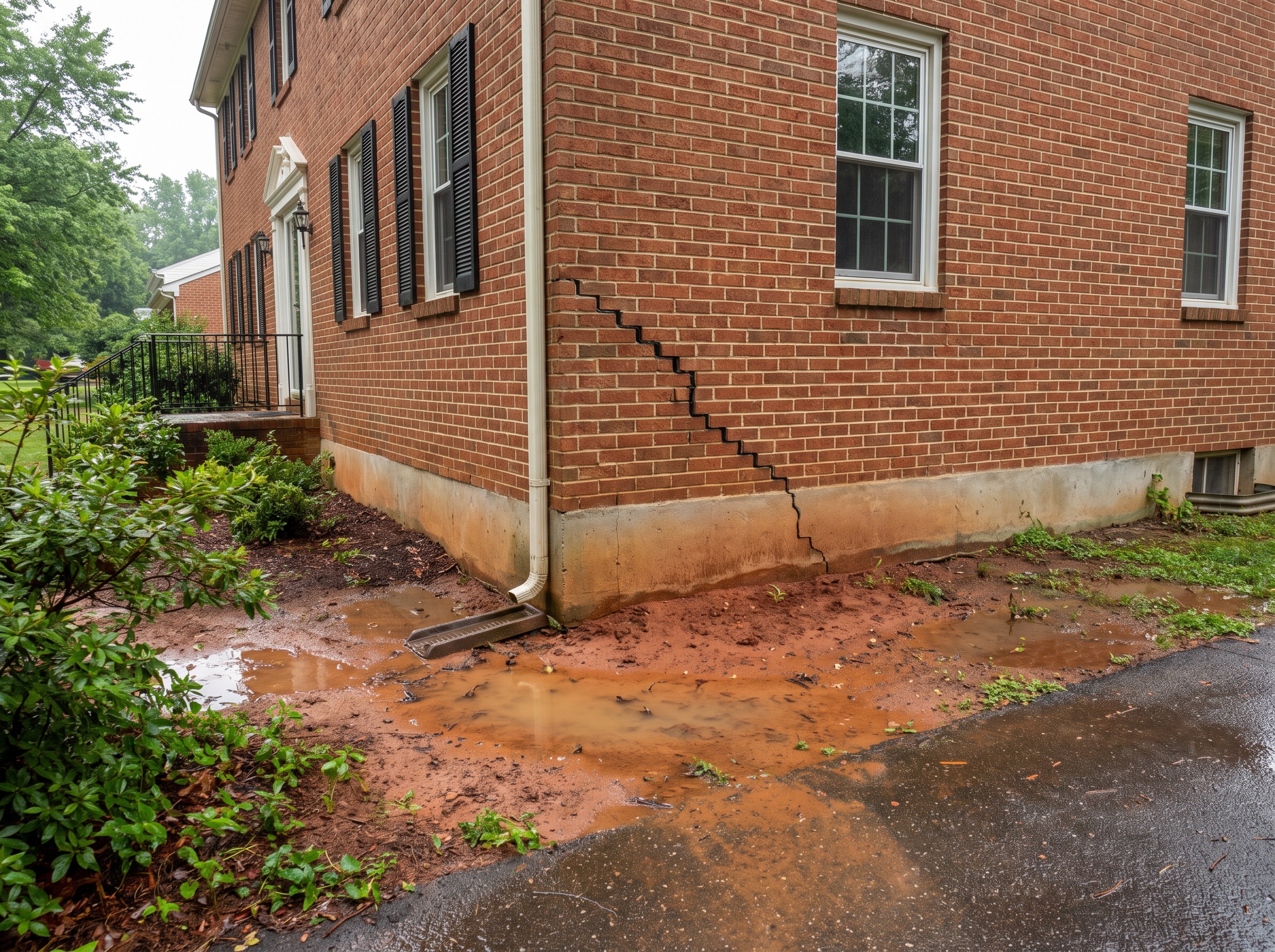
Sometimes the signs are subtle. A door starts rubbing. A small drywall crack opens near a window. A floor slopes more than it used to. Other times, the problem is harder to ignore, like stair-step cracks in brick, gaps around trim, or a foundation wall that appears to have dropped along one corner.
Foundation settlement does not always mean the entire home needs a major repair. The cause, location, and severity matter. A good inspection should separate normal aging from active movement and explain what is actually happening below the home.
Foundation Settlement Virginia Homeowners Should Understand
The topic of foundation settlement in Virginia covers a wide range of soil and structure problems. Some homes settle because the soil beneath the footing was never compacted properly. Others move because water has changed the soil over time. Older homes may have a combination of original construction conditions, drainage issues, and decades of seasonal movement.
Central Virginia has plenty of homes built on clay-heavy soil, sloped lots, mixed fill, and ground that changes behavior depending on the weather. During dry stretches, soil can shrink away from the foundation. During heavy rain, it can swell, soften, or wash out. When those changes happen unevenly around the home, one section may settle more than another.
That uneven movement is what creates many of the symptoms homeowners notice inside the house. The foundation does not have to collapse for settlement to matter. Small shifts can still affect framing, floors, walls, windows, doors, brickwork, and basement or crawl space supports.
Clay Soil and Moisture Changes
Clay soil is one of the biggest reasons foundation settlement can become a concern in Virginia. Clay holds water differently than sandy or loamy soil. When it gets wet, it can expand. When it dries out, it can shrink and pull away from the foundation.
The Virginia Department of Energy explains that expansive soils change volume with changing moisture content, and that these hazards are made worse by prolonged drought followed by soil-saturating rain. You can read more from Virginia Energy’s page on expansive soils.
That wet-dry cycle is hard on foundations because the movement is rarely perfectly even. Soil near one side of the home may stay wetter because of poor drainage or a short downspout. Soil near another section may dry faster because it gets more sun or sits near large tree roots. Over time, those differences can create stress across the foundation.
Central Virginia’s recent pattern of intense summer rainstorms broken up by hot, dry periods is a good example of why homeowners should pay attention. A hard rain after a dry spell can dump water onto soil that has pulled back, cracked, or become less stable. That does not automatically mean damage will occur, but it can reveal weak spots that were already developing.
Poor Drainage Around the Foundation
Water should move away from the home. When it collects beside the foundation, the soil around the footing can become oversaturated, soft, and unstable.
Drainage problems can come from several places. Gutters may overflow. Downspouts may dump water too close to the house. The yard may slope toward the foundation. Mulch beds may be built too high. Walkways, patios, or driveways may trap water against the wall. In some cases, the original grading around the home was never ideal.
After a heavy storm, check where the water goes. If it pools near the foundation or runs toward the house, that water is putting extra stress on the soil and the foundation. Over time, repeated saturation can contribute to settlement, basement water, crawl space moisture, and wall pressure.
Good drainage will not fix every foundation problem, but poor drainage can make many foundation problems worse.
Drought Can Also Contribute to Settlement
Heavy rain gets most of the blame because it is easier to see. Water in the basement, muddy crawl spaces, and pooling around the foundation are obvious problems. Drought damage is quieter.
During long dry periods, clay soil can shrink. As the soil loses moisture, it may pull away from the foundation and create small gaps or voids below the footing. If part of the home loses support, that section may begin to settle.
Large trees near the home can add to the issue. Tree roots draw moisture from the soil, and during dry weather that moisture loss can be more dramatic. A tree does not have to be touching the house to affect nearby soil. The concern is the moisture balance around the foundation.
This is why alternating drought and heavy rain can be such a problem. Dry soil may shrink and crack. Then a strong storm can rapidly change the moisture level around the home. That repeating cycle creates movement, and movement is what foundations dislike most.
Fill Soil and Poor Compaction
Some foundation settlement problems trace back to the way the lot was prepared before the home was built. If a foundation rests on fill soil that was not compacted properly, that soil can compress over time. As it compresses, the foundation above it may settle.
This can happen near additions, porches, garages, patios, or sections of a home built on disturbed ground. It can also happen where builders cut and filled a sloped lot to create a level building area.
Settlement from poor compaction may show up years after construction. A homeowner may not know anything was wrong until cracks, sloping floors, or sticking doors begin to appear.
Erosion and Washout
Fast-moving water can remove soil from around or beneath a foundation. This is more likely where downspouts discharge near the house, drainage channels form along the foundation, or water runs across a sloped yard during storms.
Washout can leave parts of the foundation unsupported. Once that support is gone, the structure may settle into the weakened area. Concrete slabs, porches, steps, and garage floors can also settle when soil erodes beneath them.
Homeowners may notice soil pulling away from the foundation, new gaps under concrete, sinking steps, or areas where mulch and topsoil disappear after storms. These signs are worth taking seriously, especially if they appear near cracks or sloping floors.
Warning Signs of Foundation Settlement
Foundation settlement can show up in different ways depending on the home. A basement home may show different symptoms than a crawl space home, and brick may reveal movement differently than drywall or siding.
Common signs include:
- Stair-step cracks in brick, block, or mortar joints
- Doors and windows that stick or no longer latch properly
- Floors that slope toward one side of the home
- Gaps between walls, ceilings, trim, or flooring
- Cracks above doorways or around window corners
- A chimney, porch, or exterior wall pulling away
- Cracks that widen after storms or dry spells
One small crack does not always mean the foundation is actively settling. Patterns matter. A crack that keeps widening, a cluster of symptoms in the same area, or signs that appear after major weather swings should be inspected.
Level Up Foundation Repair has more information on signs of foundation problems for homeowners who are trying to understand what they are seeing.
How Foundation Settlement Is Repaired
The right repair depends on the cause of the settlement and the structure of the home. Some foundations need stabilization with piers. Some need drainage improvements first. Some issues that look like settlement from upstairs may actually start in the crawl space framing.
For true foundation settlement, repair may involve helical piers or push piers. These systems are designed to transfer the weight of the affected part of the home to deeper, more stable supporting soil or load-bearing strata.
In other cases, the repair may involve wall anchors, carbon fiber reinforcement, crawl space support, beam repair, joist repair, or water management. That is why the inspection matters so much. The visible symptom is only one part of the story.
Level Up Foundation Repair focuses on targeted repairs. If one section of the home is moving, that does not automatically mean every wall needs the same solution. A clear diagnosis helps homeowners avoid both under-repairing the problem and paying for work they do not need.
When to Schedule a Foundation Inspection
Schedule an inspection if cracks are widening, doors and windows are getting harder to use, floors are becoming more uneven, or new symptoms appear after heavy rain or dry weather. You should also have the home checked before finishing a basement, selling the property, or buying a home with visible cracks or sloping floors.
An inspection gives you more than a repair quote. It gives you context. You should understand what moved, why it moved, whether the movement appears active, and what repair options make sense.
Level Up Foundation Repair provides free inspections and estimates for homeowners across Central and Southwest Virginia. If you are concerned about foundation settlement in Virginia, contact Level Up Foundation Repair to schedule a no-pressure inspection.
FAQ
What is the main cause of foundation settlement in Virginia?
Foundation settlement in Virginia is often connected to soil movement, moisture changes, poor drainage, erosion, or poorly compacted fill soil. Clay-heavy soil can expand when wet and shrink during dry periods, which can create uneven support below the foundation.
Can heavy rain cause foundation settlement?
Heavy rain can contribute to settlement when water collects near the foundation, softens soil, causes erosion, or increases pressure around the home. Rain is especially concerning when it follows a dry period because the soil may have already shrunk, cracked, or pulled away from the foundation.
Can drought damage a foundation?
Yes, drought can contribute to foundation movement. Dry soil, especially clay soil, can shrink and create voids or uneven support below the home. When moisture returns, the soil may swell again, creating more movement around the foundation.
How do I know if my foundation settlement needs repair?
Look for patterns, not one isolated mark. Widening cracks, sticking doors, sloping floors, gaps around trim, stair-step brick cracks, or symptoms that appear together in one area should be inspected. A foundation professional can determine whether the movement is active and what repair, if any, is needed.