Carbon Fiber Straps vs. Wall Anchors: How Do You Choose?
If a basement wall has started bowing inward, cracking horizontally, or leaning out of plumb, two repair methods you may hear about are carbon fiber straps and wall anchors. Both are designed to stabilize foundation walls that are under pressure from the surrounding soil, but they work in very different ways.
Carbon fiber reinforces the wall from the inside. Wall anchors connect the wall to stable soil farther out in the yard, creating resistance against continued inward movement and, in some situations, allowing gradual correction over time.
Choosing between carbon fiber straps vs wall anchors depends on more than the size of the crack you can see. The amount of wall movement, wall material, exterior access, soil conditions, drainage, and the repair goal all matter. A contractor should measure the wall and understand why it moved before recommending either system.
How Carbon Fiber Straps Work
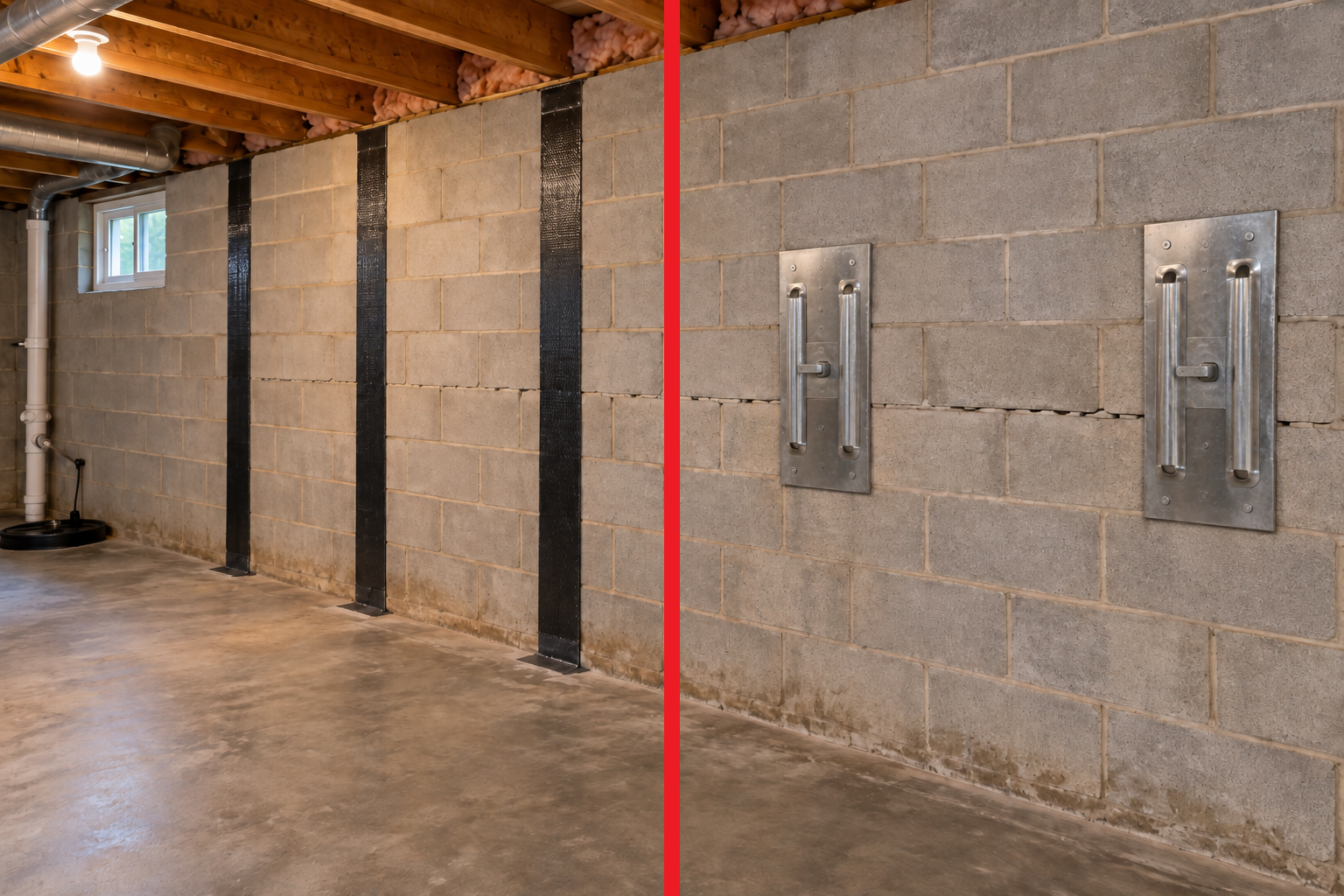
Carbon fiber foundation reinforcement uses thin, high-strength strips bonded directly to the interior face of the basement wall with structural epoxy. The straps generally run vertically from near the floor to the top of the wall, reinforcing the masonry or concrete against continued inward movement.
Because the material is thin and installed against the wall, it takes up very little basement space. There is usually no need to excavate the yard, and the finished straps can often be painted or covered later if the basement is finished.
Level Up Foundation Repair uses carbon fiber foundation repair for appropriate cracked, bowing, or leaning foundation walls. Their system is designed primarily to stabilize the wall and resist additional inward movement caused by outside soil pressure.
That last point is important: carbon fiber reinforcement generally holds the wall in its current position rather than pulling a noticeably bowed wall back toward perfectly plumb. For many walls caught early, stabilization is exactly what is needed.
How Wall Anchors Work
Wall anchors take a different approach. Instead of reinforcing only the interior face of the foundation, an anchor system ties the wall to stable soil several feet outside the home.
A steel plate is installed against the inside of the basement wall. Outside, an earth anchor is placed in stable soil away from the foundation. A steel rod connects the two, creating a system that resists the pressure pushing the wall inward.
Once installed, the anchors stabilize the wall. Depending on the system, soil conditions, and condition of the foundation, the anchors may also be tightened periodically to gradually improve the wall’s position.
When Carbon Fiber May Make Sense
Carbon fiber is often considered when wall movement has been caught relatively early and the foundation wall is still in a condition that can be reinforced effectively.
A homeowner may notice a horizontal crack across a block wall before there is an obvious bulge. Another wall may have mild inward deflection that can be measured but is difficult to see unless you’re up close. In situations like these, carbon fiber may provide the reinforcement needed to prevent the movement from progressing.
There are practical advantages, too. Installation takes place from inside the basement, so patios, sidewalks, landscaping, and utility lines outside usually remain untouched. The straps are low-profile and do not project far into the room, which can be helpful in finished or partially finished basements.
Carbon fiber may be considered when:
- The wall has limited inward movement
- The main repair goal is stabilization
- The wall is suitable for bonded reinforcement
- Exterior excavation would be difficult or disruptive
- The homeowner wants a low-profile interior repair
The condition of the wall still matters. Loose masonry, significant displacement, severe cracking, or more advanced movement may call for another approach.
When Wall Anchors May Make Sense
Wall anchors are often considered when a foundation wall has moved farther inward or when the repair plan calls for more than reinforcement alone.
Because the system connects the wall to stable soil beyond the disturbed area beside the foundation, anchors can resist continued lateral pressure while applying force back toward the exterior. In appropriate conditions, periodic adjustment may gradually reduce some of the existing bow.
That makes wall anchors useful for certain walls where meaningful deflection has already occurred. They can also provide strong long-term stabilization without requiring the wall to be completely rebuilt.
Wall anchors may be considered when:
- The wall has more noticeable inward deflection
- Gradual correction may be part of the repair goal
- There is enough exterior space for earth anchors
- The soil beyond the foundation provides suitable anchoring conditions
- The wall condition supports an anchor-based repair
The exterior space requirement is one of the biggest practical differences. A neighboring property line, driveway, porch, buried utility, retaining wall, or other obstruction can limit where an earth anchor can be installed.
Carbon Fiber Straps vs. Wall Anchors for Existing Wall Movement
If the wall is already visibly bowed, the amount of movement becomes especially important.
Carbon fiber is generally used to reinforce and stabilize. Once bonded to the wall, the straps help resist additional flexing or inward movement. They do not provide an adjustable mechanism for pulling the wall outward later.
Wall anchors provide that adjustability. After installation, an anchor system may be tightened in controlled increments when conditions allow. That does not guarantee the wall will return to its original position, and aggressive straightening can create additional damage. The realistic goal may be modest improvement combined with long-term stabilization.
A wall does not have to look perfectly straight to be structurally stable. In an older home, trying to chase cosmetic perfection can sometimes create more disruption than the existing bow warrants.
Does the Type of Foundation Wall Matter?
Yes. Poured concrete and concrete block walls behave differently under pressure, and the crack pattern can give clues about how the wall is moving.
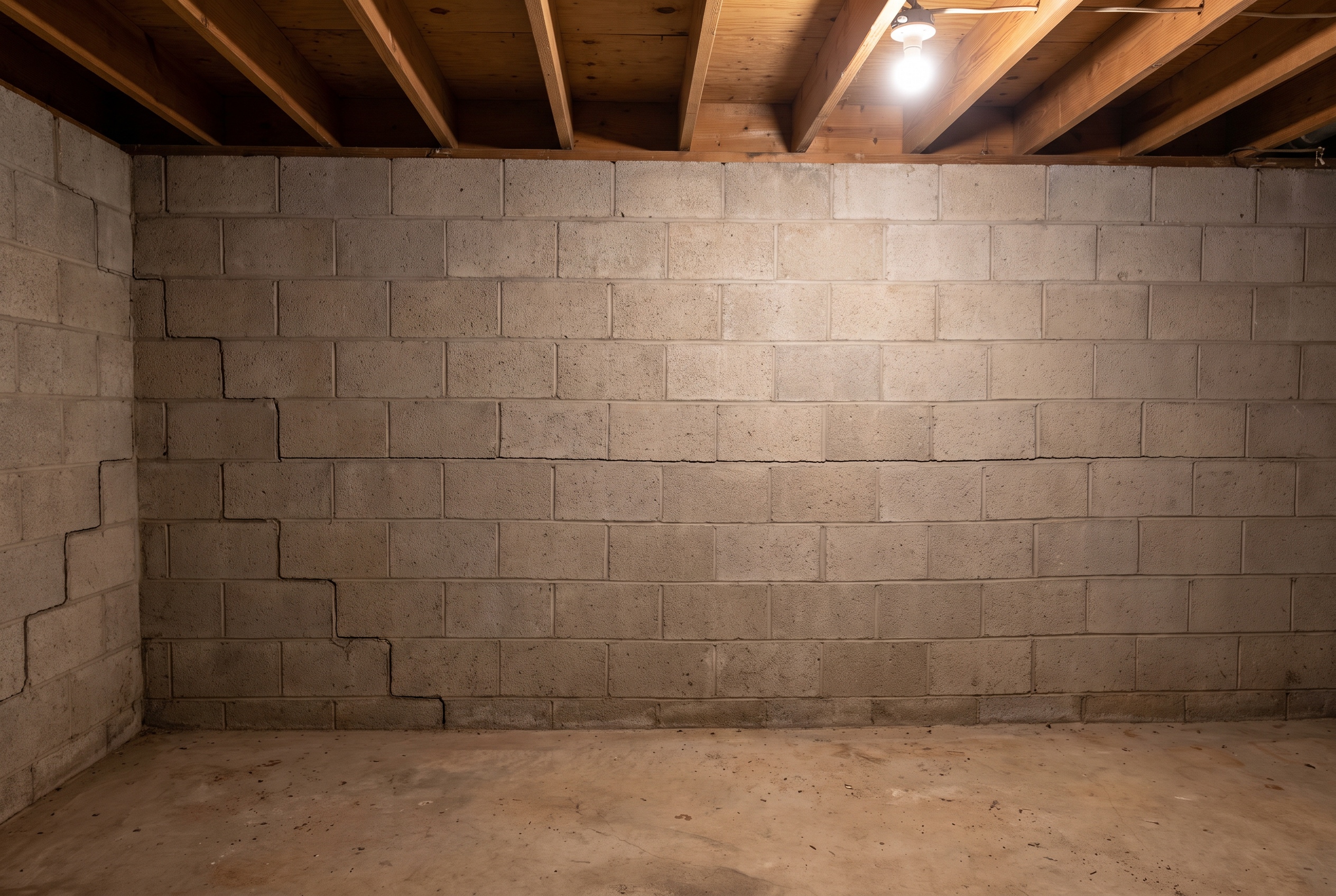
A concrete block wall may develop a long horizontal crack along a mortar joint, often near the middle portion of the wall. Stair-step cracking can appear near corners. With enough movement, individual courses of block may shift relative to one another.
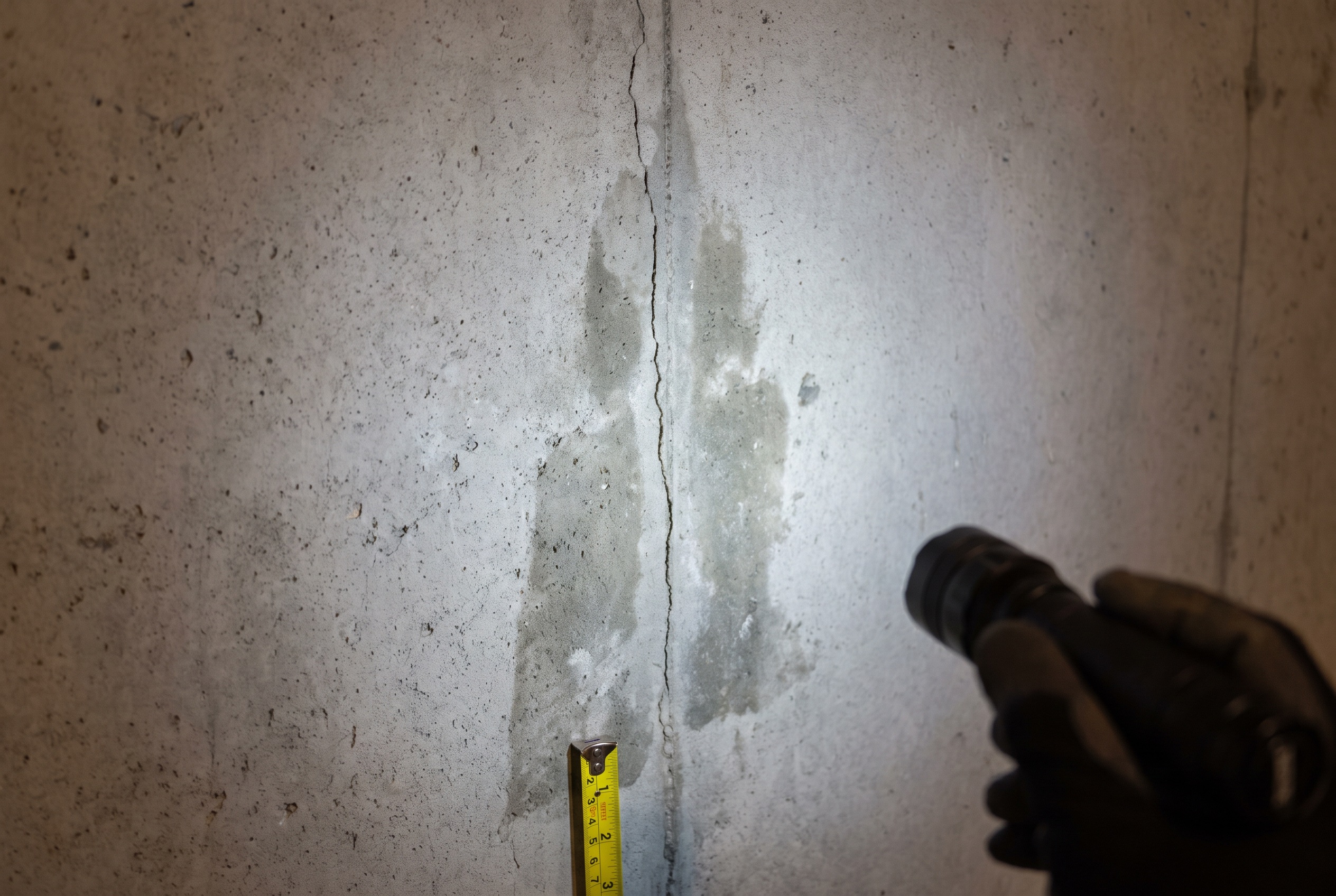
Poured concrete walls can develop horizontal, diagonal, or vertical cracks depending on the forces involved. The contractor needs to look at the entire wall, not simply the most obvious crack, because a repair system has to stabilize the underlying movement rather than the cosmetic opening alone.
Wall thickness, height, construction, reinforcement, and existing damage all factor into the repair recommendation.
Why Water and Soil Conditions Still Matter
Neither carbon fiber nor wall anchors makes drainage irrelevant.
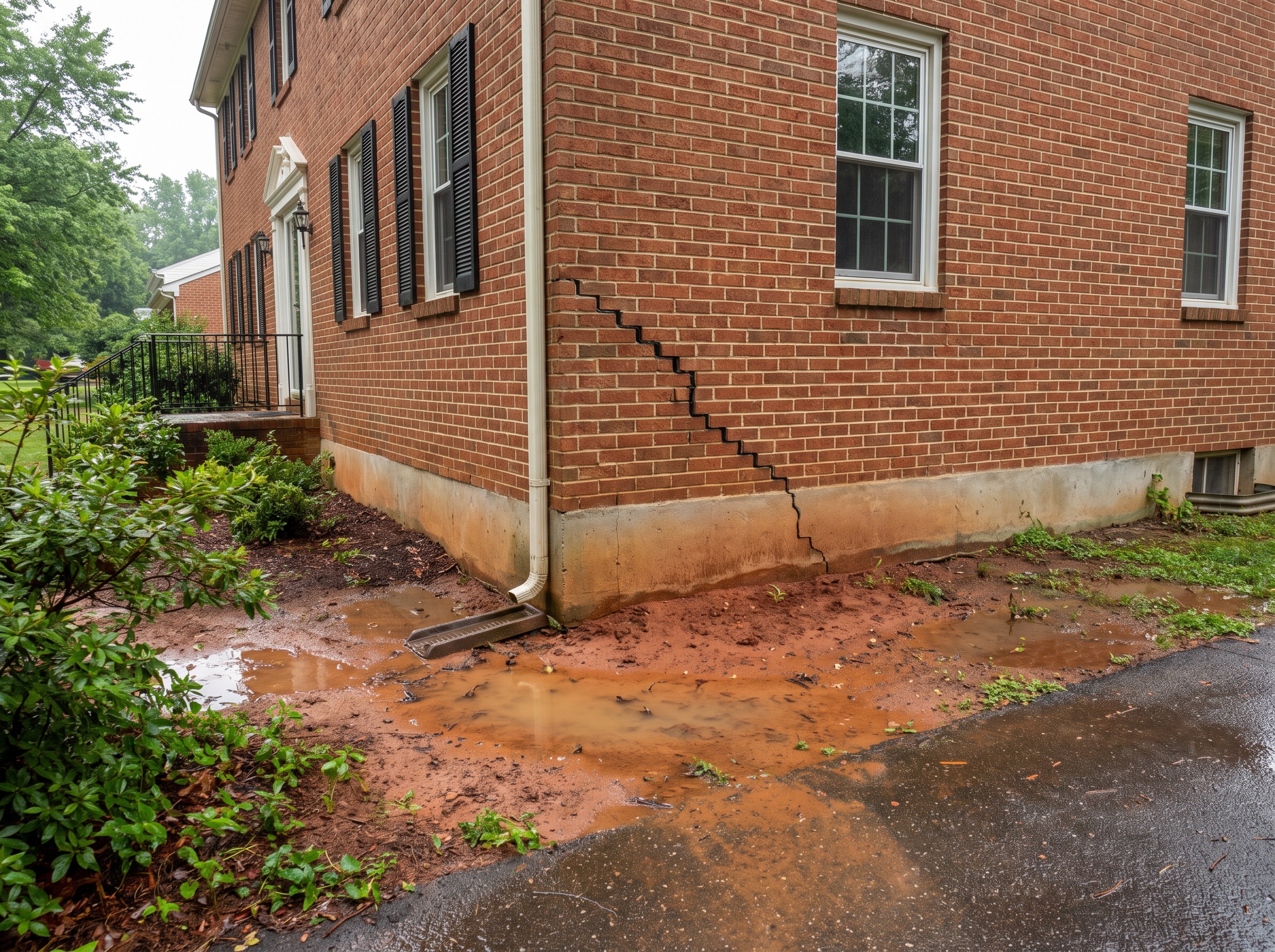
Foundation walls often begin moving because of pressure from the soil outside. When that soil becomes saturated, the load against the basement wall can increase. Expansive clay can add another layer of stress as moisture levels change through periods of rain and drought.
The Virginia Department of Energy explains that expansive soils change volume as their moisture content changes, with repeated wetting and drying capable of stressing foundations and other structures.
If poor drainage is contributing to the wall pressure, that should be addressed as part of the larger plan. Gutters may need attention. Downspouts may need to carry water farther from the home. Grading or foundation drainage may need improvement.
Structural reinforcement can stabilize the wall, while better water management helps reduce unnecessary pressure around it.
What About Steel Beams?
Carbon fiber straps and wall anchors are not the only methods available for bowing basement walls. Some situations call for steel beam reinforcement, especially when the wall condition, amount of movement, or site constraints make another system more appropriate.
This is one reason comparison charts only go so far. A homeowner may arrive expecting carbon fiber and discover that anchors make more sense. Another may assume the wall needs excavation and find that an interior reinforcement system is sufficient.
Level Up’s broader foundation repair solutions include multiple methods so the repair can be matched to the condition of the home rather than forcing every wall into the same treatment.
Which Foundation Wall Repair Costs Less?
Carbon fiber is often less labor-intensive because installation usually stays inside the basement and does not require placing anchors in the yard. Wall anchor projects involve interior hardware, exterior anchor locations, steel connecting rods, and more site-specific installation considerations.
That does not make carbon fiber the economical choice in every situation. A less expensive repair that cannot adequately stabilize the wall is poor value, while installing a more involved system on a wall that only needs reinforcement may add unnecessary cost.
An estimate should explain the amount of measured wall movement, the recommended method, and why that method fits the structure. Homeowners should be able to understand what they are paying for without decoding a miniature engineering thesis at the kitchen table.
How Level Up Chooses Between Carbon Fiber and Wall Anchors
The decision begins with measuring the wall and looking at the entire foundation. The inspection should document crack patterns, inward deflection, wall construction, drainage conditions, and any other signs of movement around the home.
Exterior access also needs to be considered if wall anchors are an option. For carbon fiber, the contractor needs to determine whether the wall and amount of movement are suitable for bonded reinforcement.
Sometimes the answer is carbon fiber. Sometimes wall anchors provide a better repair. More advanced problems may require steel reinforcement or another structural solution. There are also cracks and irregularities that do not require either system.
The goal is to use enough repair to stabilize the problem without selling homeowners structural work their house does not need.
Get the Wall Measured Before Choosing a Repair
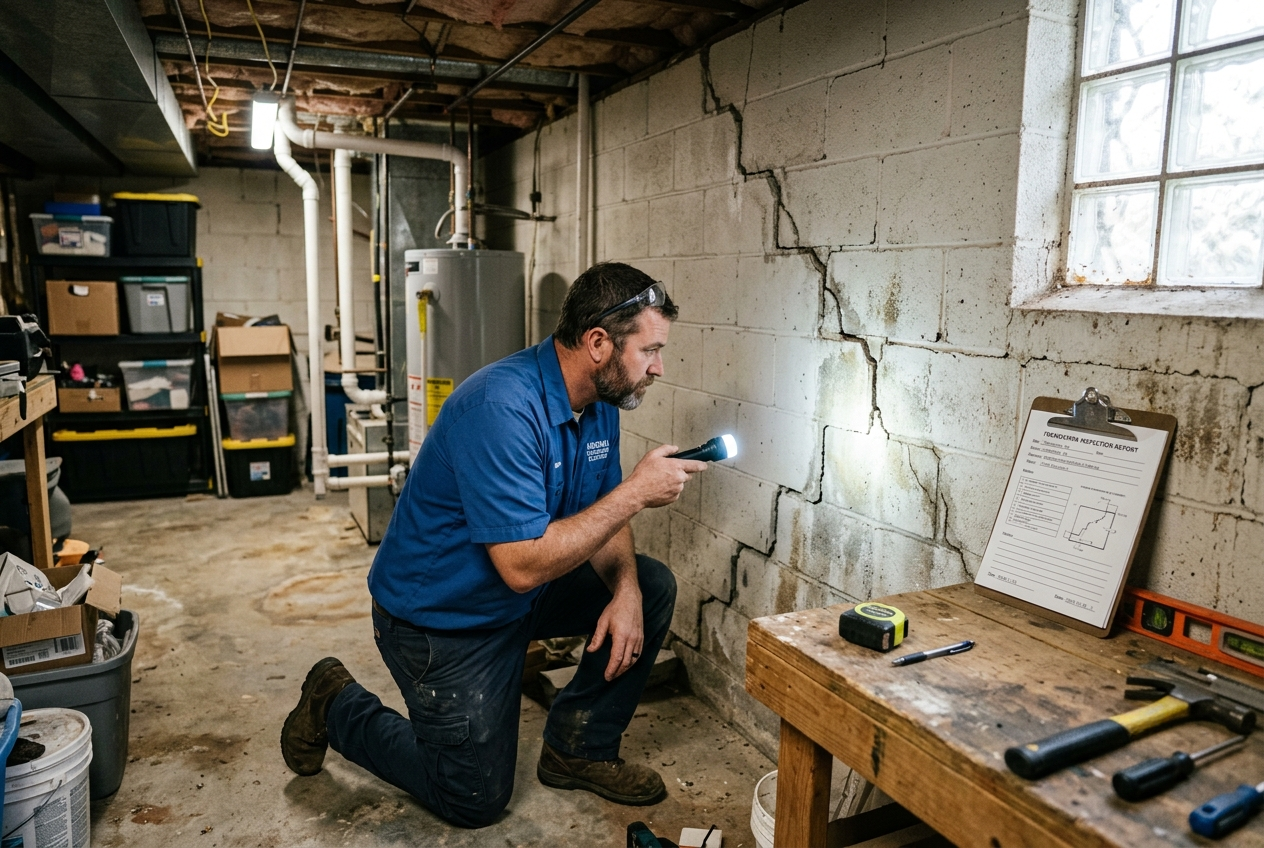
If your basement has a horizontal crack, visible inward bowing, stair-step cracking, or a wall that appears to be leaning, have the wall inspected before choosing a repair method.
Level Up Foundation Repair provides free foundation inspections throughout Central and Southwest Virginia. The team can measure the wall, identify the likely source of the movement, and explain whether carbon fiber straps, wall anchors, or another repair makes sense.
To get a clear recommendation for your home, schedule a free inspection with Level Up Foundation Repair.
FAQ
Are wall anchors better than carbon fiber straps?
Each system is suited to different conditions. Carbon fiber is commonly used to stabilize walls with limited movement, while wall anchors may be appropriate when there is more inward deflection or when gradual correction is part of the repair plan. Wall condition, exterior access, and soil conditions all affect the decision.
Can carbon fiber straps straighten a bowed basement wall?
Carbon fiber reinforcement is primarily used to stabilize the wall and resist additional inward movement. It generally does not provide an adjustable mechanism for gradually pulling an already bowed wall outward.
Can wall anchors straighten a basement wall?
Wall anchors can sometimes be adjusted over time to improve the position of a bowed wall. How much correction is possible depends on the wall, soil, amount of movement, and surrounding conditions. Stabilization remains the primary structural goal.
Do wall anchors require digging outside the house?
Yes. The earth anchors are installed in stable soil away from the foundation, so access to the yard is required. Landscaping, patios, driveways, utilities, property lines, and other obstacles may affect whether wall anchors are practical.