Appomattox, VA · Serving Central & SW Virginia

Tag: foundation cracks

  • What Happens During a Foundation Inspection? A Step-by-Step Guide for Virginia Homeowners

    What Happens During a Foundation Inspection? A Step-by-Step Guide for Virginia Homeowners

    What Happens During a Foundation Inspection?

    If you’ve noticed a new foundation crack, uneven floors, a sticking door, or a basement wall that does not look quite straight, scheduling a foundation inspection is usually the next step. But if you’ve never had one before, it might not be obvious what the contractor is actually going to do once they arrive.

    A good foundation inspection is more than a quick look at one crack. The goal is to understand how the house is behaving as a whole, determine whether there is meaningful structural movement, and identify conditions that may be contributing to the problem.

    That can involve looking inside and outside the home, documenting cracks, taking measurements, checking drainage, and inspecting the basement or crawl space. The findings should then lead to a clear explanation of whether repairs are recommended and why.

    Step 1: Start With What the Homeowner Has Noticed

    The inspection usually begins with a conversation. You may have called because a crack appeared above a doorway, a section of flooring feels lower than it used to, or water has started entering a basement after heavy rain.

    Those observations help the inspector know where to start, but they shouldn’t limit the inspection to that one spot. A crack in a living-room wall, for example, may relate to movement at the foundation several feet away. A sagging floor may point toward crawl-space framing rather than the perimeter foundation.

    If you have old photos, previous repair records, or notes showing when a crack appeared, those can be useful. Photos taken several months apart are especially helpful when trying to determine whether something is changing.

    Step 2: Look at the Exterior of the Home

    Foundation movement often leaves clues outside.

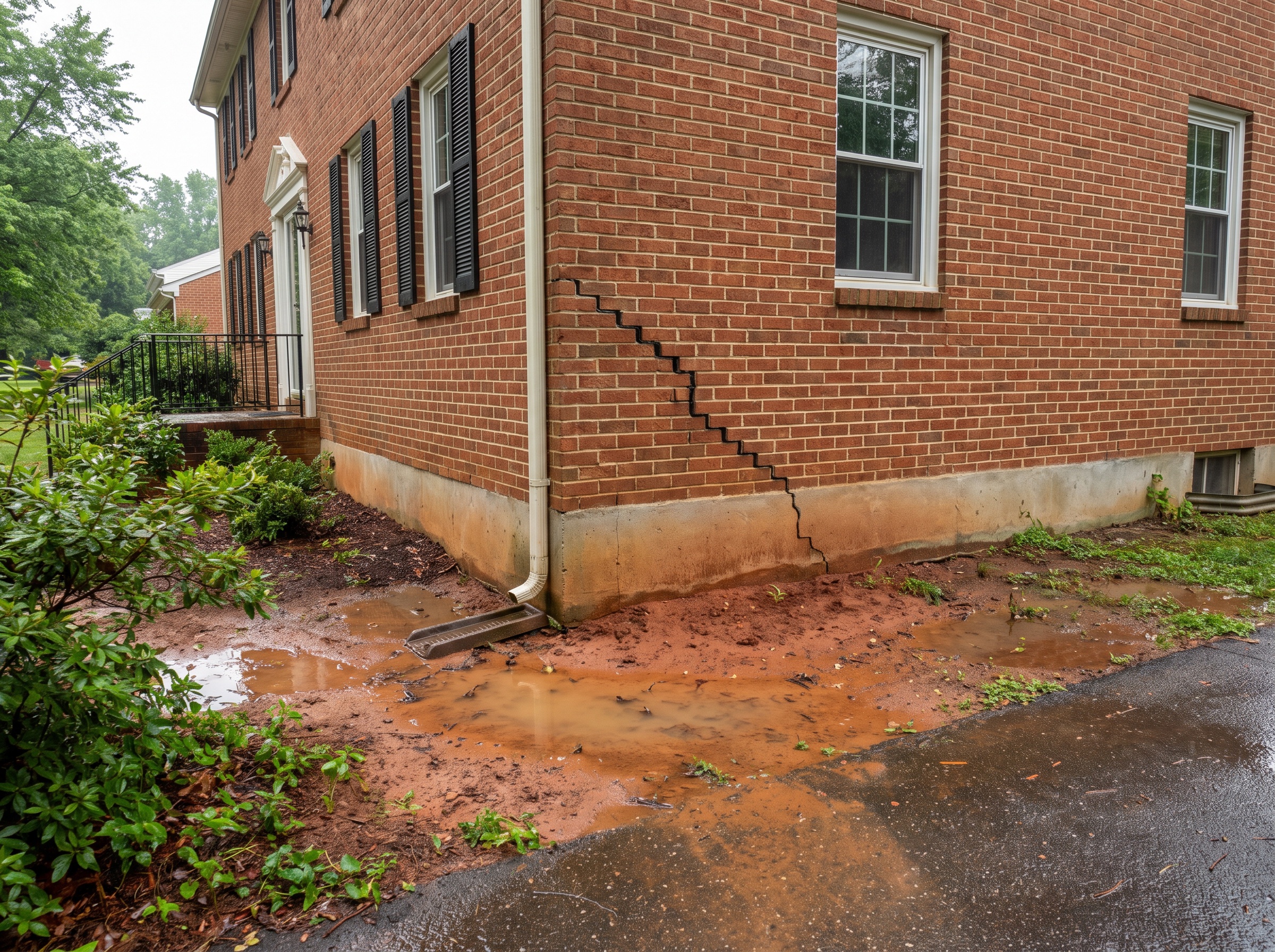
    An inspector may look for stair-step cracks in brick or block, separation around windows and doors, gaps at exterior trim, cracks in exposed foundation walls, or areas where different sections of the home appear to have shifted relative to one another.

    Drainage matters too. Gutters, downspouts, grading, nearby slopes, patios, and low areas beside the foundation can affect how much water reaches the soil around the house.

    That does not mean poor drainage automatically caused every crack. It does help explain the conditions the foundation has been dealing with over time.

    Step 3: Check the Basement or Crawl Space

    Much of the useful evidence is often underneath the home.

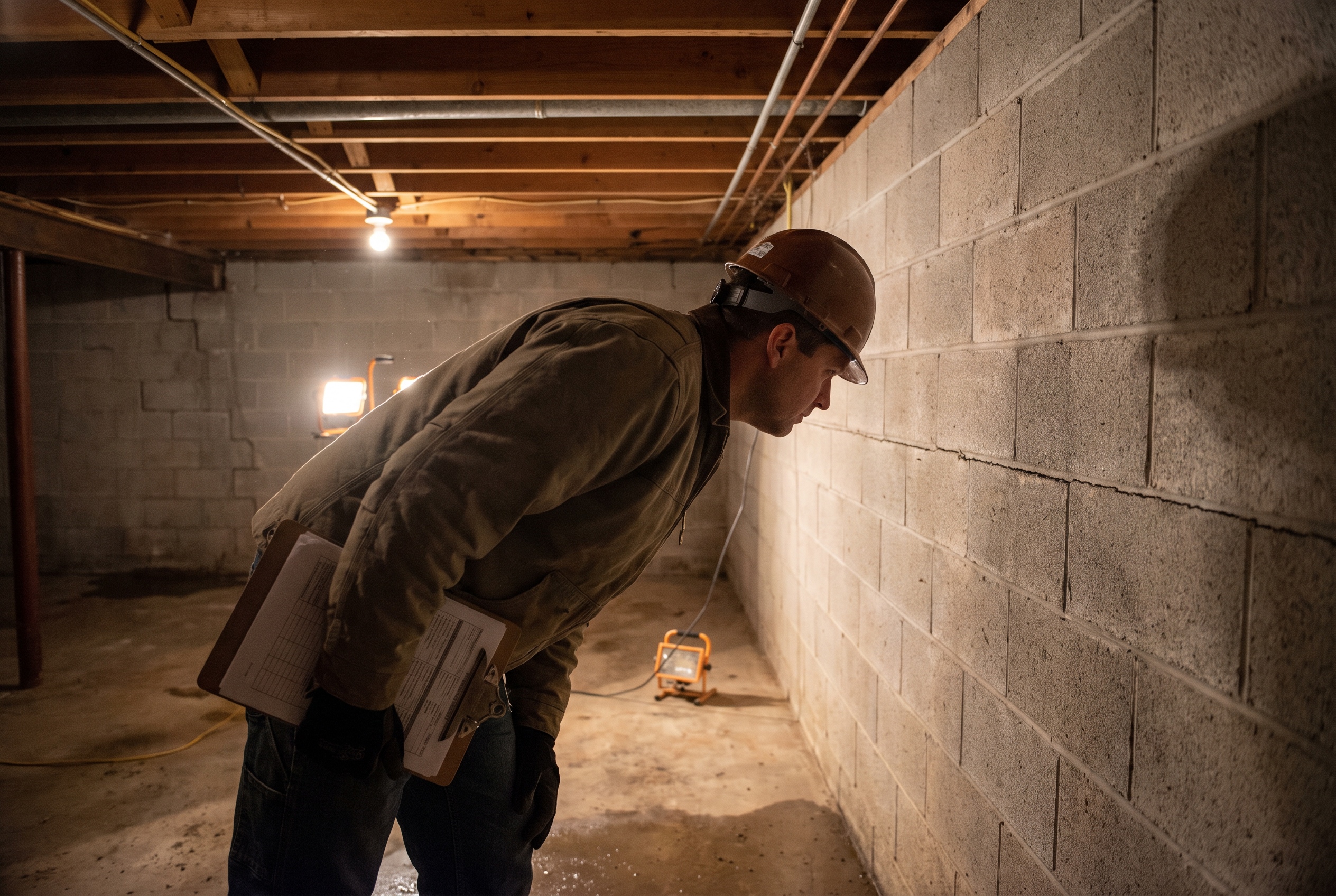
    In a basement, the inspector may check foundation walls for horizontal cracks, stair-step cracking, inward bowing, water intrusion, or displacement between blocks. In a crawl space, attention may shift to beams, floor joists, support columns, moisture conditions, and signs that the framing has sagged or weakened.

    Level Up also handles crawl space repair, so an inspection can distinguish between a perimeter-foundation problem and an issue involving the structure beneath the floors.

    This distinction matters because similar symptoms upstairs can come from different places. An uneven floor could relate to settlement at the exterior foundation, but it could also come from a weakened beam, an inadequate support, or moisture-damaged framing in the crawl space.

    Step 4: Measure the Movement

    Visual clues tell part of the story. Measurements help put those clues into context.

    Depending on the problem, an inspector may measure crack widths, wall deflection, floor elevation differences, or other signs of movement. The point is to establish exactly how much something has shifted rather than relying only on how dramatic it looks.

    A long crack can look alarming while showing very little displacement. A smaller crack may be more important if it appears alongside measurable settlement or a wall that is moving out of plumb.

    Level Up’s inspection process as includes photos and measurements so the recommendation is based on documented conditions rather than a visual guess.

    Step 5: Look for a Pattern, Not Just One Symptom

    Foundation problems tend to make more sense when several observations are considered together.

    For example, stair-step cracking on one corner of the home, a nearby sticking window, and measurable floor movement in the same area may point toward settlement. A horizontal basement-wall crack combined with inward deflection may suggest lateral soil pressure.

    By contrast, a single narrow drywall crack with no other movement may turn out to be cosmetic or something worth monitoring rather than repairing immediately.

    Level Up has a guide to common signs of foundation problems, including stair-step cracks, uneven floors, sticking doors and windows, and bowing basement walls.

    Step 6: Consider What May Be Causing the Problem

    Finding movement is only part of the inspection. The next question is why it happened.

    Foundation settlement can be influenced by soil conditions, erosion, poorly compacted fill, changes in moisture, or water repeatedly collecting near the home. Bowing basement walls may be related to pressure from wet or expansive soil outside the foundation.

    Crawl-space problems can involve a different combination of causes, including moisture, deteriorated framing, inadequate supports, or movement beneath existing columns.

    The repair should address the type of movement that is actually occurring. That is why Level Up offers several foundation repair solutions, including piers, carbon fiber reinforcement, and wall anchors rather than relying on one system for every house.

    What Happens If the Foundation Does Need Repair?

    If the inspection identifies a repairable structural problem, the contractor should explain what was found, what repair method is being recommended, and why that method fits the problem.

    A settling section of foundation may call for helical or push piers. A mildly bowing basement wall may be a candidate for carbon fiber reinforcement, while more significant wall movement may require anchors or another stabilization method.

    Crawl-space movement may instead involve support jacks, beam reinforcement, joist repair, or moisture-control work.

    The estimate should make clear where the work will be performed and what is included. Level Up’s free inspections are followed by a written, line-item estimate so homeowners can see the proposed scope before deciding whether to proceed.

    What If the Inspector Says You Do Not Need Foundation Repair?

    That is a legitimate outcome of an inspection.

    Homes move a little over time, and cracks can develop for reasons that do not require structural stabilization. Some conditions may simply need monitoring. Others may be related to drainage, waterproofing, or a non-foundation component of the house.

    A useful inspection should narrow down the problem even when the answer is not a foundation-repair project.

    If monitoring is appropriate, ask what changes would justify another inspection. Taking dated photographs and occasional measurements can make future comparisons much easier.

    Is a Contractor Foundation Inspection the Same as an Engineer’s Inspection?

    No. A foundation repair contractor evaluates the home with the goal of identifying foundation problems and determining whether the contractor’s repair systems are appropriate. A licensed professional engineer can provide an independent engineering evaluation when that level of analysis or documentation is needed.

    There are situations where a homeowner may want an engineer involved, particularly when a problem is unusually complex, an independent structural opinion is required, or engineering documents are needed for another purpose.

    For repair work, homeowners should also verify that the company they hire is properly licensed. The Virginia Department of Professional and Occupational Regulation recommends working with licensed contractors, checking license status, and getting written estimates. Its consumer guide to hiring a contractor provides additional information for Virginia homeowners.

    How Much Does a Foundation Inspection Cost?

    Inspection policies vary by company. Some contractors charge for consultations or certain types of evaluations, while others offer inspections as part of the estimating process.

    Level Up Foundation Repair provides free, no-obligation inspections. These include a walk-through, photo documentation, and a written estimate without a trip or consultation fee.

    Before scheduling with any company, it’s reasonable to ask whether the inspection has a fee and what you will receive afterward.

    How Should You Prepare for a Foundation Inspection?

    You usually don’t need to do much. Make sure the inspector can reach the areas where you have noticed problems and provide access to the basement or crawl space if one is present.

    It can also help to gather:

    • Photos showing when cracks or movement first appeared
    • Records from previous foundation or waterproofing work
    • Notes about when doors, windows, or floors started changing
    • Information about where water collects after heavy rain
    • Questions you want answered before discussing repairs

    You do not need to diagnose the house yourself before the appointment. Showing the inspector what you have noticed and when you noticed it is usually more useful than trying to determine the cause in advance.

    What Should You Know When the Inspection Is Over?

    By the end of a foundation inspection, you should have a clearer understanding of what was found, whether the condition appears to need repair, and what the recommended next step would accomplish.

    If repair is proposed, ask why that particular method was selected and whether there are reasonable alternatives. The explanation should connect the repair to the measurements and conditions observed during the inspection.

    Level Up Foundation Repair provides free foundation inspections across Central and Southwest Virginia. If you have noticed cracking, uneven floors, sticking doors, bowing walls, or another possible sign of movement, schedule a free inspection with us to have the problem documented and evaluated.

    FAQ

    How long does a foundation inspection take?

    The time required depends on the size and accessibility of the home and the problem being investigated. A straightforward crack evaluation may take less time than a home with several areas of movement, a crawl space, drainage problems, and multiple structural symptoms.

    What does a foundation inspector look for?

    An inspector may evaluate cracks, wall movement, floor elevation differences, exterior settlement signs, crawl-space framing, drainage, and other conditions that could help explain what is happening to the structure.

    Do I need to move furniture before a foundation inspection?

    Usually not, although the inspector needs reasonable access to the areas showing symptoms as well as the basement, crawl space, or exterior foundation. Moving a few stored items away from an important crack or access opening can make the inspection easier.

    Will a foundation inspection automatically lead to a repair estimate?

    Not necessarily. An inspection may determine that repairs are appropriate, that another type of work should be considered, or that the condition can simply be monitored. When Level Up recommends repair, we provide a written, line-item estimate explaining the proposed scope.
  • How Freeze-Thaw Cycles Affect Foundations in Virginia

    How Freeze-Thaw Cycles Affect Foundations in Virginia

    How Freeze-Thaw Cycles Affect Foundations in Virginia

    Winter in Virginia rarely means months of uninterrupted deep freeze. Instead, temperatures often move above and below freezing repeatedly, sometimes within the same week. That back-and-forth can be hard on concrete, masonry, soil, and other materials around a foundation when moisture is present.

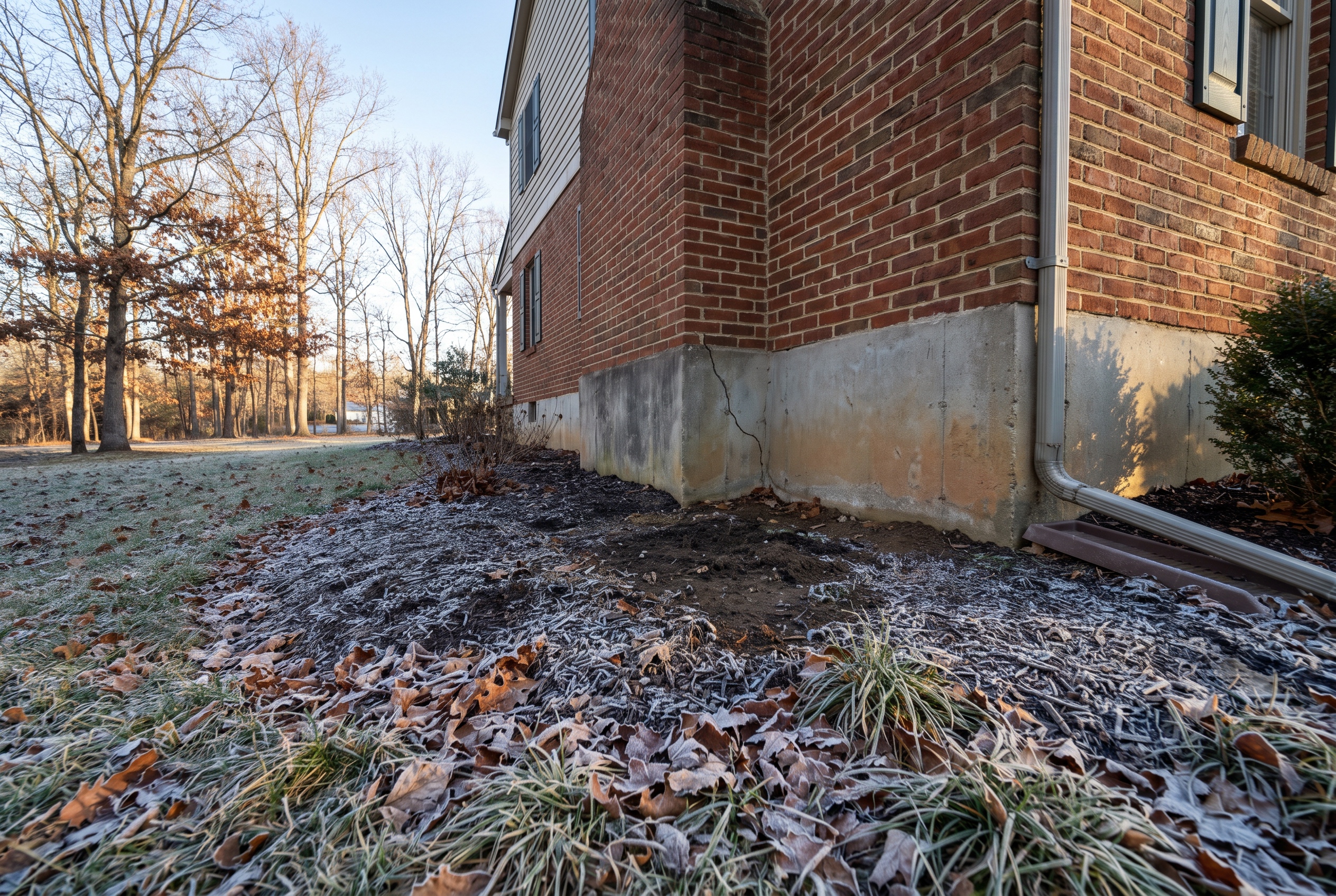
    Freeze-thaw foundation cracks do not appear simply because the temperature drops below 32 degrees; water has to be part of the equation. Moisture can enter small cracks, porous masonry, or the soil beside the foundation, and when that water freezes, it expands. Then when temperatures rise again, it thaws. Repeated cycles can gradually widen existing weaknesses or contribute to movement in soil around the home.

    For homeowners across Central and Southwest Virginia, late fall is a good time to look at drainage, existing cracks, and areas where water tends to collect before colder weather settles in.

    What Happens During a Freeze-Thaw Cycle?

    Concrete and masonry contain small pores and imperfections. Water can enter those spaces during rain, snowmelt, or prolonged damp weather. If temperatures then fall below freezing, that water can turn to ice and expand inside the material.

    One freeze usually does not transform a healthy foundation into a structural problem, but the concern is repetition. Over a winter, the same damp area may freeze and thaw many times. Existing cracks can slowly open farther, surface material can begin to flake or spall, and mortar joints may deteriorate.

    The National Park Service notes that water can enter cracks and pores in masonry, freeze, expand, and contribute to damage over repeated freeze-thaw cycles. NPS guidance also points out that cracking can result from several causes at once, including settlement, moisture changes, thermal movement, and freeze-thaw effects. You can read more in the National Park Service’s guide to common problems with brick masonry.

    That last point matters for homeowners. A crack that becomes noticeable in winter is not automatically a “freeze crack.” The colder weather may be one contributor among several.

    Frost Heave Happens in the Soil, Too

    Freeze-thaw damage can also happen outside the foundation itself.

    When moisture in certain soils freezes, ice can form beneath the ground surface and push the soil upward. This process is called frost heave. The Virginia Department of Energy explains that frost heave is most likely where moisture is available to feed ice formation in susceptible soils, especially during longer cold spells.

    You can read more about expansive soils and frost heave in Virginia.

    Frost heave tends to affect lighter structures and exterior concrete more noticeably than a properly designed deep foundation. Sidewalks, patios, steps, and other slabs can move because they sit closer to the surface, where freezing occurs more readily.

    That is one reason homeowners may notice a sidewalk edge becoming uneven or a small gap opening around exterior concrete after winter weather.

    Why Drainage Matters Before Winter

    Water is the common ingredient in most freeze-thaw problems, which makes drainage one of the most useful things a homeowner can check before freezing weather arrives.

    Start with gutters and downspouts. Roof runoff should move away from the foundation instead of collecting beside it. If downspouts terminate near the wall, heavy autumn rain can leave soil saturated going into a cold snap.

    Look at the grading as well. Low spots beside the foundation, settled walkways, and patios that slope toward the house can all direct extra moisture toward the wall.

    Below grade, foundation drainage helps manage water near the footing. Building America guidance recommends effective exterior drainage, including footing drains and proper grading, as part of managing moisture and reducing frost-related problems around foundations.

    If water regularly reaches the basement wall, Level Up also offers exterior foundation wall coatings that can be paired with drainage improvements when the inspection shows exterior water intrusion is part of the problem.

    Can Small Foundation Cracks Get Worse in Winter?

    They can, although many small cracks remain stable for years.

    A narrow crack that stays dry and does not change may simply need monitoring. A crack that allows water through is more vulnerable because moisture can repeatedly enter the opening before cold weather.

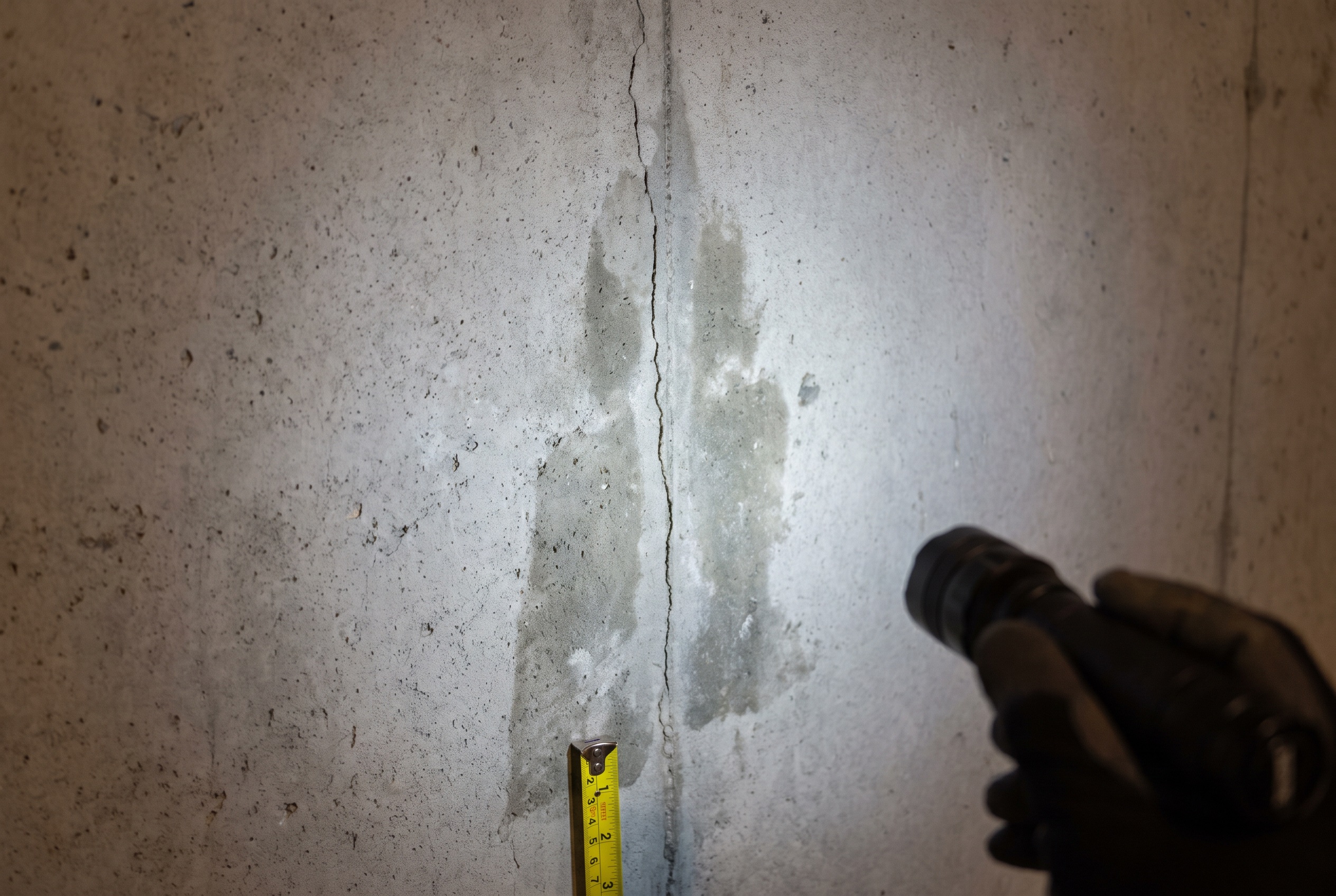
    Take a clear photo and note the date. If possible, measure the width. Check it again after periods of freezing weather and after major rain or snowmelt. You are looking for change rather than perfection.

    Cracks deserve more attention if they widen, become wet, spread into a stair-step pattern, or appear alongside other symptoms such as sticking doors, sloping floors, gaps around trim, or wall movement.

    What About Concrete Steps, Sidewalks, and Patios?

    Exterior concrete sees more direct exposure to water and freezing temperatures than most foundation walls, so winter damage is often easier to spot there.

    Surface scaling, flaking, small chips, widening joints, and uneven slabs may become more noticeable after repeated freezing and thawing. Water that gets beneath a slab can also contribute to soil movement or frost heave below it.

    If the slab itself is still in good condition but has settled, concrete leveling may be an option. If the concrete is badly cracked or deteriorated, replacement may make more sense. The condition of the slab and the soil beneath it should guide the repair.

    Does Winter Cause Foundation Settlement?

    Foundation settlement is usually more complicated than a single cold-weather event. Soil moisture changes, expansive clay, erosion, poor compaction, drainage problems, and long-term movement can all contribute.

    Winter can add another layer of stress. Moist soil may freeze and move, then soften again during a thaw. Expansive soils may already have experienced months of shrinking and swelling before colder weather arrives.

    Virginia Energy (linked above) notes that soil-related foundation damage can come from several mechanisms, including expansive soils, frost heave, and compressive soils. Conditions can vary significantly from one property to another, so visible movement should be evaluated in context.

    Level Up’s foundation repair solutions include several stabilization methods depending on whether the problem involves settlement, bowing walls, or another structural issue.

    What Should You Check Before the First Hard Freeze?

    A quick walk around the house can reveal a lot before winter weather becomes regular.

    • Clear leaves and debris from gutters
    • Make sure downspouts discharge away from the foundation
    • Look for low areas where water collects beside the house
    • Check visible foundation cracks for moisture or recent growth
    • Inspect exterior concrete for sinking, gaps, or severe cracking
    • Look inside the basement or crawl space for damp areas after rain
    • Photograph cracks you want to monitor through the winter

    You don’t need to treat every hairline crack as an emergency; the goal is to know what is already there so you can recognize meaningful changes later.

    When to Schedule a Foundation Inspection

    Schedule an inspection if a crack is widening, leaking, or appearing with other signs of movement. Horizontal cracks, stair-step cracking, visibly bowed walls, increasingly uneven floors, or doors that suddenly stop closing properly deserve a closer look regardless of the season.

    Level Up Foundation Repair provides free inspections throughout Central and Southwest Virginia from our headquarters in Appomattox. Each inspection includes a walk-through, photo documentation, and a written estimate, so homeowners can understand what is happening before deciding whether a repair is needed.

    If winter weather has you watching an existing crack or you want the foundation checked before freezing temperatures become more frequent, schedule a free inspection with Level Up Foundation Repair.

    FAQ

    Can freezing weather crack a foundation?

    Freezing weather can contribute to foundation or masonry damage when water is present in cracks, pores, or surrounding soil. Repeated freeze-thaw cycles are generally more important than one isolated freeze.

    What is frost heave?

    Frost heave occurs when moisture in susceptible soil freezes and forms ice that pushes the ground upward. It can affect exterior slabs, steps, and other structures near the surface and may contribute to movement around foundations in certain soil conditions.

    Should I repair a foundation crack before winter?

    A leaking, widening, horizontal, or stair-step crack should be evaluated rather than ignored. A small, dry, stable crack may only need monitoring. The crack pattern and any related signs of movement matter more than the season alone.

    How can I reduce freeze-thaw problems around my foundation?

    Keep water moving away from the house. Clean gutters, extend downspouts, correct obvious drainage problems, and monitor areas where water collects beside the foundation. Reducing unnecessary moisture around concrete, masonry, and soil helps limit the conditions that contribute to freeze-thaw damage.

  • Do Small Foundation Cracks Need to Be Repaired?

    Do Small Foundation Cracks Need to Be Repaired?

    Do Small Foundation Cracks Need to Be Repaired?

    Small foundation cracks are common, especially in older homes, but that does not mean they should be ignored. Some cracks are minor shrinkage cracks that can be monitored or sealed. Others are early signs of settlement, wall pressure, water intrusion, or structural movement.

    The tricky part is that crack size alone does not tell the whole story. A thin vertical crack in poured concrete may be less concerning than a stair-step crack in block or brick. A small crack that stays dry and unchanged for years is different from one that widens after every hard rain. Location, shape, direction, moisture, and movement all matter.

    For homeowners in Central and Southwest Virginia, small foundation cracks are worth taking seriously without jumping straight to panic. The right next step may be simple monitoring, a waterproofing repair, or a professional foundation inspection.

    Why Small Foundation Cracks Happen

    Foundation cracks can form for several reasons. Some start during the normal curing process after concrete is poured. As concrete dries and shrinks, small hairline cracks may appear. These cracks are often narrow, fairly straight, and do not keep growing.

    Other cracks develop because the foundation is under stress. Soil around the home may expand when wet and shrink during dry spells. Poor drainage can keep soil saturated near the foundation. Tree roots, erosion, hydrostatic pressure, and settlement can all add strain over time.

    Central Virginia weather can make these issues more noticeable. A dry stretch can cause clay-heavy soil to shrink. A week of heavy rain can saturate the same soil and add pressure against basement or crawl space walls. When those cycles repeat, small weaknesses can become visible.

    That is why a crack should be judged by what it is doing, not just how it looks on the day you notice it.

    When a Small Crack Can Usually Be Monitored

    Some small foundation cracks can be watched before any repair decision is made. This is usually more reasonable when the crack is very thin, vertical, dry, and not changing over time.

    If you decide to monitor a crack, take a clear photo with the date noted. You can also measure the width, mark the endpoints lightly with pencil, and check it every month or after major rainstorms. The goal is to see whether the crack is stable or active.

    A crack that looks the same six months from now may simply need sealing if it allows moisture or air through. A crack that grows, spreads, leaks, or appears with other symptoms deserves closer attention.

    Monitoring should be practical, not wishful thinking. If you are already seeing sloping floors, sticking doors, stair-step cracks, water seepage, or a wall that looks bowed, waiting may give the problem more time to develop.

    Cracks That Should Be Inspected

    Certain foundation cracks should be inspected even if they look small. The pattern can matter more than the width.

    Stair-step cracks in brick or block often suggest movement along mortar joints. Horizontal cracks in basement or crawl space walls can point to outside soil pressure. Diagonal cracks near corners, windows, or doors may be connected to settlement. Multiple cracks in the same area can also suggest that one section of the structure is moving differently than the rest of the home.

    You should schedule an inspection if you notice:

    • A crack that keeps getting wider or longer
    • Water coming through the crack
    • Stair-step cracking in brick, block, or masonry
    • Horizontal cracks in a basement or crawl space wall
    • Cracks paired with bowing, leaning, or bulging walls
    • Doors or windows that suddenly stick or stop latching
    • Floors that slope, sag, or feel bouncy
    • Gaps opening around trim, ceilings, walls, or flooring

    Level Up Foundation Repair has a helpful overview of signs of foundation problems for homeowners who are trying to understand whether a crack may be part of a larger pattern.

    When Small Foundation Cracks Need Repair

    Small foundation cracks may need repair when they allow water into the basement or crawl space, continue to grow, or show signs of structural movement. The repair depends on the cause.

    A dry, non-structural crack may be sealed to reduce moisture, air movement, or pest entry. A leaking crack may need a waterproofing repair, especially if water appears during heavy rain. The Building America Solution Center recommends inspecting basement walls for evidence of bulk water penetration and addressing exposed foundation wall cracks, seams, or holes before certain improvement work begins. You can read more in its basement wall inspection and preparation guidance.

    If the crack is connected to foundation settlement, the repair may involve stabilization. Depending on the home and soil conditions, that could mean helical piers, push piers, or another foundation repair method.

    If the wall is bowing inward, repair may involve carbon fiber reinforcement, wall anchors, or another wall stabilization approach. If moisture is the main issue, the better solution may be drainage, sump pump work, or basement waterproofing.

    The important point is simple: the crack is a symptom. The repair should match the cause.

    Can You Seal a Foundation Crack Yourself?

    Some homeowners seal small cracks themselves, especially if the crack is dry, narrow, and clearly non-structural. That can help with minor air or moisture pathways. It can also make the wall look cleaner.

    DIY sealing has limits. Caulk, patching compound, or surface sealant will not stop active settlement. It will not correct wall movement. It may hide changes that would otherwise help a contractor understand whether the crack is growing.

    If you do seal a small crack yourself, take photos first. Keep track of where it was, how wide it was, and whether water had ever come through. If the crack reopens, leaks, or spreads beyond the patch, that is useful information.

    A crack that is horizontal, stair-stepped, widening, wet, or paired with other movement signs should be inspected before being covered up.

    Why Water Makes Small Cracks More Important

    A tiny crack can become a bigger nuisance if it lets water into the home. Even a small amount of seepage can stain walls, dampen insulation, raise humidity, or contribute to musty odors. Water can also make soil problems worse outside the foundation.

    After heavy rain, check the basement or crawl space wall near the crack. Look for damp concrete, mineral staining, mud, peeling paint, or a musty smell. Outside, check whether gutters and downspouts are carrying water away from the home. Also look for low spots where water collects near the foundation.

    Many foundation crack problems are made worse by water management issues. Fixing drainage, extending downspouts, correcting grading, or addressing basement waterproofing concerns can help reduce pressure on the foundation and limit future damage.

    How Level Up Looks at Foundation Cracks

    A good inspection should not turn every small crack into a major repair proposal. It should identify the type of crack, look for movement, check moisture conditions, and connect the crack to the rest of the home’s symptoms.

    At Level Up Foundation Repair, the goal is to explain what is happening in plain language and recommend a targeted repair when repair is actually needed. Sometimes that means monitoring. Sometimes it means sealing or waterproofing. Sometimes it means foundation stabilization.

    Homeowners should not have to guess from a photo or choose between ignoring the crack and paying for an oversized repair. A clear inspection helps separate cosmetic cracks from cracks that need action.

    When to Call for a Free Foundation Inspection

    If you are unsure, schedule an inspection. That is especially true if the crack is changing, leaking, spreading, or appearing with other signs of movement.

    Level Up Foundation Repair provides free inspections and estimates for homeowners across Central and Southwest Virginia. If you have small foundation cracks and want to know whether they should be monitored, sealed, or repaired, contact Level Up Foundation Repair for a no-pressure inspection.

    FAQ

    Are small foundation cracks normal?

    Some small foundation cracks are common, especially hairline vertical cracks in concrete. They may come from shrinkage or normal aging. Still, cracks should be watched for changes, water seepage, or signs that they are part of a larger foundation problem.

    What kind of foundation crack is most concerning?

    Horizontal cracks, stair-step cracks, widening cracks, leaking cracks, and cracks paired with bowing walls or settlement signs are more concerning than a stable hairline crack. The pattern and movement matter as much as the size.

    Should I repair a crack if it is not leaking?

    A dry crack may not need immediate repair if it is small, stable, and not connected to structural movement. Monitoring is often reasonable. If the crack grows or appears with other symptoms, it should be inspected.

    Can small foundation cracks get worse?

    Yes. Some small cracks stay about the same for years, while others widen as soil shifts, water pressure increases, or settlement continues. Take photos, track changes, and schedule an inspection if the crack changes or new symptoms appear.

  • What Causes Foundation Settlement in Central Virginia?

    What Causes Foundation Settlement in Central Virginia?

    Why Foundation Settlement Happens in Virginia Homes

    Foundation settlement in Virginia usually starts with one simple problem: the ground under part of the home can no longer support the structure evenly.

    That can happen slowly over years or become more noticeable after a rough stretch of weather. In Central Virginia, homeowners often see the warning signs after cycles of heavy summer rain, dry heat, and another round of storms. Soil expands, shrinks, softens, washes out, and shifts. The foundation above it has to respond to all that movement.

    Sometimes the signs are subtle. A door starts rubbing. A small drywall crack opens near a window. A floor slopes more than it used to. Other times, the problem is harder to ignore, like stair-step cracks in brick, gaps around trim, or a foundation wall that appears to have dropped along one corner.

    Foundation settlement does not always mean the entire home needs a major repair. The cause, location, and severity matter. A good inspection should separate normal aging from active movement and explain what is actually happening below the home.

    Foundation Settlement Virginia Homeowners Should Understand

    The topic of foundation settlement in Virginia covers a wide range of soil and structure problems. Some homes settle because the soil beneath the footing was never compacted properly. Others move because water has changed the soil over time. Older homes may have a combination of original construction conditions, drainage issues, and decades of seasonal movement.

    Central Virginia has plenty of homes built on clay-heavy soil, sloped lots, mixed fill, and ground that changes behavior depending on the weather. During dry stretches, soil can shrink away from the foundation. During heavy rain, it can swell, soften, or wash out. When those changes happen unevenly around the home, one section may settle more than another.

    That uneven movement is what creates many of the symptoms homeowners notice inside the house. The foundation does not have to collapse for settlement to matter. Small shifts can still affect framing, floors, walls, windows, doors, brickwork, and basement or crawl space supports.

    Clay Soil and Moisture Changes

    Clay soil is one of the biggest reasons foundation settlement can become a concern in Virginia. Clay holds water differently than sandy or loamy soil. When it gets wet, it can expand. When it dries out, it can shrink and pull away from the foundation.

    The Virginia Department of Energy explains that expansive soils change volume with changing moisture content, and that these hazards are made worse by prolonged drought followed by soil-saturating rain. You can read more from Virginia Energy’s page on expansive soils.

    That wet-dry cycle is hard on foundations because the movement is rarely perfectly even. Soil near one side of the home may stay wetter because of poor drainage or a short downspout. Soil near another section may dry faster because it gets more sun or sits near large tree roots. Over time, those differences can create stress across the foundation.

    Central Virginia’s recent pattern of intense summer rainstorms broken up by hot, dry periods is a good example of why homeowners should pay attention. A hard rain after a dry spell can dump water onto soil that has pulled back, cracked, or become less stable. That does not automatically mean damage will occur, but it can reveal weak spots that were already developing.

    Poor Drainage Around the Foundation

    Water should move away from the home. When it collects beside the foundation, the soil around the footing can become oversaturated, soft, and unstable.

    Drainage problems can come from several places. Gutters may overflow. Downspouts may dump water too close to the house. The yard may slope toward the foundation. Mulch beds may be built too high. Walkways, patios, or driveways may trap water against the wall. In some cases, the original grading around the home was never ideal.

    After a heavy storm, check where the water goes. If it pools near the foundation or runs toward the house, that water is putting extra stress on the soil and the foundation. Over time, repeated saturation can contribute to settlement, basement water, crawl space moisture, and wall pressure.

    Good drainage will not fix every foundation problem, but poor drainage can make many foundation problems worse.

    Drought Can Also Contribute to Settlement

    Heavy rain gets most of the blame because it is easier to see. Water in the basement, muddy crawl spaces, and pooling around the foundation are obvious problems. Drought damage is quieter.

    During long dry periods, clay soil can shrink. As the soil loses moisture, it may pull away from the foundation and create small gaps or voids below the footing. If part of the home loses support, that section may begin to settle.

    Large trees near the home can add to the issue. Tree roots draw moisture from the soil, and during dry weather that moisture loss can be more dramatic. A tree does not have to be touching the house to affect nearby soil. The concern is the moisture balance around the foundation.

    This is why alternating drought and heavy rain can be such a problem. Dry soil may shrink and crack. Then a strong storm can rapidly change the moisture level around the home. That repeating cycle creates movement, and movement is what foundations dislike most.

    Fill Soil and Poor Compaction

    Some foundation settlement problems trace back to the way the lot was prepared before the home was built. If a foundation rests on fill soil that was not compacted properly, that soil can compress over time. As it compresses, the foundation above it may settle.

    This can happen near additions, porches, garages, patios, or sections of a home built on disturbed ground. It can also happen where builders cut and filled a sloped lot to create a level building area.

    Settlement from poor compaction may show up years after construction. A homeowner may not know anything was wrong until cracks, sloping floors, or sticking doors begin to appear.

    Erosion and Washout

    Fast-moving water can remove soil from around or beneath a foundation. This is more likely where downspouts discharge near the house, drainage channels form along the foundation, or water runs across a sloped yard during storms.

    Washout can leave parts of the foundation unsupported. Once that support is gone, the structure may settle into the weakened area. Concrete slabs, porches, steps, and garage floors can also settle when soil erodes beneath them.

    Homeowners may notice soil pulling away from the foundation, new gaps under concrete, sinking steps, or areas where mulch and topsoil disappear after storms. These signs are worth taking seriously, especially if they appear near cracks or sloping floors.

    Warning Signs of Foundation Settlement

    Foundation settlement can show up in different ways depending on the home. A basement home may show different symptoms than a crawl space home, and brick may reveal movement differently than drywall or siding.

    Common signs include:

    • Stair-step cracks in brick, block, or mortar joints
    • Doors and windows that stick or no longer latch properly
    • Floors that slope toward one side of the home
    • Gaps between walls, ceilings, trim, or flooring
    • Cracks above doorways or around window corners
    • A chimney, porch, or exterior wall pulling away
    • Cracks that widen after storms or dry spells

    One small crack does not always mean the foundation is actively settling. Patterns matter. A crack that keeps widening, a cluster of symptoms in the same area, or signs that appear after major weather swings should be inspected.

    Level Up Foundation Repair has more information on signs of foundation problems for homeowners who are trying to understand what they are seeing.

    How Foundation Settlement Is Repaired

    The right repair depends on the cause of the settlement and the structure of the home. Some foundations need stabilization with piers. Some need drainage improvements first. Some issues that look like settlement from upstairs may actually start in the crawl space framing.

    For true foundation settlement, repair may involve helical piers or push piers. These systems are designed to transfer the weight of the affected part of the home to deeper, more stable supporting soil or load-bearing strata.

    In other cases, the repair may involve wall anchors, carbon fiber reinforcement, crawl space support, beam repair, joist repair, or water management. That is why the inspection matters so much. The visible symptom is only one part of the story.

    Level Up Foundation Repair focuses on targeted repairs. If one section of the home is moving, that does not automatically mean every wall needs the same solution. A clear diagnosis helps homeowners avoid both under-repairing the problem and paying for work they do not need.

    When to Schedule a Foundation Inspection

    Schedule an inspection if cracks are widening, doors and windows are getting harder to use, floors are becoming more uneven, or new symptoms appear after heavy rain or dry weather. You should also have the home checked before finishing a basement, selling the property, or buying a home with visible cracks or sloping floors.

    An inspection gives you more than a repair quote. It gives you context. You should understand what moved, why it moved, whether the movement appears active, and what repair options make sense.

    Level Up Foundation Repair provides free inspections and estimates for homeowners across Central and Southwest Virginia. If you are concerned about foundation settlement in Virginia, contact Level Up Foundation Repair to schedule a no-pressure inspection.

    FAQ

    What is the main cause of foundation settlement in Virginia?

    Foundation settlement in Virginia is often connected to soil movement, moisture changes, poor drainage, erosion, or poorly compacted fill soil. Clay-heavy soil can expand when wet and shrink during dry periods, which can create uneven support below the foundation.

    Can heavy rain cause foundation settlement?

    Heavy rain can contribute to settlement when water collects near the foundation, softens soil, causes erosion, or increases pressure around the home. Rain is especially concerning when it follows a dry period because the soil may have already shrunk, cracked, or pulled away from the foundation.

    Can drought damage a foundation?

    Yes, drought can contribute to foundation movement. Dry soil, especially clay soil, can shrink and create voids or uneven support below the home. When moisture returns, the soil may swell again, creating more movement around the foundation.

    How do I know if my foundation settlement needs repair?

    Look for patterns, not one isolated mark. Widening cracks, sticking doors, sloping floors, gaps around trim, stair-step brick cracks, or symptoms that appear together in one area should be inspected. A foundation professional can determine whether the movement is active and what repair, if any, is needed.