
Appomattox, VA · Serving Central & SW Virginia

Tag: crawl space encapsulation

  • Do Crawl Space Dehumidifiers Really Work?

    Do Crawl Space Dehumidifiers Really Work?

    Do Crawl Space Dehumidifiers Really Work?

    Crawl space dehumidifiers can be very effective at controlling excess humidity beneath a home. In Virginia, where warm summer air regularly arrives carrying plenty of moisture, that can make a noticeable difference in a crawl space that stays damp even when there is no active leak.

    The catch is that a dehumidifier has a specific job. It removes water vapor from the air. It cannot stop rainwater from flowing into the crawl space, repair a plumbing leak, replace a missing vapor barrier, or correct drainage problems outside the foundation.

    That distinction matters. A crawl space with high humidity may benefit tremendously from dehumidification. A crawl space with two inches of standing water needs the water problem addressed first.

    The best results usually come when a dehumidifier is part of a larger moisture-control plan based on what is actually happening under the home.

    What Does a Crawl Space Dehumidifier Do?

    A crawl space dehumidifier pulls humid air into the unit, cools it so moisture condenses out of the air, collects or drains that water, and sends drier air back into the space. Over time, the unit helps maintain a more stable relative humidity level.

    Unlike a small portable dehumidifier designed for a bedroom or finished basement, crawl-space units are built to handle larger moisture loads and operate for long periods in less forgiving conditions. Proper sizing matters because a unit that is too small may run constantly without bringing humidity under control.

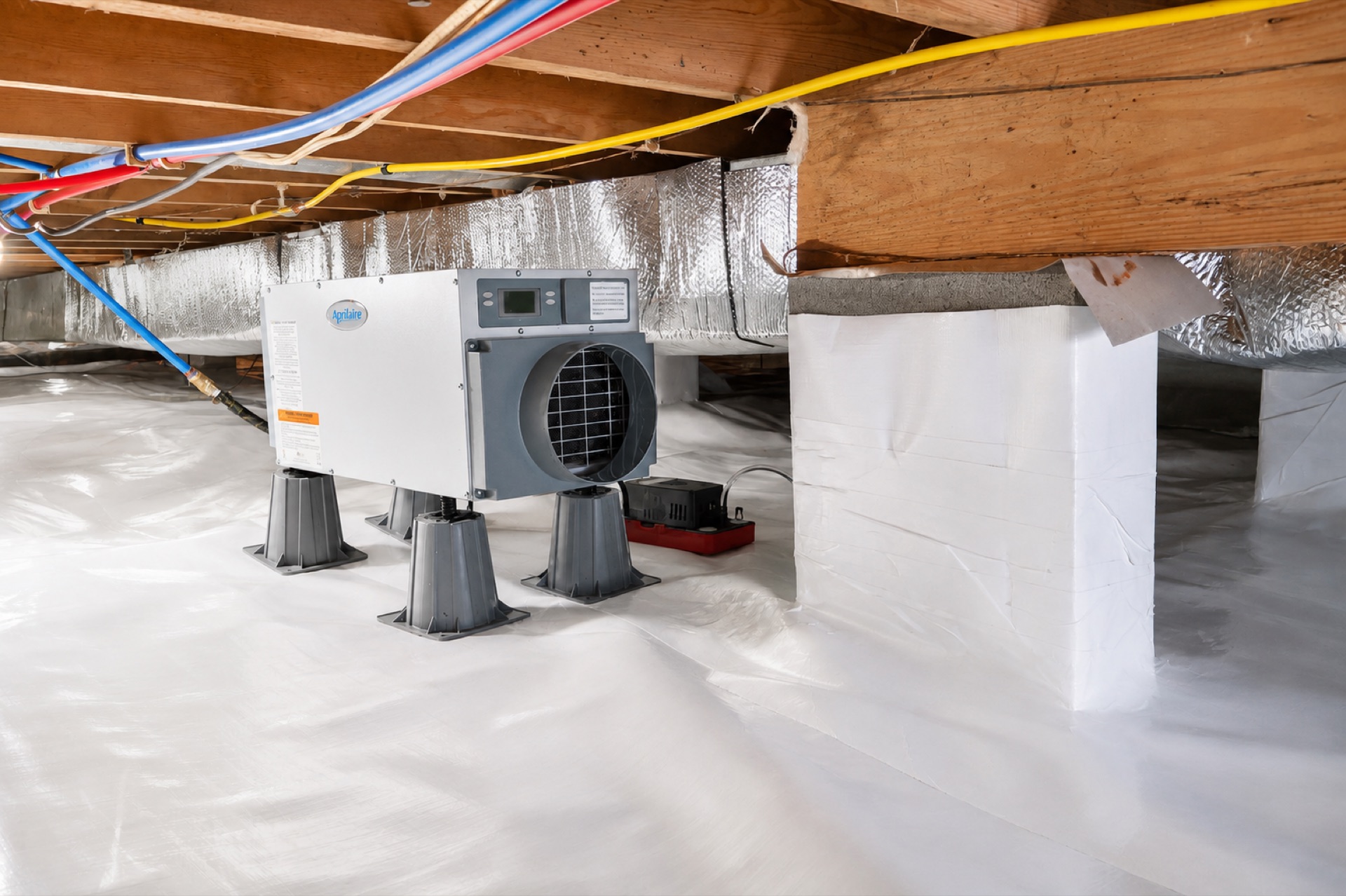
    Level Up Foundation Repair installs crawl space dehumidifiers as part of moisture-control systems for Central and Southwest Virginia homes. Level Up currently uses commercial-grade AprilAire units and sizes its crawl-space systems to maintain humidity below 55% year-round.

    Why Crawl Space Humidity Gets So High in Virginia

    Virginia summers provide plenty of opportunities for crawl spaces to become humid. Warm outdoor air contains water vapor, and traditional foundation vents can allow that air to move freely underneath the home.

    Once humid air enters a cooler crawl space, relative humidity rises. Pipes, ductwork, floor framing, and other surfaces may be cooler still, which can lead to condensation when conditions are right.

    Ground moisture adds another source. Bare soil continually releases water vapor into the crawl space, especially after periods of rain. Poor grading, short downspouts, plumbing leaks, and drainage problems can raise the moisture load further.

    The EPA recommends keeping indoor relative humidity below 60% and ideally between 30% and 50% where practical. Its moisture and mold guidance also recommends acting when condensation appears on walls, pipes, or other surfaces because condensation can signal excessive humidity.

    When a Crawl Space Dehumidifier Works Best

    Dehumidifiers tend to work best in crawl spaces where the major sources of liquid water and outside humidity have already been controlled.

    A sealed or encapsulated crawl space is a good example. A vapor barrier reduces moisture coming from the ground, sealed vents limit humid outdoor air, and drainage handles water entering during storms. The dehumidifier can then manage the moisture that remains in the air instead of fighting a constant flood of new humidity.

    This is one reason Level Up treats dehumidification as one component of a complete crawl space moisture-control system. Their encapsulation process may include a sealed vapor barrier, vent sealing, drainage, structural repairs, and dehumidification depending on what the inspection finds.

    A dehumidifier may also be useful in a crawl space that is generally dry but consistently measures high humidity during warm weather. Not every home needs the same combination of repairs.

    When a Dehumidifier Will Not Solve the Problem

    If water is pooling on the crawl space floor, start there. A dehumidifier can remove some of the moisture that eventually evaporates from standing water, but asking it to keep up with an active water source is inefficient and often ineffective.

    Water may enter through the foundation, collect because of poor exterior grading, or flow in during heavy storms. In those situations, a crawl space drainage system may be needed to collect the water and direct it to a sump pump.

    The same principle applies to plumbing leaks. A dripping supply line or damaged drain should be repaired rather than handled indirectly with dehumidification.

    Exposed soil can also keep feeding moisture into the air. If a crawl space has a dirt floor and no effective vapor barrier, the dehumidifier may spend much of its time removing moisture that continuously rises from the ground.

    In each case, the source should be controlled before expecting a dehumidifier to carry the entire moisture load.

    Can a Crawl Space Dehumidifier Help With Sweating Ductwork?

    Yes, sometimes. Sweating ductwork is often connected to humidity.

    During cooling season, HVAC ducts carrying cold air can be considerably cooler than the crawl space around them. If the surrounding air is humid enough, water vapor can condense on the cold duct surface, much like moisture collecting on the outside of a cold glass.

    Lowering crawl space humidity can reduce the conditions that allow that condensation to form. This is particularly helpful in an encapsulated crawl space where humid outside air and ground vapor are already being controlled.

    Duct condensation should still be inspected rather than automatically blamed on humidity. Damaged or missing duct insulation, air leaks, drainage problems, and HVAC issues can also contribute. If ductwork is dripping heavily, the repair may involve more than adding a dehumidifier.

    What About Musty Crawl Space Odors?

    A persistent musty odor often becomes more noticeable during humid weather. Lowering humidity can make the crawl space less hospitable to the damp conditions associated with those smells, but the source still matters.

    If insulation, wood, cardboard, or other material has remained wet, simply drying the air may not eliminate the odor immediately. Existing mold-like growth, decayed wood, standing water, or contaminated insulation may need to be addressed separately.

    Moisture control is the important first step. EPA guidance emphasizes controlling the moisture source when dealing with mold and dampness rather than relying on surface treatment alone.

    Do You Need Encapsulation With a Dehumidifier?

    Not in every case, although the two are often used together.

    A dehumidifier controls moisture in the air. Crawl space encapsulation reduces the amount of moisture entering the space in the first place by sealing the ground and limiting outside air infiltration.

    In a crawl space with bare earth and open vents, a dehumidifier may have to work much harder. Humid outside air can continue entering through the vents while moisture rises from the soil below. During a muggy Virginia summer, that is a substantial and recurring moisture load.

    Once the crawl space is properly sealed, the dehumidifier has a much more manageable job. It can maintain the environment instead of continuously chasing new moisture.

    Some relatively dry crawl spaces may need only a vapor barrier and targeted humidity control. Others require full encapsulation, drainage, and dehumidification. The condition of the space should determine the scope of work.

    How Do You Know If Your Crawl Space Is Too Humid?

    A hygrometer provides the clearest answer. It measures relative humidity and is inexpensive enough for homeowners who want to keep an eye on conditions themselves.

    There are also visible clues. Condensation on pipes or ducts, damp insulation, musty smells, moisture on the vapor barrier, or wood that stays damp can all suggest that humidity is running too high.

    Other signs may appear upstairs. Floors can feel damp or uncomfortable, odors may drift into living areas, and prolonged moisture beneath the home can contribute to deterioration of joists and beams.

    During a professional crawl space inspection, humidity readings should be considered alongside drainage, wood condition, ground moisture, ventilation, and any visible structural problems. One humidity number is useful, but the surrounding conditions explain why that number is high.

    How Big of a Crawl Space Dehumidifier Do You Need?

    Dehumidifiers are not best selected by grabbing the largest unit available. Capacity should match the crawl space size, moisture load, air leakage, drainage conditions, and level of encapsulation.

    An oversized or poorly configured system can be unnecessary, while an undersized unit may run nearly nonstop and struggle to reach the target humidity. Drainage from the unit also needs somewhere reliable to go so homeowners are not emptying a collection bucket underneath the house every few days.

    Level Up installs commercial-grade crawl space dehumidifiers with automatic drainage and sizes the equipment to the conditions found during inspection. That allows the unit to work as part of the system rather than as a standalone appliance dropped into a damp crawl space.

    When to Have Crawl Space Humidity Checked

    If your crawl space smells musty, the ductwork sweats, insulation stays damp, or humidity seems to spike every summer, an inspection can help identify where the moisture is coming from.

    The answer may be a dehumidifier. It may also involve a vapor barrier, sealing foundation vents, correcting drainage, repairing a leak, or installing a more complete encapsulation system.

    Level Up Foundation Repair provides free crawl space inspections throughout Central and Southwest Virginia. If you are considering a crawl space dehumidifier, schedule a free inspection to find out what is driving the humidity and which moisture control measures make sense for the home.

    FAQ

    Do crawl space dehumidifiers really work?

    Yes. A properly sized crawl space dehumidifier can effectively lower relative humidity and help maintain drier conditions. It works best after standing water, leaks, ground moisture, and excessive outside-air infiltration have been addressed.

    What humidity should a crawl space be?

    EPA guidance recommends keeping indoor relative humidity below 60%, ideally between 30% and 50% where practical. Level Up sizes its crawl space dehumidification systems to maintain humidity below 55% year-round.

    Will a crawl space dehumidifier stop condensation on HVAC ducts?

    Lower humidity can reduce condensation on cold ductwork, particularly when excess crawl space humidity is the main cause. Damaged duct insulation, air leaks, or HVAC problems can also cause sweating, so persistent condensation should be inspected.

    Can I use a regular household dehumidifier in my crawl space?

    A portable household unit may remove some moisture, but crawl spaces can require greater capacity, automatic drainage, and equipment designed for continuous operation in that environment. The size and conditions of the crawl space should determine the equipment.
  • Crawl Space Vents in Virginia: Open, Closed, or Sealed?

    Crawl Space Vents in Virginia: Open, Closed, or Sealed?

    Should Crawl Space Vents Be Open or Closed?

    For decades, crawl space vents were installed with a straightforward idea behind them: let outdoor air pass underneath the house so moisture can escape. Many homeowners were even taught to open the vents in warm weather and close them once winter arrived.

    In Virginia, that advice deserves a closer look.

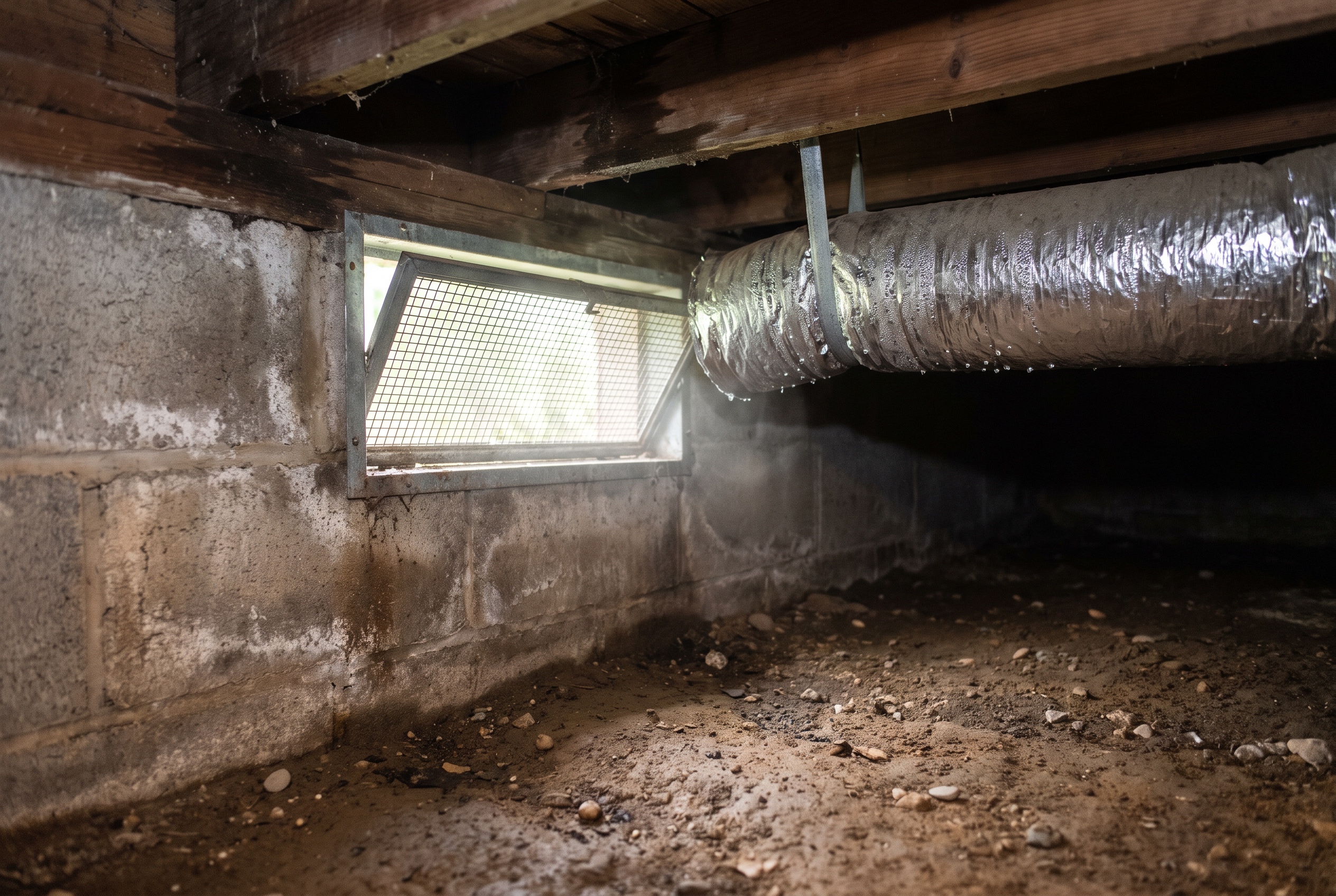
    Our summers are warm and humid, which means the air entering an open crawl space can carry a significant amount of moisture with it. When that humid air reaches cooler floor framing, ductwork, pipes, or other surfaces below the home, moisture can accumulate instead of drying the space out.

    That does not mean every homeowner should walk outside this afternoon and permanently plug every crawl space vent. Open, closed, and fully sealed crawl spaces are different systems. How the vents should be handled depends on how the rest of the crawl space manages ground moisture, drainage, humidity, insulation, and air movement.

    Why Crawl Space Vents Were Used in the First Place

    Traditional vented crawl spaces rely on outdoor air to provide ventilation underneath the floor system. The idea is that air enters through vents on one side, moves across the crawl space, and carries moisture out through vents on the other side.

    That approach sounds reasonable when the incoming air is relatively dry. During a muggy Central Virginia summer, however, outdoor air may already contain more moisture than the crawl space needs.

    The U.S. Department of Energy’s research on unvented and conditioned crawl spaces found that conventional vents can contribute to moisture problems in humid climates because outdoor air is often more humid than the air underneath the house. Building America research has also found lower humidity in properly designed closed crawl spaces compared with conventional vented designs.

    For Virginia homeowners, this helps explain a frustrating situation: the vents may be wide open, yet the crawl space still smells musty, insulation is sagging, and condensation is showing up on pipes or ductwork.

    What Happens When Humid Summer Air Enters a Crawl Space?

    Warm air can hold a great deal of water vapor. When humid outside air enters the cooler environment underneath a home, the relative humidity rises. If surfaces are cool enough, condensation may form.

    Wood framing is especially important to watch because prolonged elevated moisture can contribute to fungal growth and decay. Insulation may also absorb moisture, sag, or fall. Metal ductwork and plumbing lines can develop visible condensation even when there is no plumbing leak nearby.

    Meanwhile, moisture may already be entering from below. A dirt crawl space floor continuously releases water vapor unless there is an effective ground vapor barrier. Rainwater can add another source through poor grading, short downspouts, foundation leaks, or inadequate drainage.

    Opening the vents does very little to solve those sources. During humid weather, it can add another one.

    Should You Close Crawl Space Vents in the Summer?

    Closing vents can reduce the amount of humid outside air entering a crawl space, but simply shutting the vent doors on a conventional crawl space is not the same thing as creating a sealed crawl space.

    If there is exposed soil underneath the house, standing water after storms, high humidity, or another unresolved moisture source, closing the vents alone can leave that moisture trapped in the space. The U.S. Department of Energy specifically recommends addressing bulk water and drainage problems before converting a vented crawl space to an unvented one.

    There are also building and mechanical considerations. Certain combustion appliances, insulation arrangements, and local code requirements can affect how a crawl space should be converted. DOE guidance cautions that retrofitting a vented crawl space involves more than covering the openings and should account for the rest of the building system.

    So if your crawl space has always been vented, permanently closing the vents should be part of a moisture-control plan rather than an isolated weekend project.

    What Does It Mean to Seal Crawl Space Vents?

    In an encapsulated crawl space, the exterior vents are typically sealed as part of a broader effort to separate the space from outdoor humidity and ground moisture.

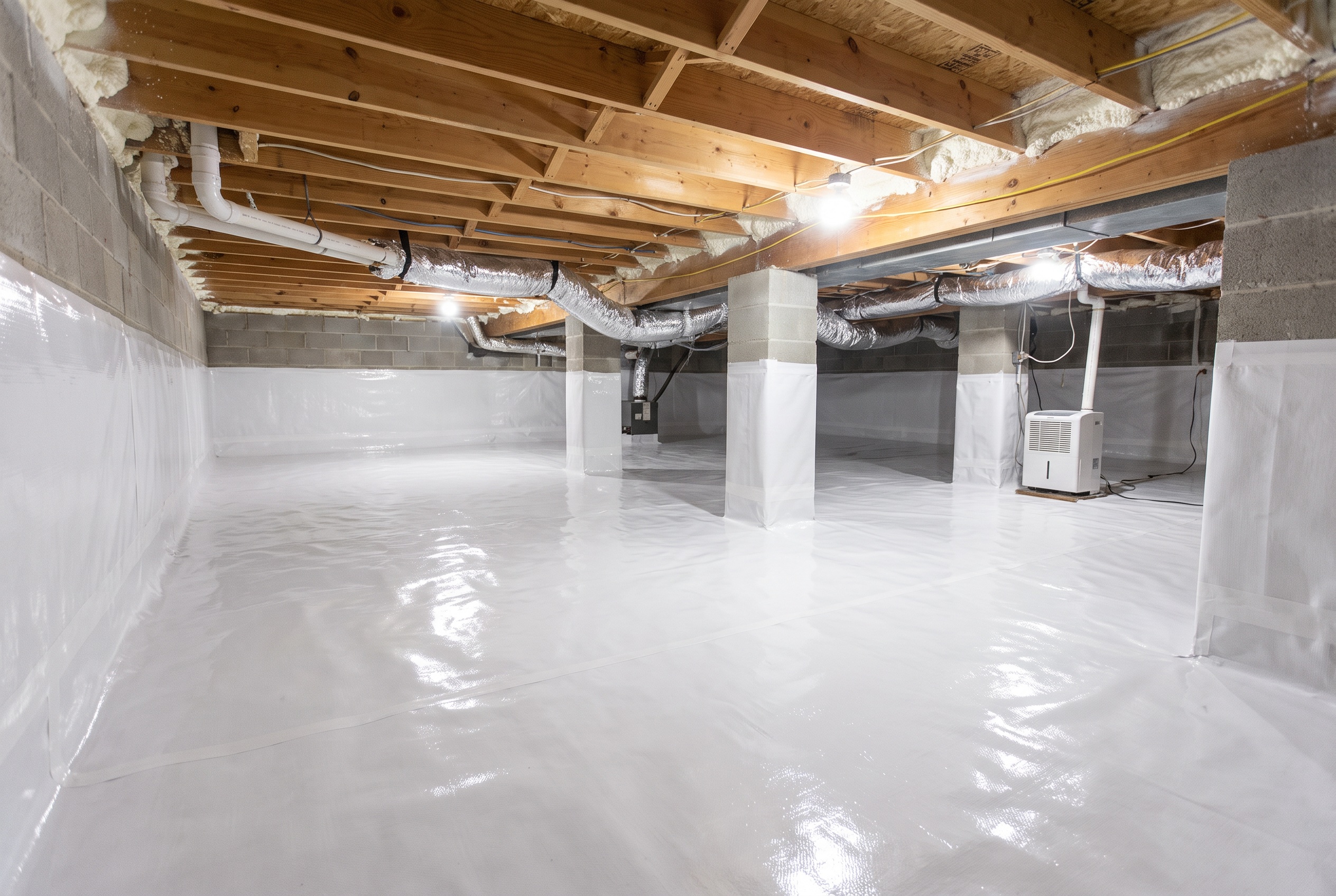
    A professional encapsulation system generally includes a heavy-duty vapor barrier across the ground, sealed seams and penetrations, treatment of foundation-wall openings, and humidity control. Drainage may be needed if water enters the crawl space during storms, while a dehumidifier can help maintain stable humidity once the space has been sealed.

    Level Up’s crawl space encapsulation services approach the space as a complete moisture system, including ground vapor, ventilation, water intrusion, and humidity rather than treating the vents in isolation.

    When properly designed, a sealed crawl space becomes a more controlled environment beneath the home. Outdoor summer air is no longer freely flowing through the foundation walls, and ground moisture is separated from the crawl space by the vapor barrier.

    What About Crawl Space Vents in Winter?

    Closing crawl space vents during cold weather has long been common advice because it can reduce cold air moving beneath the floors and help protect plumbing from freezing temperatures. That seasonal routine does not address what happens during the other half of the year, though.

    Opening the vents again in spring can bring humid air right back into the space. For a conventional vented crawl space that otherwise stays dry, seasonal vent operation may have been part of how the home was originally designed. Homes that repeatedly struggle with moisture deserve a more thorough evaluation.

    A properly sealed and moisture-controlled crawl space generally does not depend on homeowners opening and closing exterior vents as the seasons change.

    Signs Your Vented Crawl Space May Have a Moisture Problem

    You do not necessarily need to crawl underneath the house to notice that ventilation is not keeping the space dry. Problems often leave clues upstairs or near the crawl space entrance.

    • Musty odors that become stronger during warm weather
    • Condensation on pipes or HVAC ductwork
    • Falling, damp, or discolored insulation
    • Visible moisture or standing water beneath the home
    • Soft, sagging, or bouncy floors
    • High indoor humidity even while the air conditioner is running
    • Visible fungal growth or deterioration on wood framing

    If liquid water is present, drainage should be addressed before the crawl space is sealed. Level Up offers crawl space drainage solutions designed to collect water entering the space and direct it toward a sump system for removal.

    Open, Closed, or Sealed: Which Makes Sense for Your Home?

    There is no useful one-word answer for every Virginia crawl space.

    An older vented crawl space that stays genuinely dry and has no humidity or structural problems may not need a major conversion simply because vents exist. A home with recurring summer humidity, ground moisture, condensation, mold-like growth, or damaged framing deserves a closer look at how the entire crawl space is functioning.

    In those homes, sealing the vents as part of a complete encapsulation system may make much more sense than relying on outdoor air for drying. Before sealing anything, water intrusion, drainage, wood condition, ground vapor, mechanical equipment, and humidity should all be evaluated.

    That diagnostic step helps avoid two expensive mistakes: paying for a full system a relatively dry crawl space does not need, or making a damp crawl space worse by sealing vent openings without addressing the moisture already inside.

    Have Your Crawl Space Checked Before Sealing the Vents

    If you are unsure what to do with your crawl space vents, an inspection can tell you much more than the vent position alone. Humidity readings, ground conditions, framing moisture, drainage, insulation, and signs of water intrusion help show whether the space is functioning properly or needs a different moisture-control strategy.

    Level Up Foundation Repair provides free crawl space inspections for homeowners throughout Central and Southwest Virginia. If your crawl space stays damp despite having vents, or you are considering sealing it, schedule a free inspection to find out what makes sense for the home.

    FAQ

    Should crawl space vents be open in summer?

    Open vents can introduce humid outdoor air into a crawl space during Virginia summers. In a conventional vented crawl space, simply closing them may create other moisture problems if the space has exposed soil, water intrusion, or inadequate humidity control. The crawl space should be evaluated as a complete system.

    Should crawl space vents be closed in winter?

    Homeowners have traditionally closed vents in winter to limit cold air beneath the home and reduce the risk of frozen pipes. A properly sealed crawl space generally keeps its exterior vents sealed year-round rather than relying on seasonal opening and closing.

    Can I just seal my crawl space vents myself?

    Covering the vent openings is physically simple, but converting a vented crawl space into a sealed one requires more planning. Ground moisture, drainage, humidity, insulation, combustion equipment, and local code requirements may all need to be considered first.

    Does sealing crawl space vents stop moisture?

    Sealing vents can stop humid outside air from entering, but it does not stop moisture coming from exposed soil, leaks, drainage problems, or groundwater. Effective moisture control may also require a vapor barrier, drainage, dehumidification, or full crawl space encapsulation.

  • Is Crawl Space Encapsulation Worth It in Virginia?

    Is Crawl Space Encapsulation Worth It in Virginia?

    Is Crawl Space Encapsulation Worth It?

    If your crawl space smells musty, feels damp, has falling insulation, or leaves your home feeling humid, you may be asking: is crawl space encapsulation worth it? For many Virginia homeowners, the answer is yes, but only when the work matches the actual condition of the crawl space.

    Crawl space encapsulation is designed to help control moisture below the home. A typical encapsulation project may include a sealed vapor barrier, air sealing, sealed vents or openings, drainage improvements, and a dehumidifier when needed. The goal is to create a cleaner, drier, more controlled crawl space instead of leaving bare soil, humid air, and outside moisture to keep causing problems.

    In Central and Southwest Virginia, crawl spaces deal with a rough mix of humidity, heavy rain, clay soil, and seasonal temperature swings. A vented crawl space that seemed fine years ago may now be damp through much of the summer. Encapsulation can help, but it should not be treated as a plastic liner rolled over every problem. The crawl space has to be inspected first.

    Why Crawl Spaces Get Damp in Virginia

    Many crawl spaces were built with vents because the old idea was simple: let outside air move through the space and dry it out. In a humid Virginia summer, that idea can backfire. Warm, damp outdoor air enters the crawl space, reaches cooler surfaces, and can contribute to condensation on wood, ductwork, pipes, and insulation.

    Moisture can also rise from bare soil. If the crawl space floor is exposed earth, ground moisture can evaporate into the air below the home. Add poor grading, short downspouts, plumbing leaks, or standing water after storms, and the crawl space can stay damp for long periods.

    The EPA explains that controlling moisture is key to preventing mold growth in homes, and damp materials should be dried quickly when moisture or water problems are found. You can read more in the EPA’s guide to mold, moisture, and your home.

    Moisture control matters because crawl spaces are tied to the rest of the house. Air movement, flooring, insulation, ductwork, and wood framing can all be affected by conditions below the first floor.

    What Crawl Space Encapsulation Usually Includes

    Crawl space encapsulation is more than laying plastic on the ground. A proper system is built to reduce moisture entry and help control the environment below the home.

    Depending on the crawl space, encapsulation may include:

    • A durable vapor barrier sealed across the crawl space floor
    • Sealing around piers, seams, vents, and foundation walls
    • Drainage improvements if water enters during storms
    • A crawl space dehumidifier to manage humidity
    • Insulation improvements where appropriate
    • Repairs to damaged joists, beams, or supports before sealing the space

    ENERGY STAR notes that basement and crawl space air sealing and insulation can improve comfort and durability when done correctly, and it references the need for a continuous sealed groundcover of vapor-resistant material in crawl spaces. Its basement and crawl space sealing guidance is a helpful resource for understanding why the details matter.

    Level Up Foundation Repair provides crawl space solutions for moisture control, encapsulation, and related crawl space concerns across Central and Southwest Virginia.

    When Encapsulation Is Worth It

    Crawl space encapsulation is often worth considering when moisture is causing ongoing problems or creating conditions that can damage the home over time.

    Good candidates often have musty odors, damp insulation, condensation, visible vapor or humidity problems, muddy soil, standing water after rain, wood moisture concerns, or high indoor humidity that seems to come from below the home. Encapsulation can also make sense before replacing insulation, repairing joists, or improving comfort in rooms over a crawl space.

    For some homeowners, the value is practical. A sealed crawl space can be easier to inspect, less inviting to damp air, and better protected from ground moisture. It can also help support other repairs. If a crew repairs joists or installs new support systems in a damp crawl space without addressing moisture, the same environment that contributed to the original problem may still be there.

    Encapsulation is especially worth a closer look if the crawl space has already needed repeated fixes. Replacing wet insulation every few years or treating musty smells without controlling the moisture source is usually a sign that the bigger issue has not been handled.

    When Encapsulation May Not Be Enough by Itself

    Encapsulation works best when the crawl space is prepared correctly. If there is standing water, drainage should be addressed. If the wood framing is damaged, structural repair may be needed. If the foundation has settlement or wall movement, sealing the crawl space will not correct that movement.

    Some crawl spaces need drainage before encapsulation. Water that enters during storms should have a controlled path to a drain, sump, or discharge point where appropriate. Covering a wet crawl space without managing liquid water can trap problems instead of solving them.

    Other homes need structural work first. Sagging floors, weakened beams, rotted joists, or failing supports should be evaluated before the space is sealed. Level Up offers crawl space structural repair for homes with damaged framing, support issues, or sagging floors.

    There are also cases where a basic vapor barrier may be enough for now. If the crawl space is dry, the framing is healthy, and the homeowner simply wants to reduce ground moisture, a full encapsulation system may not be necessary. That is why inspection matters.

    Vapor Barrier vs. Full Crawl Space Encapsulation

    A vapor barrier is one part of encapsulation. It usually refers to the liner installed across the crawl space floor to reduce moisture coming up from the ground.

    Full encapsulation goes further. It may include sealing the liner at seams and walls, closing or sealing vents, managing humidity, improving drainage, and conditioning the crawl space with a dehumidifier. The difference is in the level of control.

    A simple vapor barrier may help in a relatively dry crawl space with minor ground moisture. A full encapsulation system may be better for a crawl space with humid air, recurring dampness, musty odors, or conditions that affect insulation and wood framing.

    Homeowners sometimes compare these options by price alone, but the better question is what the crawl space needs. Paying for full encapsulation when the space only needs a smaller moisture-control step may be unnecessary. Choosing a thin ground cover when the space needs drainage and dehumidification can leave the real problem untouched.

    What Affects Crawl Space Encapsulation Cost?

    Crawl space encapsulation cost depends on the size of the crawl space, access, existing moisture problems, drainage needs, material quality, dehumidifier needs, and whether structural repairs are required first.

    A clean, dry, easy-to-access crawl space will usually be simpler than one with standing water, damaged insulation, wood rot, tight clearance, debris, or sagging floors. The amount of sealing also matters. Piers, seams, vents, foundation walls, plumbing penetrations, and irregular layouts can all add labor.

    Cost should be discussed after an inspection. Without seeing the crawl space, it is easy to overestimate or underestimate the job. Level Up’s approach is to diagnose the actual problem and recommend a repair that fits the home rather than pushing every homeowner toward the same package.

    Signs You Should Have Your Crawl Space Inspected

    You do not need to crawl through mud with a flashlight to know something may be wrong. Many crawl space problems show up upstairs first.

    Schedule an inspection if you notice:

    • Musty odors inside the home
    • Floors that feel soft, bouncy, or uneven
    • High indoor humidity during summer
    • Cold floors in winter
    • Falling or damp insulation
    • Standing water or muddy soil in the crawl space
    • Condensation on ductwork, pipes, or framing
    • Visible wood rot, mold-like growth, or pest activity

    These signs can have different causes, so the inspection should look at moisture, drainage, framing, insulation, ventilation, and the foundation. The best repair plan may be encapsulation, structural repair, drainage, dehumidification, or some combination of those services.

    Get a Crawl Space Recommendation That Fits the Home

    Crawl space encapsulation can be a smart investment for many Virginia homeowners, especially when moisture is affecting comfort, air quality concerns, insulation, or the wood structure below the home. It makes the most sense when the crawl space has been inspected and the repair plan addresses the real source of the problem.

    Level Up Foundation Repair provides free inspections and estimates across Central and Southwest Virginia. If you are wondering whether crawl space encapsulation is worth it for your home, contact Level Up Foundation Repair for a no-pressure inspection and a clear explanation of your options.

    FAQ

    Is crawl space encapsulation worth it in Virginia?

    Crawl space encapsulation is often worth it in Virginia homes with moisture problems, musty odors, humid air, falling insulation, or wood framing concerns. The value depends on the condition of the crawl space and whether the system includes the right combination of sealing, drainage, and humidity control.

    Does crawl space encapsulation stop mold?

    Encapsulation helps control moisture, which is important because mold needs moisture to grow. It should not be described as a guaranteed mold cure. Existing growth, wet materials, leaks, standing water, and humidity problems may need to be addressed as part of the repair plan.

    Do I need a dehumidifier with crawl space encapsulation?

    Many encapsulated crawl spaces benefit from a dehumidifier, especially in humid Virginia conditions. Whether one is needed depends on humidity levels, air sealing, drainage, crawl space size, and how the space behaves after sealing.

    Can I just install a vapor barrier instead of encapsulating the crawl space?

    Sometimes a vapor barrier is enough for minor ground moisture in an otherwise dry crawl space. If the crawl space has recurring dampness, odors, standing water, humid air, or damaged insulation, a fuller encapsulation or moisture-control plan may be needed.