 Free Estimate
 Call Now


-
SEOTeam
-
 Blog
Blog
-
 0 Comments
-
 March 18, 2026
Why Your Lynchburg Crawl Space Smells Musty (and How To Fix It Permanently)
If you are noticing a damp, earthy odor in your home, there is a good chance it is coming from crawl space moisture buildup. At Level Up Foundation Repair, we see this all the time in Lynchburg, Charlottesville, Roanoke and across Central and Southwest Virginia because our climate, seasonal humidity and heavy rains create the perfect conditions for moisture to build up under a house.
That moisture does not just stay down there. It can affect the air you breathe, the comfort of your home and even the strength of the wood supporting your floors. Mold and mildew thrive in damp environments, feeding on organic material like wood framing, insulation, cardboard storage boxes, or debris. It’s a warning sign that should not be ignored.
We, at Level Up Foundation Repair, have observed and found that most crawl space odors in Central Virginia came from four specific, preventable issues:
Humid outside air gets trapped inside
Many crawl spaces have vents or gaps that let outside air move in. In humid months, that warm air hits cooler crawl space surfaces like ducts, pipes, joists and foundation walls. The result is condensation. Over time, that repeated “sweating” creates the damp environment that leads to odors and mold growth.
Ground moisture rises into the crawl space
If your crawl space has exposed soil or a thin, damaged liner, moisture vapor can continuously rise from the ground. Even when there is no standing water, that ongoing vapor adds humidity to the space and fuels musty smells.
Water gets in and does not drain out
Heavy rainfall, poor exterior drainage, plumbing leaks or groundwater seepage can leave puddles or wet insulation behind. The longer moisture lingers, the faster odor and mold issues develop. This is especially common when gutters overflow, downspouts dump water too close to the foundation or the yard slopes toward the home.
Mold, pests and debris make the odor worse
Once moisture is present, mold can spread quickly and release that familiar musty smell. Damp crawl spaces also attract pests, and droppings or nesting materials can create additional odor. Leftover debris in the crawl space can trap moisture and become another “food source” for mold.
Why That Musty Crawl Space Smell Rises Into Your Living Space
Crawl space air does not stay in the crawl space. Two common paths bring it into your home:
- The stack effect: Warm air rises and pulls air upward through the house, which can draw the crawl space air into living areas.
- Ductwork and gaps: Ducts, plumbing penetrations and small openings can allow odors and airborne particles to move upstairs.
That means the smell isn’t just annoying. It can be a sign your indoor air quality is being impacted.
When Musty Air Means Damage: 5 Signs Your Foundation Is in Trouble
One issue on its own doesn’t necessarily mean you have crawl space moisture problems. However, if you notice several, it is time to take action.
- Persistent musty odor that never fully goes away
- Higher indoor humidity or frequent condensation on windows
- Allergy or asthma symptoms that seem worse at home
- Visible staining, mildew or mold on walls, insulation or wood
- Increased pest activity
- Bouncy floors, soft spots or sagging areas above the crawl space
How To Get Rid of the Musty Smell in a Crawl Space? Start With Moisture Control
Odor sprays and DIY “fresheners” may mask the smell for a short time, but they do not remove the cause. A lasting fix comes from controlling moisture and preventing it from coming back.
Here is what a permanent approach typically includes:
1) Stop humid air and water from getting in
Sealing vents and closing gaps helps keep outdoor humidity from cycling into the crawl space. Just as important, improve exterior drainage by keeping gutters clear, extending downspouts away from the home and making sure water flows away from the foundation.
2) Block ground moisture with the right barrier
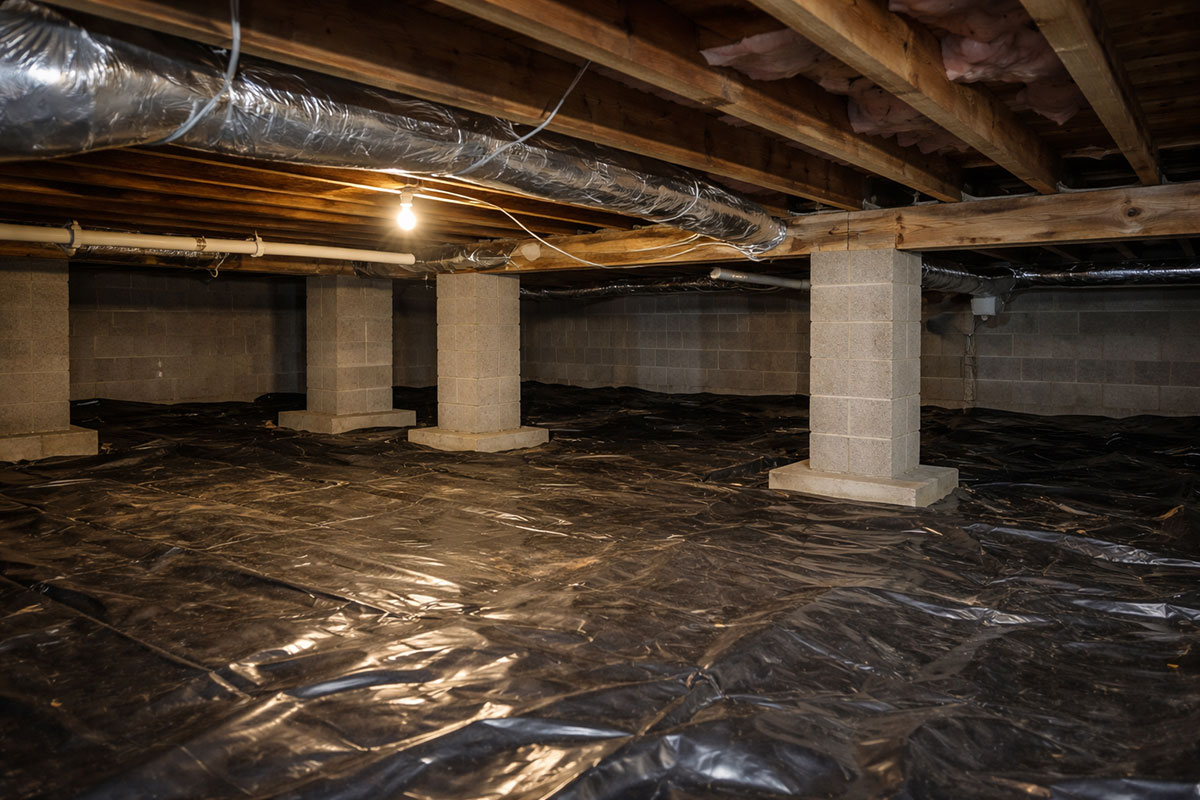
A properly installed crawl space vapor barrier helps reduce moisture vapor coming up from the soil. It is not just about laying plastic down. The seams need to be secured and the coverage needs to be complete enough to prevent moisture from slipping through.
3) Manage bulk water the right way
If the crawl space has a history of puddling or seepage, a drainage solution may be needed to collect water and move it out. In many cases, that includes a sump pump system designed for the crawl space.
4) Control humidity year-round
Even after sealing and drainage improvements, humidity can remain high. A crawl space dehumidifier can keep moisture levels in check so mold is less likely to return and the air stays cleaner.
Why a Professional Inspection is the Only Way To Clear the Air
Crawl spaces can be tricky because multiple sources often contribute to the same problem. What appears to be “just a smell” could be condensation from vents, groundwater seepage, a plumbing leak — or all three. The fastest way to get a real answer is a professional assessment so you can fix the source instead of guessing.
Tired of musty smells coming from your crawl space? Schedule a free inspection with Level Up Foundation Repair. Our crawl space encapsulation team will identify the source of the odor and recommend long-term moisture control solutions to keep your home clean, dry and comfortable.
Whether you are in Rivermont Avenue or in the Riverside Park Area, dealing with the red clay in Fort Hill, or seeing slope-related runoff in Boonsboro, we’ve likely worked on a house just like yours. We understand the local drainage challenges in Lynchburg’s neighborhoods and are ready to help you protect your home long term.

