Appomattox, VA · Serving Central & SW Virginia

Category: Uncategorized

  • Wet basement wall showing water damage and hydrostatic pressure.

    How Much Rain Is Too Much? Understanding Hydrostatic Pressure in Virginia Basements

    When homeowners in Virginia experience heavy rain, it is easy to assume a little water around the foundation is normal. But at Level Up Foundation Repair, we often see how quickly that moisture turns into a serious problem. Too much rain creates hydrostatic pressure, a hidden force that pushes against your basement walls and floors and leads to long-term damage if not addressed. Understanding how this works is the first step toward protecting your home.

    Heavy rain in Virginia can saturate the soil around your home, creating hydrostatic pressure that leads to basement leaks, cracks, and long-term foundation damage. Learn the signs and how to prevent it.

    What Is Hydrostatic Pressure?

    Hydrostatic pressure is the force created when water builds up in the soil surrounding your foundation. As the ground becomes saturated, that water has nowhere to go. Instead, it pushes against your basement walls and floor, increasing the pressure.

    Think of your basement as a barrier holding back water. The more rain your soil absorbs, the more pressure builds. Over time, that pressure can force water through tiny cracks, porous concrete, or even solid surfaces that appear undamaged.

    Why Heavy Rain Makes the Problem Worse in Virginia

    Virginia’s climate plays a big role in hydrostatic pressure issues. Frequent storms, seasonal downpours, and clay-heavy soil all contribute to water retention around your home. Clay soil holds water instead of draining it. After a storm, the ground stays saturated longer, increasing pressure against your foundation. Homes on slopes or in low-lying areas are more vulnerable since water naturally collects around them.

    When rainfall is consistent or intense, the soil reaches saturation. At that stage, hydrostatic pressure rises rapidly, beginning to stress your foundation.

    What Happens if Hydrostatic Pressure Is Too High?

    If hydrostatic pressure exceeds what your foundation can withstand, the consequences can be serious. You may start to notice:

    • Cracks in basement walls or floors
    • Water is seeping into your basement.
    • Musty odors or mold growth
    • Bowing or shifting walls
    • Efflorescence, which appears as a white, chalky residue

    These aren’t just cosmetic issues. Hydrostatic pressure can weaken your foundation over time, leading to structural instability and expensive repairs.

    How Long Does Hydrostatic Pressure Last?

    Many homeowners assume this is a short-term issue that will disappear once the rain stops. That is often not the case. Hydrostatic pressure lasts as long as the soil around your home remains saturated. In areas with frequent rainfall or poor drainage, pressure can persist for days or weeks. During that time, water presses against your foundation, slowly seeping inside.

    Why Basement Waterproofing Matters

    This is where basement waterproofing becomes essential. Waterproofing isn’t just about sealing cracks. It is a complete system designed to manage water before it becomes a problem.

    Effective solutions may include:

    • Exterior drainage systems to move water away from your home
    • Interior drainage channels to collect and redirect water
    • Sump pumps to remove water buildup
    • Sealants and coatings to protect walls and floors

    These systems work together to relieve pressure and keep your basement dry, even during heavy rain.

    How to Fix Hydrostatic Pressure in Basement Floor and Walls

    If you are already dealing with water intrusion, you might be wondering how to fix hydrostatic pressure in basement floor areas or walls.

    Surface fixes alone are rarely enough. Addressing the root cause means reducing water buildup around your foundation. This often involves improving drainage, installing waterproofing systems, and repairing existing structural damage.

    DIY approaches may help temporarily, but long-term protection requires a comprehensive plan made specifically for your property.

    Protect Your Home Before Damage Starts

    Hydrostatic pressure is not something you can ignore. The longer water sits around your foundation, the more damage it causes. What starts as minor moisture can quickly turn into cracks, leaks, and structural issues that cost far more to repair.

    The good news is that early action makes a big difference. Identifying drainage issues, sealing vulnerabilities, and investing in proper waterproofing can protect your home for years to come.

    Take the Next Step

    Concerned about water pressure around your foundation after heavy rain? Schedule a free inspection with Level Up Foundation Repair. Our Lynchburg team will evaluate your basement and recommend proven solutions to relieve hydrostatic pressure and keep your home dry and protected.
  • Top Signs Your Crawl Space Needs Structural Repairs Before the Damage Gets Worse

    Top Signs Your Crawl Space Needs Structural Repairs Before the Damage Gets Worse

    At Level Up Foundation Repair, we often remind homeowners that crawl space issues rarely stay hidden forever. What starts below your home can quickly manifest as sagging floors, cracks, or higher energy bills. Recognizing the early warning signs can help you act before minor problems turn into major structural damage.

    If you’re not sure when to worry about structural damage, the answer is simple: the moment you notice changes in your floors, air quality, or foundation, it is time to take a closer look.

    Sagging floors, musty odors, and rising humidity can all point to crawl space structural damage. Learn the long-term effects and what the first signs of foundation issues look like before the problem gets worse.

    Sagging or Bouncy Floors

    One of the most obvious signs of crawl space trouble is a floor that feels uneven, soft, or bouncy. This usually indicates weakened support beams or floor joists beneath your home. Moisture is often the root cause. When wood is exposed to damp conditions over time, it rots and loses strength. As this happens, the structure above shifts, leading to visible sagging or instability. What may feel like a minor inconvenience can quickly become a serious safety concern if left unaddressed.

    Musty Smells and Poor Air Quality

    A persistent musty odor is more than an annoyance. It often signals mold or mildew growing in your crawl space. Because air naturally moves upward through your home, those odors and airborne particles do not stay contained. This can affect indoor air quality and even contribute to allergies or respiratory issues. If your home smells damp or stale, your crawl space may be holding excess moisture that needs attention.

    Increased Humidity Inside the Home

    Have you noticed your home feeling more humid than usual? That moisture often comes from below your floors. Crawl spaces with poor ventilation or water intrusion trap humidity, which then spreads throughout your home. This not only creates discomfort but also increases the risk of mold growth and long-term damage to wood and insulation.

    Visible Water Damage or Standing Water

    Water is one of the biggest threats to your crawl space structure. Signs like standing water, damp insulation, or water stains should never be ignored. Over time, moisture can weaken wooden supports and affect your foundation. If you notice pooling water, slow-drying soil, and recurring dampness, you should keep an eye on your crawlspace.

    Cracks in Walls or Foundation

    Cracks in drywall or your home’s foundation can signal deeper structural issues. While some small cracks may be cosmetic, others indicate movement or settling beneath your home. These cracks often appear after crawl space supports begin to fail or shift. Addressing the underlying issue early can prevent more extensive damage and higher repair costs later.

    Pest Activity in the Crawl Space

    A damp, unsealed crawl space creates the perfect environment for pests. Rodents, insects, and other unwanted visitors are drawn to moisture and can cause additional damage to insulation, wiring, and wooden structures. If you hear noises under your floors or notice increased pest activity, your crawl space may already be compromised.

    Rising Energy Bills

    A damaged crawl space can impact your home’s efficiency. Gaps, moisture, and poor insulation allow air to escape, forcing your heating and cooling system to work harder.

    If your energy bills are climbing without a clear reason, your crawl space could be contributing to the problem.

    Why These Problems Get Worse Over Time

    Crawl space damage does not stay the same. Moisture continues to spread, wood continues to weaken, and structural components continue to shift. What starts as a small issue can quickly lead to major repairs involving floor systems or even your foundation. This is why early detection matters.

    Take Action Before It Escalates

    Your crawl space supports your entire home. Ignoring warning signs can lead to structural instability, reduced property value, and costly repairs in the future. If something feels off, trust that instinct. Small changes in your home often point to larger issues below the surface.

    Noticing sagging or bouncy floors in your home? Schedule a free inspection with Level Up Foundation Repair. Our Lynchburg experts will assess your crawl space structure and recommend the right repair solutions to restore strength and stability.

  • Why Your Lynchburg Crawl Space Smells Musty (and How To Fix It Permanently)

    Why Your Lynchburg Crawl Space Smells Musty (and How To Fix It Permanently)

    If you are noticing a damp, earthy odor in your home, there is a good chance it is coming from crawl space moisture buildup. At Level Up Foundation Repair, we see this all the time in Lynchburg, Charlottesville, Roanoke and across Central and Southwest Virginia because our climate, seasonal humidity and heavy rains create the perfect conditions for moisture to build up under a house.

    That moisture does not just stay down there. It can affect the air you breathe, the comfort of your home and even the strength of the wood supporting your floors. Mold and mildew thrive in damp environments, feeding on organic material like wood framing, insulation, cardboard storage boxes, or debris. It’s a warning sign that should not be ignored.

    We, at Level Up Foundation Repair, have observed and found that most crawl space odors in Central Virginia came from four specific, preventable issues:

    Humid outside air gets trapped inside

    Many crawl spaces have vents or gaps that let outside air move in. In humid months, that warm air hits cooler crawl space surfaces like ducts, pipes, joists and foundation walls. The result is condensation. Over time, that repeated “sweating” creates the damp environment that leads to odors and mold growth.

    Ground moisture rises into the crawl space

    If your crawl space has exposed soil or a thin, damaged liner, moisture vapor can continuously rise from the ground. Even when there is no standing water, that ongoing vapor adds humidity to the space and fuels musty smells.

    Water gets in and does not drain out

    Heavy rainfall, poor exterior drainage, plumbing leaks or groundwater seepage can leave puddles or wet insulation behind. The longer moisture lingers, the faster odor and mold issues develop. This is especially common when gutters overflow, downspouts dump water too close to the foundation or the yard slopes toward the home.

    Mold, pests and debris make the odor worse

    Once moisture is present, mold can spread quickly and release that familiar musty smell. Damp crawl spaces also attract pests, and droppings or nesting materials can create additional odor. Leftover debris in the crawl space can trap moisture and become another “food source” for mold.

    Why That Musty Crawl Space Smell Rises Into Your Living Space

    Crawl space air does not stay in the crawl space. Two common paths bring it into your home:

    • The stack effect: Warm air rises and pulls air upward through the house, which can draw the crawl space air into living areas.
    • Ductwork and gaps: Ducts, plumbing penetrations and small openings can allow odors and airborne particles to move upstairs.

    That means the smell isn’t just annoying. It can be a sign your indoor air quality is being impacted.

    When Musty Air Means Damage: 5 Signs Your Foundation Is in Trouble

    One issue on its own doesn’t necessarily mean you have crawl space moisture problems. However, if you notice several, it is time to take action.

    • Persistent musty odor that never fully goes away
    • Higher indoor humidity or frequent condensation on windows
    • Allergy or asthma symptoms that seem worse at home
    • Visible staining, mildew or mold on walls, insulation or wood
    • Increased pest activity
    • Bouncy floors, soft spots or sagging areas above the crawl space

    How To Get Rid of the Musty Smell in a Crawl Space? Start With Moisture Control

    Odor sprays and DIY “fresheners” may mask the smell for a short time, but they do not remove the cause. A lasting fix comes from controlling moisture and preventing it from coming back.

    Here is what a permanent approach typically includes:

    1) Stop humid air and water from getting in

    Sealing vents and closing gaps helps keep outdoor humidity from cycling into the crawl space. Just as important, improve exterior drainage by keeping gutters clear, extending downspouts away from the home and making sure water flows away from the foundation.

    2) Block ground moisture with the right barrier

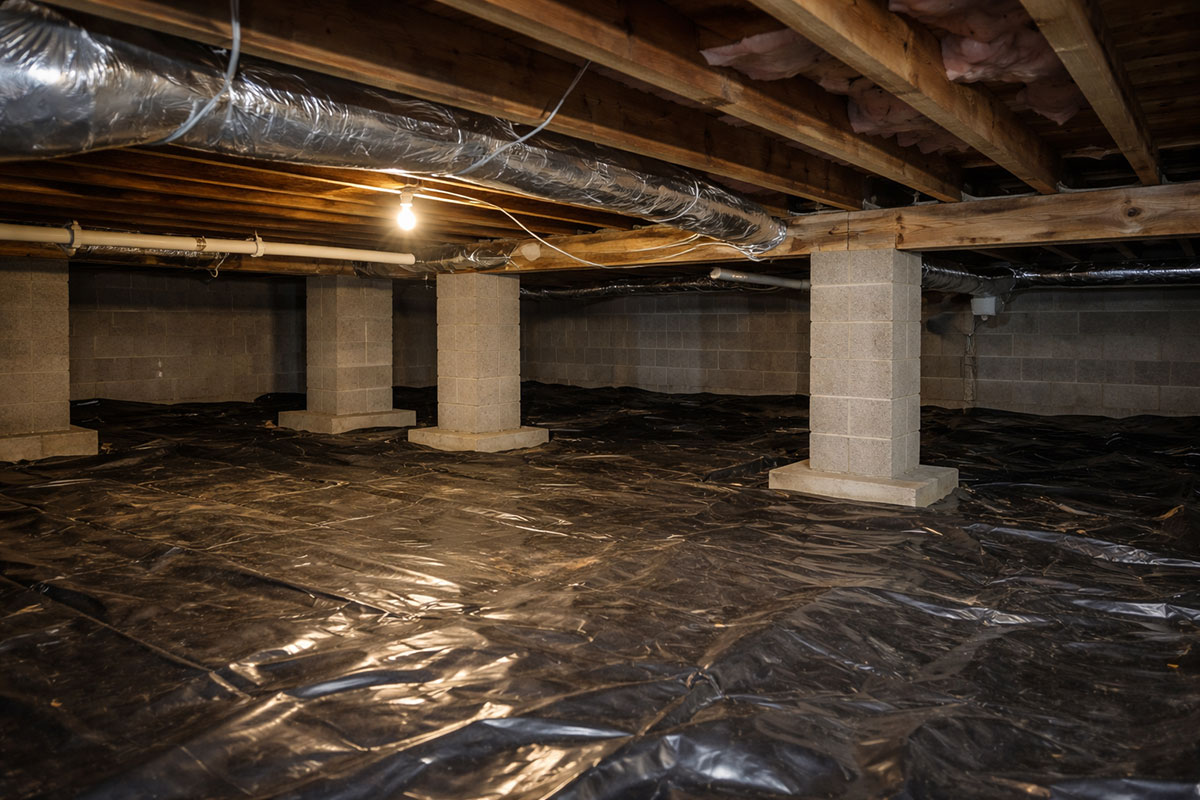
    A properly installed crawl space vapor barrier helps reduce moisture vapor coming up from the soil. It is not just about laying plastic down. The seams need to be secured and the coverage needs to be complete enough to prevent moisture from slipping through.

    3) Manage bulk water the right way

    If the crawl space has a history of puddling or seepage, a drainage solution may be needed to collect water and move it out. In many cases, that includes a sump pump system designed for the crawl space.

    4) Control humidity year-round

    Even after sealing and drainage improvements, humidity can remain high. A crawl space dehumidifier can keep moisture levels in check so mold is less likely to return and the air stays cleaner.

    Why a Professional Inspection is the Only Way To Clear the Air

    Crawl spaces can be tricky because multiple sources often contribute to the same problem. What appears to be “just a smell” could be condensation from vents, groundwater seepage, a plumbing leak —  or all three. The fastest way to get a real answer is a professional assessment so you can fix the source instead of guessing.

    Tired of musty smells coming from your crawl space? Schedule a free inspection with Level Up Foundation Repair. Our crawl space encapsulation team will identify the source of the odor and recommend long-term moisture control solutions to keep your home clean, dry and comfortable.

    Whether you are in Rivermont Avenue or in the Riverside Park Area, dealing with the red clay in Fort Hill, or seeing slope-related runoff in Boonsboro, we’ve likely worked on a house just like yours. We understand the local drainage challenges in Lynchburg’s neighborhoods and are ready to help you protect your home long term.

  • The Cost of Ignoring Water in Your Basement: Structural Damage, Health Risks & Necessary Repairs

    The Cost of Ignoring Water in Your Basement: Structural Damage, Health Risks & Necessary Repairs

    Water in your basement is never “just a small issue.” At Level Up Foundation Repair, we’ve seen how minor moisture problems turn into major structural repairs for Lynchburg homeowners who waited too long. A damp corner, a faint musty smell or a small stain on the wall often signals a deeper problem developing behind the scenes.

    The real cost of ignoring basement water is more than cleanup. It affects your home’s structure, your indoor air quality, your monthly bills and your long-term property value.

    How Basement Water Problems Start

    Basement moisture usually begins in one of three ways:

    • Poor exterior drainage that directs rainwater toward the foundation
    • Water coming through small cracks in the basement walls or floors
    • High humidity that causes condensation on cool basement surfaces

    In Lynchburg, Charlottesville, Roanoke and across Central and South Virginia, heavy rainfall and clay-rich soil make matters worse. When soil becomes saturated, hydrostatic pressure builds against foundation walls. Over time, that pressure forces water through cracks and porous concrete. Even water seeping into basement walls in small amounts can slowly weaken structural materials.

    How Fast Does Water Actually Damage Your Home Foundation?

    Homeowners often assume serious damage takes years. In reality, deterioration can begin much sooner than expected. How long does it take for water to cause structural damage? In some cases, wood framing and floor joists can begin to weaken within weeks of ongoing moisture exposure. Drywall, insulation and subflooring can start to break down even faster.

    Persistent moisture leads to:

    • Rotting wooden beams and supports
    • Cracking or bowing foundation walls
    • Rusted metal supports and fasteners
    • Deteriorated drywall and insulation

    As materials weaken, structural stability declines. What begins as a damp basement can evolve into sagging floors, sticking doors and visible foundation cracks.

    Is Your Basement Making You Sick? The Health Risks of Basement Moisture

    Basement moisture creates the perfect environment for mold and mildew. Mold spores spread through the air and can circulate throughout your home. That musty smell is not harmless. It is often a sign of microbial growth behind walls or under flooring.

    Health effects may include:

    • Increased allergy symptoms
    • Asthma flareups
    • Chronic coughing or sinus irritation
    • Respiratory complications in vulnerable individuals

    A damp basement does not stay isolated. Air from the basement naturally rises into living spaces, affecting overall indoor air quality.

    Many homeowners ask, “What happens if you ignore water damage?” The answer is simple: The problem grows, and the repair bill multiplies.

    Ignoring water damage in basement areas can result in:

    Ignoring water damage in the basement can cost into the thousands or even tens of thousands once structural elements are compromised. By comparison, early waterproofing and drainage corrections are far more affordable.

    Basement water can also raise utility bills. Excess humidity forces HVAC systems to work harder year round, increasing heating and cooling costs.

    6 Red Flags Your Basement Is Failing Due to Water Issues

    Pay attention if you notice:

    • Musty odors
    • White mineral deposits on walls
    • Stained drywall or baseboards
    • Warped flooring
    • Water leaking into the basement after heavy rain
    • Rust on appliances or metal surfaces

    Even small puddles or damp patches matter.

    Prevention Is Always Cheaper Than Basement Repair

    The good news is that basement water problems are highly manageable when addressed early. Solutions may include improving exterior drainage, sealing foundation cracks, installing sump pumps, adding interior drainage systems or professional waterproofing.

    Taking action quickly protects your home’s structure and your family’s health while preventing extensive repairs later.

    Have you discovered moisture, stains or musty smells in your basement? Cracks in your walls, doors that won’t close right, or water creeping into your basement after a heavy rain? Don’t ignore it. We’ve worked on homes throughout Central and Southwest Virginia, and we know how local soil and weather can take a toll on foundations. We’ve solved basement water issues and moisture problems that threaten homes from Charlottesville and Lynchburg down through Farmville, Roanoke and Danville.  Schedule a free inspection with Level Up Foundation Repair.

  • What Happens if You Ignore Water Damage in Your Basement? Health Risks, Structural Damage and Repairs

    What Happens if You Ignore Water Damage in Your Basement? Health Risks, Structural Damage and Repairs

    At Level Up Foundation Repair, we see it all the time. Homeowners notice a damp smell, a small water stain or a little moisture after a heavy rain and assume it is not a big deal. Unfortunately, basement moisture is rarely harmless. In a climate like Lynchburg’s and Central Virginia, where rainfall is frequent and humidity stays high, ignoring early warning signs can lead to serious and expensive problems throughout your home.

    So what happens if you ignore water damage? The short answer is that it almost always gets worse.

    Why Basements Are Especially Vulnerable to Water Problems

    Basements sit below ground level, which means they are surrounded by soil. When that soil becomes saturated from rain, melting snow or poor drainage, water pushes against foundation walls and floors. This pressure forces moisture through tiny cracks, porous concrete, and weak points around joints or utility penetrations.

    Common sources of basement moisture include water seeping into basement walls, water leaking into the basement after heavy rain, poor grading around the home, clogged gutters, plumbing leaks, and high indoor humidity that leads to condensation.

    Early Warning Signs Homeowners Often Ignore 

    Basement water problems usually start subtly. Many homeowners overlook these early clues:

    • Musty or damp odors
    • White chalky residue on walls
    • Dark stains on concrete or drywall
    • Condensation on pipes or windows
    • Warped flooring or damp carpet
    • Rust on appliances or metal surfaces

    Even small signs matter. What happens if you leave water in your basement for weeks or months? The damage is rarely visible right away, but it continues worsening behind walls and under floors.

    Health Risks Linked to Basement Moisture 

    One of the biggest concerns with a damp basement is indoor air quality. Mold and mildew thrive in dark, moist environments. Once mold forms, it releases spores that travel throughout your home.

    This can lead to coughing, allergies, asthma flare-ups, sinus irritation and other respiratory problems. Children, seniors and anyone with compromised immunity are especially vulnerable. Musty smells are often the first indicator that mold growth has already started.

    Water Damage Compromises Your Home’s Structural Integrity

    Water is also one of the most destructive forces against a home’s structure. Over time, moisture can:

    • Cause foundation cracks and widening gaps
    • Lead to bowing or shifting basement walls
    • Weaken wood framing and floor joists
    • Rot insulation and drywall
    • Contribute to settling foundations

    Hydrostatic pressure from saturated soil can push walls inward, while erosion beneath the foundation may cause uneven settling. Repairing structural damage is far more expensive than addressing moisture early, which is why costs of ignoring water damage in the basement can rise quickly.

    Electrical and Safety Concerns

    Basements often house electrical panels, wiring and appliances. Water in basement wall cavities or along floors increases the risk of electrical shorts and shock hazards. In severe cases, moisture can contribute to fire risks when wiring corrodes or insulation degrades.

    Basement Repair: Is Ignoring Water Damage Costing You Thousands?

    Many homeowners wonder, “How much does it cost to repair a basement with water damage?” The answer depends on how long the problem has been ignored. Minor moisture control may cost relatively little, while advanced structural repairs, mold remediation and material replacement can reach tens of thousands of dollars.

    Water damage also hurts resale value. Home inspectors flag moisture issues quickly, and buyers often walk away or demand steep price reductions.

    Steps You Can Take Now

    If you are wondering how to eliminate moisture in a basement or how to keep moisture out of basement spaces, start with these basics:

    • Keep gutters and downspouts clear and extended away from the foundation.
    • Make sure soil slopes away from the home.
    • Seal visible foundation cracks.
    • Use a dehumidifier to control humidity.
    • Address plumbing leaks immediately.

    If moisture persists, professional waterproofing and drainage solutions are usually necessary.

    When To Call a Professional

    DIY steps can help, but they have limits. If you see recurring moisture, standing water, mold growth or structural changes, it is time for an expert evaluation. A professional inspection identifies where water is entering and how to stop it permanently.

    Protect Your Home Before Damage Spreads 

    Basement moisture is never something to brush aside. What begins as a damp smell can turn into mold, structural repairs and major expense if ignored. Acting early protects your home, your health and your wallet.

    Noticing moisture, musty smells or water stains in your basement? Schedule a free inspection with Level Up Foundation Repair today. Our experts will find the source of the problem and provide affordable solutions to keep your basement dry, safe and structurally sound.

  • Bowing Basement Walls: Causes, Signs & Wall Anchor Solutions

    Bowing Basement Walls: Causes, Signs & Wall Anchor Solutions

    At Level Up Foundation Repair, we regularly help Central Virginia homeowners address one of the most serious foundation warning signs a home can show: bowing basement walls. When basement walls begin to bend, crack or lean inward, it means the structure is under stress. This is not a cosmetic issue. Left unaddressed, bowed walls can compromise the safety, value and long-term stability of your entire home.

    Dealing with bowing basement walls? Wall anchors are one of the most reliable ways to fix the lean and make sure they stay put for years to come.

    What Causes Basement Walls To Bow?

    Bowing basement walls almost always result from pressure building up outside the foundation. In Lynchburg and surrounding areas, several local conditions make this problem especially common.

    Hydrostatic pressure

    The most common cause of bowing walls is hydrostatic pressure. When heavy rain or poor drainage saturates the soil around your home, that wet soil becomes extremely heavy. As water builds up, it presses inward against basement walls with tremendous force. Over time, concrete and block walls begin to crack, bulge or bow inward under that pressure.

    Clay-heavy and expansive soils

    Virginia’s clay-rich soil expands when wet and shrinks as it dries. This repeated expansion and contraction creates constant movement around foundation walls. As the soil swells, it pushes against the basement walls. As it dries, voids can form, allowing the cycle to repeat and worsen the damage.

    Poor drainage and grading

    If gutters overflow, downspouts discharge too close to the foundation or the yard slopes toward the house, water collects near basement walls instead of flowing away. This increases soil pressure and accelerates wall movement.

    Construction and age-related factors

    Older homes may lack the reinforcement required to withstand long-term soil pressure. Over decades, even properly built walls can begin to bow if drainage and moisture issues are not controlled.

    Is Your Basement Wall Failing? Warning Signs You Should Not Ignore

    Bowing basement walls rarely happen overnight. There are usually clear signs that appear as pressure builds:

    • Horizontal cracks across basement walls
    • Stair-step cracking in block walls
    • Walls visibly leaning inward or bulging in the center
    • Water seepage or dampness along wall cracks
    • Doors or windows above the basement becoming difficult to open

    These symptoms indicate active structural stress. They can be fixed, but only if the right solution is installed before the damage becomes severe.

    How Wall Anchors Fix Bowing Basement Walls

    Wall anchors are one of the most reliable long-term solutions for stabilizing and correcting bowing basement walls.

    A wall anchor system works by transferring pressure away from the foundation wall and into stable soil farther from the home. Steel anchor plates are installed outside the foundation in undisturbed soil. Inside the basement, steel plates are mounted to the damaged wall. Heavy-duty steel rods connect the interior and exterior plates.

    As the system is tightened, the rods slowly pull the wall back toward its original position. More importantly, the anchors prevent any additional inward movement by counteracting ongoing soil pressure. Over time, many walls can be partially or fully straightened while remaining permanently stabilized.

    Homeowners often choose wall anchors because they:

    • Provide long-term structural stabilization
    • Can be adjusted gradually as conditions change
    • Address the root cause of wall movement
    • Work well for moderate to severe bowing

    The Cost of Waiting: Ignoring Bowing Basement Walls Can Lead to Major Expense

    Ignoring bowing basement walls allows pressure to continue building. Cracks widen, water intrusion worsens and structural repairs become more expensive and invasive. In severe cases, wall failure can occur, leading to major safety risks, plummeting home value and major foundation repair expenses.

    Homeowners want to know: “How much to repair a bowing basement wall?” Costs vary based on severity, wall length and underlying drainage issues, but early intervention almost always reduces the overall scope and expense of repairs.

    Stop Basement Wall Damage Before It Threatens Your Foundation

    Bowing basement walls are not something to monitor indefinitely or cover up with paint or temporary fixes. They are a clear signal that your foundation needs professional attention.

    If you are seeing cracked, leaning or bulging basement walls, do not wait. Contact Level Up Foundation Repair to schedule a free structural inspection. Our team will identify the cause of the problem and install dependable wall anchor solutions that restore strength, stability and peace of mind.

  • Failing Foundations: Early Warning Signs Lynchburg Homeowners Can’t Ignore

    Your home’s foundation is the structure that supports everything else, so even small warning signs should never be brushed aside. As a local company, Level Up Foundation Repair understands how Lynchburg’s clay soil, seasonal moisture changes and frequent rain make foundation issues more common here than many homeowners realize. By knowing what to look for early, you can prevent serious structural damage, avoid expensive repairs and protect your home’s long-term stability.

    Below are the most common indications that your foundation may be failing and why acting quickly matters.

    Cracks That Widen, Spread or Appear in the Wrong Places

    Hairline cracks can appear in any home over time as materials settle. These fine lines aren’t always cause for concern, but larger or widening cracks deserve attention. Horizontal cracks, cracks wider than a quarter inch, or cracks that continue to grow often indicate movement within the foundation.

    Cracks in drywall can also be early clues. Diagonal lines near doorways, gaps forming at corners, or stair-step patterns in brick or block walls are signs that the foundation may be shifting. These openings can allow moisture or pests to enter, increasing the risk of further deterioration.

    If you’ve ever questioned when to be concerned about foundation issues, this is one of the clearest signals.

    Doors and Windows That Stick, Even When the Weather Hasn’t Changed

    Sticky doors and windows often get blamed on humidity, but if they become difficult to open year-round, the underlying issue may be structural. When a foundation settles or sinks, it causes the framing around doors and windows to tilt or warp. You may also notice gaps forming around window frames or trim beginning to pull away from the wall.

    Warped Siding, Gaps or Exterior Shifting

    Changes to the exterior of your home can reveal trouble beneath the surface. Warped siding, bulging sections or gaps between planks or bricks often mean the foundation is no longer level. These exterior shifts usually happen gradually, but once visible, they signal that the home’s structure is under stress.

    Uneven, Sagging or Bouncy Floors

    Floors should feel solid and level. If you notice soft spots, slopes or areas that bounce when walked on, the foundation may be settling unevenly or the support system in the crawl space could be compromised. Moisture beneath the home is a major contributor to sagging floors, especially in Lynchburg’s humid climate.

    Drainage Problems and Persistent Moisture Around the Home

    Water is one of the biggest threats to a foundation. After heavy rain, take note of how water flows around your home. Pooling, soggy soil or damp areas near the foundation can accelerate settlement, weaken the structure and lead to mold or wood rot. Moisture in crawl spaces or basements also contributes to bowing basement walls, musty odors and long-term structural damage.

    Why Early Action Matters

    What happens if you ignore foundation problems? The answer is simple: They get worse. Foundation shifts won’t correct themselves. Cracks widen, floors sag further, doors become more misaligned and moisture damage spreads. The longer the issue goes untreated, the more involved and costly the repair becomes.

    Addressing foundation problems early:

    • Preserves the structural integrity of your home
    • Prevents secondary damage like plumbing strain or roofing misalignment
    • Protects your property’s value
    • Reduces needing invasive repair methods later

    Even if the signs seem minor, the safest approach is to have a professional inspect the foundation so you know exactly what’s going on beneath your home.

    Protect Your Home Before Damage Spreads

    Don’t ignore the warning signs. If you’ve noticed any of the symptoms above — cracks, uneven floors, sticking windows or moisture problems — it’s time to take action.

    Not sure whether your foundation is starting to fail? Schedule a free inspection with Level Up Foundation Repair today. Our Lynchburg experts will identify the problem and provide affordable solutions to keep your home stable, dry and protected.

  • Lynchburg Foundation Repair: Why Expansive Clay Soil Causes Home Settlement

    Foundation settlement is one of the most common structural issues homeowners face in Lynchburg, and Level Up Foundation Repair sees the effects of it every day. Our area’s clay-rich soil, seasonal moisture swings, and consistently high rainfall all contribute to shifting ground conditions that place stress on your foundation. Understanding how these natural forces work and how they impact your home can help you spot early warning signs before they turn into costly problems.

    Why Lynchburg Soil Behaves Differently

    The soil beneath your home isn’t static. Lynchburg’s dominant clay soils expand when saturated with water and contract during dry spells. This repeated swelling and shrinking creates movement under your foundation that can lead to settlement over time.

    During long dry periods, the soil loses moisture and pulls away from the foundation. When heavy rainfall returns, the soil absorbs water and becomes soft, creating an unstable base for the home. These dramatic changes in soil volume are a major reason why foundation settlement is so common in this region.

    If you’ve ever wondered how to know if a foundation is settling, one of the best indicators is whether you see seasonal changes in cracks, flooring or door alignment. Shifts that worsen after periods of heavy rain or extended drought often point to soil-related settlement.

    Common Causes of Foundation Settlement in Virginia Homes

    Foundation settlement can occur for multiple reasons, many of which are tied to Lynchburg’s climate and soil conditions. The most common include:

    Soil Drying and Shrinking

    Clay soils shrink as they dry out. When this happens, they leave voids beneath the foundation that the home gradually sinks into. Trees planted too close to the house can make this even worse, as their roots pull moisture from the soil during dry months.

    Soil Softening During Heavy Rain

    When clay soils absorb a large amount of water, they lose strength. This weakened soil can no longer support the weight of the home, causing the structure to settle unevenly. Poor drainage around a home intensifies the problem by allowing water to pool near the foundation.

    Poorly Compacted Fill SoilSome properties are built on fill soil that was never adequately compacted during construction. As the soil compresses naturally over time, the foundation settles along with it. Even newer homes are not immune to this type of settlement.

    Warning Signs That Foundation Settlement Has Started

    Foundation settlement often begins subtly. Early detection is key to preventing further damage. Homeowners commonly report:

    • Cracks in walls, floors or brickwork
    • Floors that slope, sag or feel uneven
    • Doors and windows that stick or won’t stay closed
    • Gaps forming around trim, cabinets or window frames
    • Moisture or pooling water near foundation walls
    • A leaning chimney or visible tilting in exterior areas

    If you’ve been looking for guidance on how to check for foundation issues, these symptoms are among the most reliable indicators.

    Why You Shouldn’t Ignore Foundation Settlement

    Foundation issues develop gradually, but the longer they’re left unaddressed, the more severe (and expensive) the damage becomes. What starts as minor cracking can evolve into structural instability, plumbing strain or major moisture intrusion.

    Homeowners often ask themselves when to worry about foundation issues, and the simplest answer is this: If you see ongoing changes in the structure of your home, it’s time to take action.

    Proactive inspections, proper drainage and early repairs can prevent further settlement and protect your home’s value. While not every problem is preventable, taking steps such as improving grading, maintaining gutters and addressing moisture around the property can help reduce future settlement risks.

    Protect Your Home from Lynchburg’s Unpredictable Soil Conditions

    Foundation settlement isn’t something homeowners should diagnose on their own. If you’ve noticed cracks, shifting floors, sticking doors or other subtle signs, a professional assessment can give you clarity and peace of mind.

    Worried your home is settling? Schedule a free inspection with Level Up Foundation Repair. Our Lynchburg team understands local soil conditions and can recommend the right solution to protect your home for years to come.