
How Freeze-Thaw Cycles Affect Foundations in Virginia
Winter in Virginia rarely means months of uninterrupted deep freeze. Instead, temperatures often move above and below freezing repeatedly, sometimes within the same week. That back-and-forth can be hard on concrete, masonry, soil, and other materials around a foundation when moisture is present.
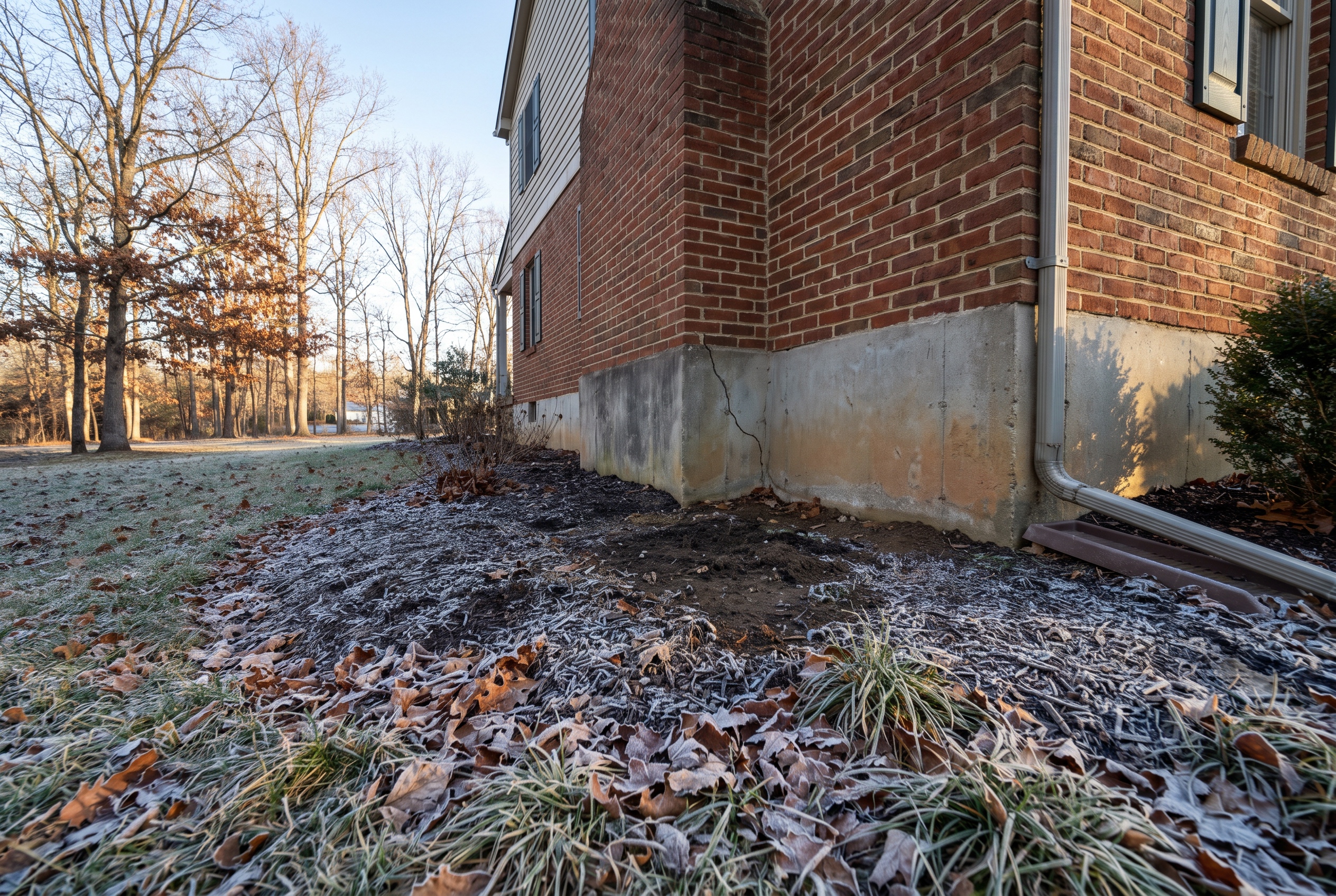
Freeze-thaw foundation cracks do not appear simply because the temperature drops below 32 degrees; water has to be part of the equation. Moisture can enter small cracks, porous masonry, or the soil beside the foundation, and when that water freezes, it expands. Then when temperatures rise again, it thaws. Repeated cycles can gradually widen existing weaknesses or contribute to movement in soil around the home.
For homeowners across Central and Southwest Virginia, late fall is a good time to look at drainage, existing cracks, and areas where water tends to collect before colder weather settles in.
What Happens During a Freeze-Thaw Cycle?
Concrete and masonry contain small pores and imperfections. Water can enter those spaces during rain, snowmelt, or prolonged damp weather. If temperatures then fall below freezing, that water can turn to ice and expand inside the material.
One freeze usually does not transform a healthy foundation into a structural problem, but the concern is repetition. Over a winter, the same damp area may freeze and thaw many times. Existing cracks can slowly open farther, surface material can begin to flake or spall, and mortar joints may deteriorate.
The National Park Service notes that water can enter cracks and pores in masonry, freeze, expand, and contribute to damage over repeated freeze-thaw cycles. NPS guidance also points out that cracking can result from several causes at once, including settlement, moisture changes, thermal movement, and freeze-thaw effects. You can read more in the National Park Service’s guide to common problems with brick masonry.
That last point matters for homeowners. A crack that becomes noticeable in winter is not automatically a “freeze crack.” The colder weather may be one contributor among several.
Frost Heave Happens in the Soil, Too
Freeze-thaw damage can also happen outside the foundation itself.
When moisture in certain soils freezes, ice can form beneath the ground surface and push the soil upward. This process is called frost heave. The Virginia Department of Energy explains that frost heave is most likely where moisture is available to feed ice formation in susceptible soils, especially during longer cold spells.
You can read more about expansive soils and frost heave in Virginia.
Frost heave tends to affect lighter structures and exterior concrete more noticeably than a properly designed deep foundation. Sidewalks, patios, steps, and other slabs can move because they sit closer to the surface, where freezing occurs more readily.
That is one reason homeowners may notice a sidewalk edge becoming uneven or a small gap opening around exterior concrete after winter weather.
Why Drainage Matters Before Winter
Water is the common ingredient in most freeze-thaw problems, which makes drainage one of the most useful things a homeowner can check before freezing weather arrives.
Start with gutters and downspouts. Roof runoff should move away from the foundation instead of collecting beside it. If downspouts terminate near the wall, heavy autumn rain can leave soil saturated going into a cold snap.
Look at the grading as well. Low spots beside the foundation, settled walkways, and patios that slope toward the house can all direct extra moisture toward the wall.
Below grade, foundation drainage helps manage water near the footing. Building America guidance recommends effective exterior drainage, including footing drains and proper grading, as part of managing moisture and reducing frost-related problems around foundations.
If water regularly reaches the basement wall, Level Up also offers exterior foundation wall coatings that can be paired with drainage improvements when the inspection shows exterior water intrusion is part of the problem.
Can Small Foundation Cracks Get Worse in Winter?
They can, although many small cracks remain stable for years.
A narrow crack that stays dry and does not change may simply need monitoring. A crack that allows water through is more vulnerable because moisture can repeatedly enter the opening before cold weather.
Take a clear photo and note the date. If possible, measure the width. Check it again after periods of freezing weather and after major rain or snowmelt. You are looking for change rather than perfection.
Cracks deserve more attention if they widen, become wet, spread into a stair-step pattern, or appear alongside other symptoms such as sticking doors, sloping floors, gaps around trim, or wall movement.
What About Concrete Steps, Sidewalks, and Patios?
Exterior concrete sees more direct exposure to water and freezing temperatures than most foundation walls, so winter damage is often easier to spot there.
Surface scaling, flaking, small chips, widening joints, and uneven slabs may become more noticeable after repeated freezing and thawing. Water that gets beneath a slab can also contribute to soil movement or frost heave below it.
If the slab itself is still in good condition but has settled, concrete leveling may be an option. If the concrete is badly cracked or deteriorated, replacement may make more sense. The condition of the slab and the soil beneath it should guide the repair.
Does Winter Cause Foundation Settlement?
Foundation settlement is usually more complicated than a single cold-weather event. Soil moisture changes, expansive clay, erosion, poor compaction, drainage problems, and long-term movement can all contribute.
Winter can add another layer of stress. Moist soil may freeze and move, then soften again during a thaw. Expansive soils may already have experienced months of shrinking and swelling before colder weather arrives.
Virginia Energy (linked above) notes that soil-related foundation damage can come from several mechanisms, including expansive soils, frost heave, and compressive soils. Conditions can vary significantly from one property to another, so visible movement should be evaluated in context.
Level Up’s foundation repair solutions include several stabilization methods depending on whether the problem involves settlement, bowing walls, or another structural issue.
What Should You Check Before the First Hard Freeze?
A quick walk around the house can reveal a lot before winter weather becomes regular.
- Clear leaves and debris from gutters
- Make sure downspouts discharge away from the foundation
- Look for low areas where water collects beside the house
- Check visible foundation cracks for moisture or recent growth
- Inspect exterior concrete for sinking, gaps, or severe cracking
- Look inside the basement or crawl space for damp areas after rain
- Photograph cracks you want to monitor through the winter
You don’t need to treat every hairline crack as an emergency; the goal is to know what is already there so you can recognize meaningful changes later.
When to Schedule a Foundation Inspection
Schedule an inspection if a crack is widening, leaking, or appearing with other signs of movement. Horizontal cracks, stair-step cracking, visibly bowed walls, increasingly uneven floors, or doors that suddenly stop closing properly deserve a closer look regardless of the season.
Level Up Foundation Repair provides free inspections throughout Central and Southwest Virginia from our headquarters in Appomattox. Each inspection includes a walk-through, photo documentation, and a written estimate, so homeowners can understand what is happening before deciding whether a repair is needed.
If winter weather has you watching an existing crack or you want the foundation checked before freezing temperatures become more frequent, schedule a free inspection with Level Up Foundation Repair.
FAQ
Can freezing weather crack a foundation?
Freezing weather can contribute to foundation or masonry damage when water is present in cracks, pores, or surrounding soil. Repeated freeze-thaw cycles are generally more important than one isolated freeze.
What is frost heave?
Frost heave occurs when moisture in susceptible soil freezes and forms ice that pushes the ground upward. It can affect exterior slabs, steps, and other structures near the surface and may contribute to movement around foundations in certain soil conditions.
Should I repair a foundation crack before winter?
A leaking, widening, horizontal, or stair-step crack should be evaluated rather than ignored. A small, dry, stable crack may only need monitoring. The crack pattern and any related signs of movement matter more than the season alone.
How can I reduce freeze-thaw problems around my foundation?
Keep water moving away from the house. Clean gutters, extend downspouts, correct obvious drainage problems, and monitor areas where water collects beside the foundation. Reducing unnecessary moisture around concrete, masonry, and soil helps limit the conditions that contribute to freeze-thaw damage.