
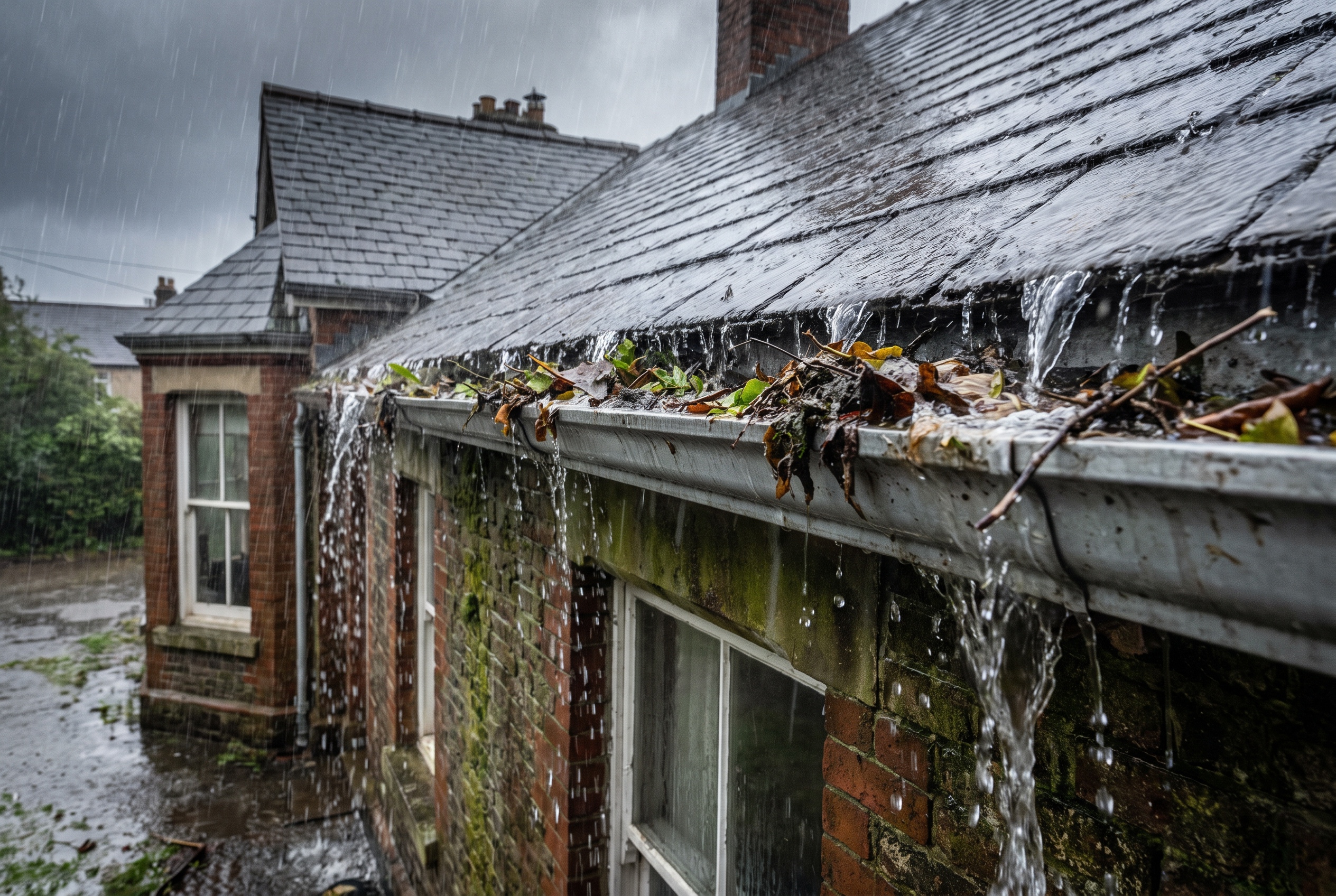
Can Clogged Gutters Cause Foundation Damage?
Gutters may seem pretty far removed from the foundation, but the two are more connected than they look. Your roof collects a large amount of rainwater, and the gutter system determines where all of that water goes once it reaches the edge of the house.
When gutters are clogged with leaves or a downspout empties directly beside the foundation, roof runoff can end up soaking the soil around the home. One rainstorm usually is not going to create a major structural problem by itself. Repeated saturation, however, can contribute to basement seepage, soil movement, erosion, and increased pressure against foundation walls.
Late fall is a particularly good time to check the system. Once leaves have accumulated, a gutter that worked fine earlier in the year may suddenly overflow in places it never did before.
Why Roof Runoff Matters to Your Foundation
Think about how much surface area a roof covers. Even a modest rain sends a significant volume of water toward the gutters, which concentrate that runoff into only a few downspouts.
When the system is working properly, that is useful. The water is collected and carried away from the house. When a gutter overflows or a downspout ends too close to the wall, that same concentration of water can become a drainage problem.
The U.S. Department of Energy’s Building America Solution Center recommends using gutters, downspouts, proper grading, and foundation drainage together to keep soil around the foundation from becoming saturated. Its guidance on gutters and downspouts notes that roof runoff should be directed away from the foundation rather than allowed to collect beside it.
The important part is not simply having gutters. The water needs somewhere appropriate to go.
What Happens When Gutters Get Clogged?
Leaves, twigs, seed pods, and other debris can block the path to a downspout or slow drainage enough that the gutter fills during heavier rain.
Once the gutter cannot carry water away fast enough, it may spill over the edge. Depending on where the blockage is, that overflow can repeatedly land within a foot or two of the foundation.
You may notice:
- Water pouring over the gutter during rain
- Deep drips or erosion lines below the roof edge
- Muddy soil beside the foundation
- Mulch washing away from the house
- Puddles forming close to basement or crawl-space walls
- Water stains or dampness appearing inside after storms
These are drainage clues rather than automatic evidence of foundation damage. They do tell you that more water is reaching the foundation area than it should.
Downspouts Can Cause Problems Even When the Gutters Are Clean
A clean gutter can still discharge all of its water in the wrong place.
If a downspout ends right at the base of the house, the system has moved the runoff from the roof but has not really moved it away from the foundation. During a heavy storm, a large amount of water may be concentrated into a small patch of soil.
Extensions or underground drainage can carry that water farther away when the site allows. The Building America Solution Center recommends directing downspouts to a sloping grade at least several feet from the foundation or into an appropriately designed drainage system.
Whatever method is used, the discharge point should not simply send the water downhill only for it to flow back toward the house.
How Excess Water Can Affect the Soil Around a Foundation
The foundation depends partly on the soil supporting and surrounding it. When moisture conditions change significantly, that soil can change too.
Water flowing beside a foundation may wash fine soil particles away or soften areas of poorly compacted fill. Clay-rich soils can also change volume as their moisture content changes. Over time, uneven soil conditions can contribute to settlement or other foundation movement.
Saturated soil can also place greater pressure against basement walls. If a wall is already vulnerable to inward movement, poor drainage may add to the conditions working against it.
This does not mean a clogged gutter is the sole explanation every time a house settles or a basement wall bows. Foundation movement usually needs to be evaluated in the context of the soil, construction, drainage, and pattern of movement around the home.
Can Clogged Gutters Cause Basement Water?
They can contribute to it.
When water repeatedly collects beside the foundation, some of it may eventually find a path into the basement. Concrete and masonry are not completely waterproof, and cracks, joints, penetrations, or the area where the wall meets the floor may become entry points.
A homeowner may first notice a damp spot after heavy rain, water at the wall-floor joint, staining on a basement wall, or white mineral deposits left behind as moisture evaporates.
If exterior runoff is part of the problem, fixing the gutter or downspout should be part of the solution. If water is still reaching the basement because of groundwater or other drainage conditions, an interior system may also be appropriate.
We install basement drainage systems that collect water around the basement perimeter and direct it to a sump system when an inspection shows that interior drainage is needed.
What About Crawl Spaces?
The same runoff problem can show up beneath homes with crawl spaces.
Water discharged near the foundation may seep through openings, move beneath the footing, or contribute to persistently damp soil under the home. In some crawl spaces, homeowners first notice musty odors, wet ground, damaged insulation, or elevated humidity rather than obvious standing water.
Redirecting roof runoff may reduce part of that moisture load, but a crawl space with an ongoing water problem may need additional drainage or moisture-control work.
When we inspect a crawl space, we look at where the moisture is coming from rather than assuming every damp space needs the same repair.
Can Bad Drainage Make Foundation Cracks Worse?
It can contribute to conditions that cause or worsen movement, especially when soil around one part of the home stays much wetter than the surrounding areas.
If you already have a crack, watch for changes. A crack that stays narrow and stable is different from one that widens, develops displacement, or appears alongside other symptoms such as sticking doors, sloping floors, or stair-step cracking in exterior masonry.
Our guide to signs of foundation problems covers several of the patterns worth watching.
Correcting a gutter problem cannot reverse structural movement that has already occurred. It can, however, remove one avoidable source of water around the home.
A Simple Late-Fall Drainage Check
You do not need specialized equipment to give the exterior drainage a basic check.
Start with the gutters. Remove accumulated leaves and debris, then make sure each downspout is open. If you can safely observe the house during the next rain, look for overflowing sections, leaks at gutter joints, or water spilling behind the gutter.
Then follow each downspout to its discharge point. Ask a simple question: where will this water go once it leaves the pipe?
Walk the perimeter and look for low spots, erosion, or areas where the soil slopes back toward the foundation. Pay particular attention to places where you have already seen basement or crawl-space moisture.
A few minutes outside during or shortly after a rain can sometimes explain a water problem more clearly than looking at a dry foundation wall several days later.
When Gutters Are Only Part of the Problem
Sometimes cleaning the gutters and extending the downspouts solves an obvious drainage issue. Other homes have multiple water sources working together.
Groundwater, poor grading, failing footing drains, cracks, sloped patios, or naturally wet areas of the property may continue directing water toward the house even after the roof runoff is corrected.
That is where an inspection becomes useful. We can look at the symptoms inside the basement or crawl space along with the drainage conditions outside and determine whether the issue appears to be surface runoff, a foundation problem, or a water-management problem that needs a larger solution.
Keep Fall Rain Moving Away From the House
Cleaning gutters is ordinary home maintenance, but it has an important job. The goal is to collect rainwater from the roof and get it away from the foundation before it can saturate the surrounding soil.
If you are seeing cracks, basement seepage, crawl-space moisture, or other signs that water may already be affecting the home, Level Up Foundation Repair provides free, no-obligation inspections across Central and Southwest Virginia. We will look at the problem, document what we find, and explain whether foundation repair, drainage work, or another approach makes sense.
You can schedule a free inspection with us if you are unsure what is causing the problem.
FAQ
Can overflowing gutters damage a foundation?
Overflowing gutters can repeatedly saturate soil beside the foundation, which may contribute to erosion, soil movement, basement seepage, and increased moisture around foundation walls. The amount of risk depends on the drainage, soil, construction, and how often the area becomes saturated.
How far should downspouts drain from the foundation?
Building America guidance recommends carrying downspout discharge several feet away from the foundation to an area that slopes away from the house or into a properly designed drainage system. The exact setup depends on the property and local drainage conditions.
Will cleaning my gutters stop basement water?
It may help if roof runoff is contributing to the problem, but basement water can also come from groundwater, grading, foundation cracks, or other drainage issues. If the basement continues to leak after obvious exterior drainage problems are corrected, the source should be evaluated.
Can clogged gutters cause foundation cracks?
A clogged gutter does not automatically create a foundation crack. Poor roof drainage can contribute to excessive soil moisture, erosion, or soil movement around the foundation, which may be one factor in foundation movement over time.