Appomattox, VA · Serving Central & SW Virginia

Category: Crawl Space Repair

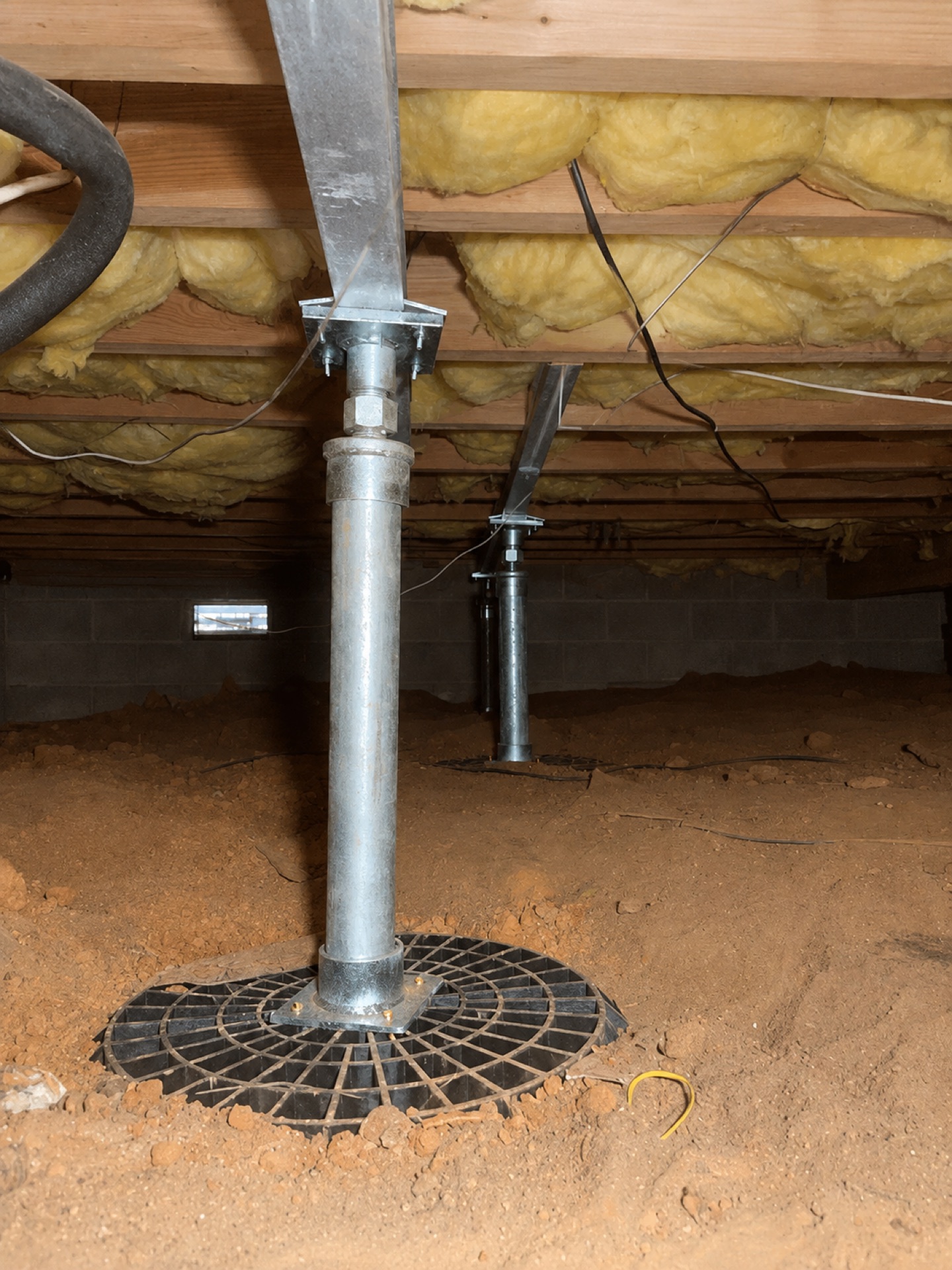
  • Adjustable steel jack support installed in crawl space reinforcing floor joists

    Crawl Space Support Jacks: When They Help and When They Don’t

    What Are Crawl Space Support Jacks?

    Crawl space support jacks are adjustable steel columns installed under beams, joists, or other structural areas beneath a home. Their job is to add support where the floor system has started to sag, bounce, or move more than it should.

    For many homes in Central and Southwest Virginia, especially older homes built over crawl spaces, support jacks can be an important part of a structural repair plan. They can help stabilize weak areas, reduce floor movement, and support beams that are carrying more weight than they should.

    But crawl space support jacks are not the answer to every floor problem. They work best when the issue is actually related to the crawl space framing or support system. If the floor is uneven because of foundation settlement, severe wood rot, poor drainage, or unstable soil, jacks alone may not solve the problem.

    That is why a good repair starts with a real inspection, not a quick guess from the living room floor.

    When Crawl Space Support Jacks Can Help

    Crawl space support jacks can help when the floor system needs additional support from below. This often happens when beams have weakened, joists have started to sag, or the original support layout was not strong enough for the way the home is being used today.

    In some homes, you may notice a soft spot in the floor, a dip near the middle of a room, or a bouncy feeling when someone walks across the floor. These symptoms can point to a floor system that is flexing because it is not properly supported underneath.

    Support jacks may be useful when:

    • Floors are sagging over a crawl space
    • The floor feels bouncy or springy when walked on
    • A main beam needs additional support
    • Existing crawl space posts have settled or shifted
    • The floor system was underbuilt or poorly supported
    • Joist or beam repairs need permanent support below them

    Level Up Foundation Repair installs crawl space support jacks to help distribute weight properly and reduce floor movement when the home’s structure calls for that type of repair.

    Why Floors Start Sagging Over a Crawl Space

    A crawl space is more than just an empty area under the house where spiders and other creepy-crawlies live. It is also part of the home’s structural system. The beams, joists, posts, piers, and foundation walls below the floor all work together to support the rooms above.

    When one part of that system weakens or moves, the floor above can start to show it. The cause may be as simple as an old support post that has settled, it may be a damaged beam, it may be joists that have bowed over time, etc., etc. In many Virginia homes, moisture is also part of the story.

    Humid air, standing water, plumbing leaks, poor drainage, and unsealed crawl spaces can all raise moisture levels below the home. Over time, damp conditions can contribute to wood rot, mold and microbial growth, insulation damage, and weakened framing. The EPA explains that controlling moisture is one of the most important steps in limiting mold growth inside and around the home. You can read more in the EPA’s guide to mold, moisture, and your home.

    Support jacks can add strength, but they do not remove moisture. If damp conditions caused the framing to weaken in the first place, the repair plan may also need drainage, vapor barrier work, encapsulation, dehumidification, or damaged wood repair.

    When Support Jacks Are Not Enough

    Support jacks are useful when the floor system needs support, but hey aren’t a magic fix for every uneven floor.

    If the joists are rotted, cracked, or severely damaged, new support from below may not be enough by itself. The damaged wood may need to be reinforced or replaced. Joist sistering, beam repair, or main beam replacement may be needed before or along with the jacks.

    If the soil below the crawl space is unstable, a jack installed on a weak base can continue to move. Proper footings or bases matter. A jack should not simply be placed on loose soil, a thin block, or a makeshift pad and expected to perform long term.

    If the foundation itself is settling, crawl space support jacks may not address the root cause. Foundation settlement can make floors slope, walls crack, and doors stick because part of the home is moving downward. In that case, the repair may require foundation repair, helical piers, push piers, or another stabilization method.

    This is where homeowners can get frustrated. The symptom may be “my floors are uneven,” but the cause might be framing, moisture, soil, foundation movement, or a mix of several issues. The right contractor should be able to explain the difference clearly.

    Support Jacks vs. Joist Sistering vs. Beam Repair

    Crawl space structural repair can include several different methods. Support jacks are only one tool.

    Joist sistering is used when an existing floor joist needs reinforcement. A new piece of lumber is installed alongside the weakened joist to help carry load and reduce movement. This can be useful when a joist is cracked, bowed, or weakened but the larger structure is still stable enough to repair.

    Beam repair focuses on the larger structural members that carry multiple joists. A damaged or undersized beam can affect a wider area of the floor. Depending on the condition of the beam, the repair may involve reinforcement, replacement, or adding support underneath it.

    Support jacks are often used beneath beams or load-bearing areas to provide vertical support. In some homes, the best repair may combine all three: repairing joists, reinforcing a beam, and installing jacks to carry the load properly.

    Level Up’s crawl space repair services are designed to address these types of structural issues from below the home, rather than treating sagging floors as a surface-level problem.

    Why Proper Installation Matters

    A crawl space support jack needs a stable base, correct placement, and the right load path. In plain English, the jack has to be installed where it can actually support the structure, and it has to sit on something that will not shift or sink.

    Poor installation can create new problems. If a jack is placed in the wrong location, it may not support the weak area. If it is adjusted too aggressively, it can stress floors, walls, trim, or finishes above. If it is installed without addressing water or wood damage, the home may continue to move.

    Older homes also require care. A floor that has sagged slowly over many years may not be able to return to perfect level without causing cracks or damage upstairs. In some cases, the goal is stabilization and improvement rather than forcing the floor into a perfectly flat position.

    A good inspection should look at the full system: joists, beams, existing posts, foundation walls, moisture conditions, drainage, soil, and visible symptoms inside the home.

    How to Know If Your Home Might Need Crawl Space Support Jacks

    You do not need to crawl under your home to know something might be wrong. The clues often show up inside the house first.

    Common warning signs include:

    • Floors that sag or slope
    • Bouncy floors when someone walks across the room
    • Soft spots in certain areas
    • Cracks in drywall near doors or windows
    • Gaps between flooring and baseboards
    • Doors that rub, swing open, or will not latch
    • Musty smells coming from below the home

    These signs do not automatically mean you need support jacks. They mean the structure below the floor should be checked. Some homes need jacks. Some need moisture control. Some need beam or joist repair. Some have a foundation issue that needs a different solution entirely.

    Get the Right Repair, Not the Biggest Repair

    One of the most important parts of crawl space repair is knowing when not to use a certain solution. Crawl space support jacks can be extremely helpful, but only when they match the actual problem.

    At Level Up Foundation Repair, the goal is to inspect the home, explain what is happening, and recommend a targeted repair. That may mean support jacks. It may mean beam repair, joist sistering, drainage improvements, encapsulation, foundation stabilization, or a combination of repairs. Our promise, however, is to never upsell you on unnecessary repairs, only what your home actually needs.

    If your floors are sagging, bouncy, or uneven, Level Up Foundation Repair can inspect your crawl space and help you understand what is causing the movement. Homeowners across Central and Southwest Virginia can schedule a free inspection and get a practical repair recommendation without pressure.

    FAQ

    Do crawl space support jacks permanently fix sagging floors?

    Crawl space support jacks can provide long-term support when they are installed correctly and used for the right problem. If the sagging is caused by moisture damage, rotted wood, unstable soil, or foundation settlement, those issues may also need to be repaired for the solution to last.

    Can support jacks level my floors?

    Support jacks can often improve sagging or uneven floors, but the amount of leveling depends on the age of the home, the condition of the framing, and how long the floor has been moving. In some older homes, stabilization and partial improvement are more realistic than making the floor perfectly level.

    Are crawl space support jacks the same as temporary house jacks?

    No. Proper crawl space support jacks are designed as part of a structural repair system. Temporary jacks used during construction or short-term lifting are not the same as a permanent support solution installed with proper placement and base support.

    How do I know if I need support jacks or foundation repair?

    Support jacks are typically used when the floor system needs added support from below. Foundation repair is needed when the foundation itself is settling, shifting, or failing. Because the symptoms can overlap, a crawl space and foundation inspection is the best way to identify the real cause.
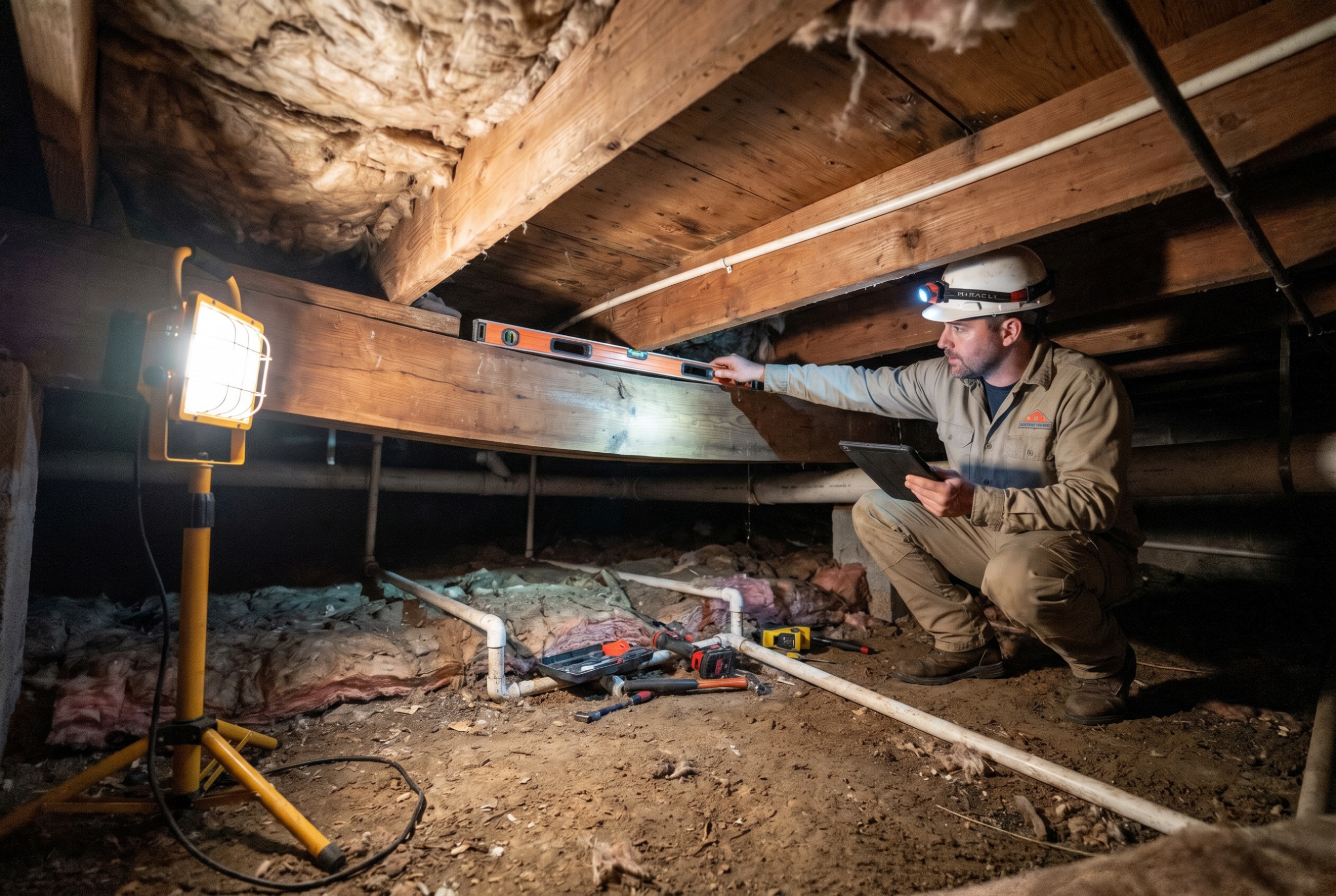
  • Crawl space inspection with Level, tablet, and work light assessing floor joist repair.

    Why Are My Floors Uneven? Crawl Space and Foundation Causes Explained

    Why Are My Floors Uneven?

    If you have been walking through your home and asking, “why are my floors uneven?” you are not being overly picky. Sloping, sagging, soft, or bouncy floors can point to problems below the living space, especially in homes built over crawl spaces or aging foundations.

    In Central and Southwest Virginia, uneven floors are often tied to crawl space moisture, weakened wood framing, failing supports, soil movement, or foundation settlement. Some floor movement is minor and develops slowly over decades. Other cases deserve a closer look because the structure underneath the home may no longer be properly supported.

    The safest place to start is with the cause. A floor that feels slightly out of level may need a very different repair than a floor that dips sharply near one wall or bounces when you walk across the room.

    What Uneven Floors Usually Mean

    Uneven floors usually happen when the structure below the floor changes, weakens, settles, or shifts. That structure may include floor joists, main beams, support posts, crawl space piers, foundation walls, or the soil underneath the home.

    In many Virginia homes, especially older homes with crawl spaces, the problem begins below the first floor. Moisture can soften or damage wood. Support posts can settle into the soil. Joists can bend over time. A main beam can lose strength. In other homes, the issue may come from foundation settlement, where part of the home sinks because the soil below can no longer support it evenly.

    That is why uneven floors should not be treated as a one-size-fits-all problem. The right repair depends on what is actually moving and why it is moving.

    Common Crawl Space Causes of Uneven Floors

    Crawl spaces are one of the most common places to find the source of sagging or bouncy floors. The framing under your home carries a lot of weight every day. If that framing weakens or loses support, the floors above can start to dip.

    Moisture is a major factor. Central and Southwest Virginia homes deal with humid summers, heavy rain, and damp soil conditions. When a crawl space stays wet or humid, the wood framing can absorb moisture. Over time, joists and beams may begin to soften, rot, or lose stiffness. The EPA notes that controlling moisture is key to preventing mold growth in homes, and wet or damp materials should be dried quickly when water damage occurs. You can read more in the EPA’s guide to mold, moisture, and your home.

    Common crawl space issues that can lead to uneven floors include deteriorated joists, weakened beams, failing support posts, poor drainage, standing water, high humidity, and inadequate original support. In some cases, a home simply needs additional structural support in the right places. In others, damaged wood may need to be repaired or replaced before supports are added.

    Level Up Foundation Repair offers crawl space structural repair for issues like damaged framing, sagging floors, and support problems below the home.

    When Support Jacks May Be Part of the Repair

    If the floor system is sagging because beams or joists need additional support, crawl space support jacks may be recommended. These are adjustable steel supports installed beneath beams or other structural areas to help restore stability from below.

    Support jacks can be a good fit when the main issue is a weakened or under-supported floor system. They may help reduce bounce, stabilize sagging areas, and provide long-term support when installed correctly. They are often used along with other crawl space repairs, such as beam reinforcement, joist sistering, drainage improvements, or moisture control.

    The key phrase is “when installed correctly.” A jack placed on unstable soil or installed without addressing moisture damage may not solve the real problem. A proper inspection should look at the framing, the existing supports, the soil conditions, and any water or humidity issues in the crawl space.

    Homeowners dealing with sagging or bouncy floors can learn more about steel jack supports and how they are used to reinforce floor systems.

    How Floor Joist and Beam Problems Cause Sagging

    Floor joists are the horizontal boards that help support the floor above. Beams carry larger loads and help distribute weight across the crawl space or basement. When these materials weaken, crack, rot, or bend, the floor above can start to feel uneven.

    Joist sistering is one possible repair method. This involves reinforcing a damaged or weakened joist by fastening a new piece of lumber alongside it. Beam repair may involve reinforcing or replacing a damaged main beam, depending on the condition of the wood and the amount of support needed.

    These repairs should be based on the actual condition of the framing. A floor that sags because of rotted joists should not be treated the same way as a floor that slopes because part of the foundation has settled. Both can make the floor feel uneven, but they are different problems.

    For some homes, joist or beam repair may be paired with crawl space moisture control. If the space under the home stays damp, structural repairs may not last the way they should. That is why a good inspection should look beyond the floor itself and check the conditions underneath it.

    Foundation Settlement Can Also Make Floors Uneven

    Sometimes the issue is not just in the crawl space framing. Uneven floors can also be a sign of foundation settlement. This happens when the soil beneath part of the home shifts, shrinks, washes out, or loses its ability to support the structure evenly.

    Foundation settlement can show up in several ways:

    • Floors that slope toward one side of the home
    • Doors or windows that stick
    • Cracks in drywall, brick, or foundation walls
    • Gaps between trim, floors, walls, or ceilings
    • Stair-step cracks in masonry

    In Central and Southwest Virginia, soil conditions and moisture changes can both contribute to settlement. Clay-heavy soil can expand when wet and shrink during dry periods. Poor drainage around the home can make the problem worse by allowing water to collect near the foundation.

    If settlement is the true cause, repairs may involve foundation stabilization methods such as foundation repair, helical piers, or push piers. The goal is to transfer the weight of the affected area to stronger supporting soil or load-bearing strata below.

    How to Tell Whether It Is a Crawl Space or Foundation Problem

    There is some overlap between crawl space problems and foundation problems. Both can cause sloping floors, cracks, gaps, and doors that do not close correctly. The difference is where the movement is coming from.

    A crawl space structural issue often starts with the framing under the floor. You might notice bouncy areas, soft spots, dips near the middle of a room, or visible moisture and damaged wood below the home.

    A foundation settlement issue often affects larger sections of the home. You might notice floors sloping toward an exterior wall, stair-step cracks in brick or block, diagonal drywall cracks near doors and windows, or gaps opening where walls meet ceilings or trim.

    Still, symptoms alone do not tell the whole story. A home can have both crawl space and foundation concerns at the same time. That is why Level Up focuses on inspecting the actual structure before recommending a repair.

    Can Uneven Floors Be Fixed?

    Often, yes. The repair depends on the cause, the age of the home, the amount of movement, and the condition of the structure below the floor.

    Some homes can be stabilized and partially lifted. Some floors can be improved but not made perfectly level without creating damage elsewhere. Older homes especially require care because trying to force a floor back into position too quickly can crack finishes, damage trim, or stress other parts of the structure.

    A good contractor should explain what can realistically be corrected, what should be stabilized, and what may be cosmetic. Level Up’s approach is to identify the real source of the problem and recommend a targeted repair instead of assuming the largest repair is automatically the right one.

    When to Schedule an Inspection

    You should consider a professional inspection if your uneven floors are getting worse, feel soft or bouncy, appear suddenly, or show up along with cracks, sticking doors, musty crawl space odors, or visible moisture below the home.

    An inspection is also smart before buying or selling a home. Uneven floors can make buyers nervous, but a clear diagnosis helps everyone understand whether the issue is minor, structural, moisture-related, or foundation-related.

    Level Up Foundation Repair provides free inspections and estimates for homeowners across Central and Southwest Virginia. If you are trying to figure out why your floors are uneven, you can schedule a free inspection and get a practical explanation of what is happening below your home.

    FAQ

    Are uneven floors always a foundation problem?

    No. Uneven floors can come from foundation settlement, but they can also be caused by crawl space moisture, weak joists, damaged beams, failing support posts, or normal aging in older homes. An inspection helps determine which issue is actually present.

    Are bouncy floors dangerous?

    Bouncy floors do not always mean immediate danger, but they can be a sign that the floor system needs more support or that moisture has weakened the framing below. If the bounce is getting worse or appears with sagging, cracks, or crawl space moisture, it is worth having it checked.

    Can crawl space support jacks level my floors?

    Support jacks can help stabilize and sometimes improve sagging floors when the issue is related to weak or under-supported framing. The amount of leveling possible depends on the home, the cause of the sagging, and how long the problem has been developing.

    How do I know if I need crawl space repair or foundation repair?

    Crawl space repair usually addresses damaged framing, moisture problems, beams, joists, or support posts. Foundation repair addresses settlement, shifting, or structural movement in the foundation itself. Many symptoms overlap, which is why the first step should be a full inspection rather than a guess.